Science · Article
Bioluminescence Explained: The Chemistry Behind Light-Producing Organisms
Published:
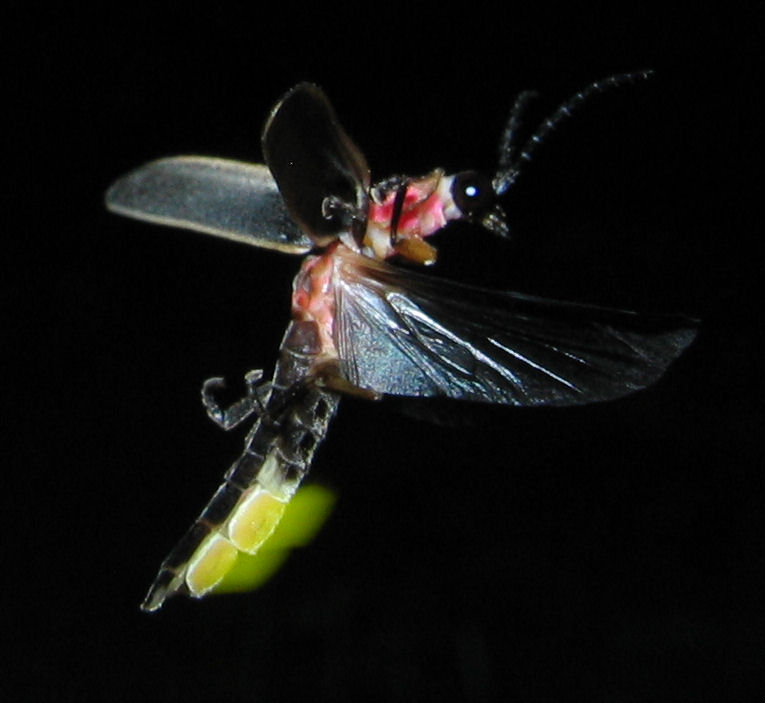
In brief
Bioluminescence is light produced inside a living organism by a chemical reaction between a light-emitting molecule called luciferin, an enzyme (usually luciferase) and oxygen. Organisms use this self-made light to find food, attract mates, evade predators and communicate, and it is far more common in the ocean than on land.
Fireflies blinking over a summer field and glowing waves breaking on a dark beach are both examples of the same underlying process: a living organism making its own light through chemistry rather than heat. Scientists call this bioluminescence, and it is one of the most widespread forms of biological light production on Earth.
The chemical reaction: luciferin, luciferase and oxygen
According to the Natural History Museum in London, bioluminescence happens when a molecule called luciferin reacts with oxygen and releases energy in the form of light. The reaction normally needs an enzyme, luciferase, that speeds up the process, or in some organisms a related protein called a photoprotein that works together with calcium ions instead.
The U.S. National Oceanic and Atmospheric Administration (NOAA) notes that although every bioluminescent organism relies on a reaction between an enzyme and a substrate, different species use different chemical combinations. NOAA says this diversity suggests the ability to make light evolved independently many times, rather than from a single common ancestor.
The color of the light depends on the exact structure of the luciferin and the surrounding proteins. The Natural History Museum and National Geographic Education both note that most marine organisms glow blue or green because those wavelengths travel farthest through seawater, while fireflies on land produce yellow light and a small number of deep-sea fish, such as loosejaw dragonfish, emit rare red light that most other animals in the deep cannot see.
Why organisms produce light
Researchers at NOAA and the Natural History Museum group the uses of bioluminescence into a few main categories: finding food, attracting or signaling to mates, and defense against predators. Some species combine several of these functions.
- Hunting: the deep-sea anglerfish dangles a glowing lure called an esca in front of its mouth to draw in curious prey, according to National Geographic Education.
- Mating: male fireflies flash species-specific patterns to signal to females, National Geographic Education reports.
- Defense: hatchetfish use 'counterillumination,' matching faint light on their undersides to the dim glow from above so predators looking up cannot see their silhouette, per National Geographic Education.
- Startling predators: some squid flash suddenly to startle an attacker, and the vampire squid ejects glowing mucus instead of ink, according to National Geographic Education.
Where bioluminescence is most common
NOAA states that 80 percent of the animals living between 200 and 1,000 meters (656 and 3,280 feet) deep in the ocean are bioluminescent. The Natural History Museum gives a higher estimate for a different zone, saying that up to 90 percent of life in the ocean's twilight zone produces light in some form. On land, bioluminescence is comparatively rare and best known from fireflies, some glow-worms, and roughly 75 species of fungi that give off a faint green glow, per the Natural History Museum.
NOAA's ocean-facts page points out an open scientific question: researchers have not fully explained why bioluminescence is so common in marine environments but essentially absent in freshwater lakes and rivers, nor have they pinpointed exactly how many times, or how, the trait evolved independently across different lineages.
Notable examples
Beyond fireflies and anglerfish, several other cases illustrate the range of bioluminescent life. Dinoflagellates — single-celled plankton — produce flashes of blue-green light when disturbed by waves or movement in the water, an effect sometimes visible as sparkling surf at night, according to National Geographic Education. Large, sustained patches of this glow created by colonies of luminous bacteria are known as 'milky seas' and are occasionally bright enough to be detected by satellites in tropical waters, National Geographic Education notes. Some species, such as the Hawaiian bobtail squid, do not make the light themselves at all; they host colonies of bioluminescent bacteria, including Vibrio fischeri, in a symbiotic relationship described by the Natural History Museum.
| Organism | Typical light color | Main function |
|---|---|---|
| Fireflies | Yellow | Attracting mates with species-specific flash patterns |
| Anglerfish | Blue/greenish | Luring prey with a glowing lure (esca) |
| Hatchetfish | Blue | Counterillumination camouflage against predators from below |
| Dinoflagellates (plankton) | Blue-green | Flashing when disturbed, visible as sparkling surf |
| Hawaiian bobtail squid | Blue (via symbiotic bacteria) | Camouflage through counterillumination |
Across all these cases, the underlying chemistry is similar — a luciferin reacting with oxygen, catalyzed by luciferase or a photoprotein — but the specific molecules, colors and biological purposes differ from one lineage to the next, reflecting the many separate origins of this trait identified by NOAA and the Natural History Museum.
Questions
- What two main ingredients are needed for bioluminescence?
- A light-producing molecule called luciferin and an enzyme, usually luciferase (or in some species a photoprotein with calcium), that triggers the reaction with oxygen to release light, according to the Natural History Museum and National Geographic Education.
- What percentage of deep-sea animals are bioluminescent?
- NOAA reports that about 80 percent of animals living between 200 and 1,000 meters deep are bioluminescent. The Natural History Museum gives a separate estimate of up to 90 percent for life in the ocean's twilight zone.
- Why do fireflies glow but most land animals don't?
- Sources do not give a single confirmed reason; NOAA notes that scientists have not fully explained why bioluminescence is widespread in the ocean but rare on land, beyond well-studied cases like fireflies, some fungi and certain insect larvae.
- Do all bioluminescent organisms make their own light-producing chemicals?
- No. Some, such as the Hawaiian bobtail squid, rely on symbiotic bioluminescent bacteria living inside their bodies rather than producing the light-emitting chemicals themselves, per the Natural History Museum.
Sources
This piece was prepared with artificial intelligence and passed an automated source check before publication. If you see an error, ask for a correction. Request a correction or reply · How we make this
Related
ScienceNews
2026 Nobel Prize in Economics Goes to Robert Hall and Michael Woodford
The 2026 Nobel Prize in Economic Sciences has been awarded to American economists Robert E. Hall of Stanford University and Michael Woodford of Columbia University. The Royal Swedish Academy of Sciences honored them for building the "microeconomic foundations of macroeconomic stabilization," work now used by central banks worldwide to manage inflation, unemployment and economic shocks.
ScienceArticle
Africa's Turkana Rift: Why Scientists Say the Continent's Crust Is Thinner Than Thought
New seismic data show the crust along Kenya and Ethiopia's Turkana Rift has thinned to about 13 kilometers, less than half of what surrounding areas measure. Columbia University researchers say this means eastern Africa has entered "necking," an advanced, self-sustaining phase of continental breakup that could eventually produce a new ocean — though the process is expected to take several million more years.

ScienceNews
Margaret Hamilton, Apollo software pioneer who coined the term, dies at 90
Margaret Hamilton, who led the MIT team that wrote the onboard flight software for NASA's Apollo missions and is credited with coining the term "software engineering," died on September 30, 2026, at a hospital in Cambridge, Massachusetts. She was 90.
ScienceNews
USGS: Deep-Sea Sulfide Rocks Can Spontaneously Catch Fire in the Lab
A USGS-led team reports that iron-sulfide-rich rocks collected from the seafloor off the Oregon–California coast spontaneously combusted after being brought into a laboratory. The study, published in Scientific Reports, says the reaction poses a possible fire hazard for future deep-sea mining operations that has not been fully accounted for in current safety rules.