Beginner's Guide to Choosing and Using a Telescope
Published:
In brief
For a first telescope, aperture — the diameter of the main lens or mirror — matters more than magnification, since it determines how much light the instrument gathers. Beginners are generally steered toward a 75–100 mm refractor or a 150–200 mm Dobsonian reflector, paired with realistic expectations about what planets and deep-sky objects actually look like through an eyepiece.
Choosing a first telescope confuses many newcomers because retail listings emphasize magnification numbers that have little to do with image quality. Astronomy organizations that advise beginners agree on a different starting point: the aperture, meaning the diameter of the telescope's main light-collecting lens or mirror.
Why aperture matters more than magnification
According to The Planetary Society, a larger aperture lets a telescope collect more light, which reveals fainter objects and finer detail on bright targets such as the Moon. EarthSky makes the same point for newcomers specifically: a beginner should worry about aperture (tube diameter) before worrying about magnifying power, because a bigger aperture produces a brighter, sharper image that can then be magnified usefully.
TelescopicWatch notes that a telescope's realistic maximum useful magnification is roughly twice its aperture in millimeters, and that atmospheric conditions usually keep real-world views below that theoretical ceiling. The Planetary Society adds that magnification above about 200x gives beginners little practical benefit regardless of the telescope's aperture.
Refractor, reflector, or catadioptric?
The three optical designs sold to beginners differ in how they bend or reflect light, and each comes with trade-offs in cost, upkeep and portability.
Beginner telescope types compared
Type
Optics
Typical beginner aperture
Maintenance
Best suited for
Refractor
Lenses
75–100 mm (3–4 in)
Low; rarely needs realignment
Moon and planets; becomes costly above 4–5 in
Reflector (Dobsonian mount)
Mirrors
150–200 mm (6–8 in)
Occasional mirror realignment (collimation); recoating every 10–20 years
Deep-sky objects such as nebulae and galaxies; most aperture for the money
Catadioptric (Schmidt- or Maksutov-Cassegrain)
Mirrors and a lens
Compact tabletop designs
Low to moderate
Portability and versatility, at a higher cost per inch of aperture
EarthSky recommends a 3- to 4-inch (75–100 mm) long-tube achromatic refractor for beginners who prefer that design, while advising against pricier apochromatic refractors for a first instrument. For a reflector, EarthSky suggests a 6- to 8-inch (150–200 mm) telescope on a Dobsonian mount, calling it portable, cost-effective and easy to use, though it must be nudged by hand every few minutes to keep an object in view as the sky appears to move.
Mounts: alt-azimuth, equatorial or GoTo
The mount — the structure the telescope sits on — affects how easily a beginner can find and track objects. The Planetary Society describes an alt-azimuth mount, which moves simply up-down and left-right, as the easiest for newcomers. An equatorial mount tracks the sky's rotation more naturally once aligned but takes longer to learn. A computerized GoTo mount can locate objects automatically after setup, though The Planetary Society cautions that relying on GoTo too early can slow down learning the night sky by star pattern.
Setting up and using a telescope for the first time
Assemble the telescope indoors following its instructions, then align the small finder scope with the main tube during daylight, aiming both at a distant fixed object such as a chimney or pole, per TelescopicWatch's guidance.
Choose a viewing site away from streetlights; TelescopicWatch notes a telescope used at a dark site shows substantially more objects and detail than the same instrument used under light pollution.
Start with the lowest-power eyepiece to locate a target, since a wider field of view makes objects easier to find before switching to higher magnification.
Locate bright, easy targets first — the Moon (ideally not at full phase, when shadows reveal more surface detail) and bright planets such as Jupiter or Saturn, which TelescopicWatch says are visible with modest apertures.
Find fainter deep-sky objects either by star-hopping between bright reference stars (a method used in guides such as 'Turn Left at Orion'), with a planetarium app like Stellarium showing real-time coordinates, or via a GoTo mount's catalog search.
Increase magnification only once an object is centered; TelescopicWatch reports that planets, double stars and globular clusters typically look best above roughly 100x, while nebulae and galaxies often look better at lower power.
Common mistakes and realistic expectations
Buying by magnification number alone: The Planetary Society and EarthSky both warn that very high advertised magnification on a cheap mount usually produces a blurry, shaky image, not a better one.
Never pointing an unfiltered telescope at the Sun, which TelescopicWatch lists as a key safety mistake; solar viewing requires a proper certified solar filter.
Expecting Hubble-style color and detail: EarthSky cautions that planets will not resemble glossy poster images and that most nebulae appear gray or colorless to the human eye.
Skipping the finder-scope alignment step, which TelescopicWatch identifies as a common reason beginners struggle to locate anything on their first night out.
How much to budget
The Planetary Society advises avoiding telescopes priced under $100, describing them as generally too frustrating to use, and places solid beginner instruments in the $200–$400 range, with computerized GoTo models at the higher end. EarthSky gives a similar range for a 6- to 8-inch Dobsonian reflector, estimating $300–$600. EarthSky also suggests that newcomers spend time with binoculars — such as 7x35, 8x40 or 7x50 models costing roughly $100–$200 — before buying a telescope, to first learn the night sky's major stars and constellations.
A beginner should be concerned more with aperture (tube diameter) than with magnifying power.
— EarthSky
EarthSky also recommends connecting with a local amateur astronomy club before buying, so a newcomer can look through several different telescope types in person and ask experienced owners about upkeep and ease of use.
Questions
What is the single most important spec when buying a first telescope?
Aperture — the diameter of the main lens or mirror — because it determines how much light the telescope gathers and how much fine detail it can resolve, according to The Planetary Society and EarthSky.
Should a beginner start with binoculars instead of a telescope?
EarthSky recommends spending time with binoculars (such as 7x35, 8x40 or 7x50 models, roughly $100–$200) to learn the night sky's major stars and constellations before investing in a telescope.
How much should a first telescope cost?
The Planetary Society suggests avoiding telescopes under $100 and places solid beginner options around $200–$400; EarthSky estimates $300–$600 for a 6- to 8-inch Dobsonian reflector.
Is higher magnification always better?
No. TelescopicWatch notes the realistic maximum useful magnification is roughly twice the aperture in millimeters, and The Planetary Society says magnification above about 200x gives beginners little real benefit; aperture and optical quality matter more than the magnification number printed on the box.
What should a beginner look at first through a new telescope?
TelescopicWatch recommends starting with the Moon (not at full phase) and bright planets like Jupiter or Saturn, since these are easy to find and visible even with modest apertures, before moving on to fainter deep-sky objects under dark skies.
This piece was prepared with artificial intelligence and passed an automated source check before publication. If you see an error, ask for a correction. Request a correction or reply · How we make this
NASA's Perseverance rover has driven farther than any other vehicle on another world, reaching 28.10 miles (45.22 km) on Mars on October 11, 2026, according to NASA's Jet Propulsion Laboratory. The new mark edges past the 28.06 miles (45.16 km) logged by the Opportunity rover between 2004 and 2018 — a distance Opportunity needed nearly 15 years to cover, versus about 5.5 years for Perseverance.
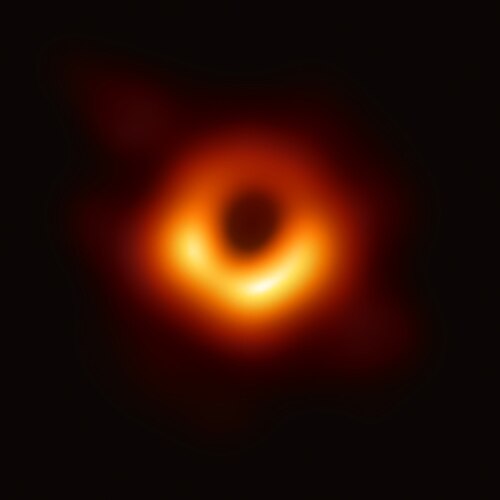
A black hole is a region where gravity is so strong that nothing, not even light, can escape once it crosses the event horizon. Most black holes form from the collapse of massive dying stars, while the origin of the largest, supermassive black holes remains poorly understood, according to NASA. Their existence has been confirmed both by a 2015 gravitational-wave detection and a 2019 direct image.
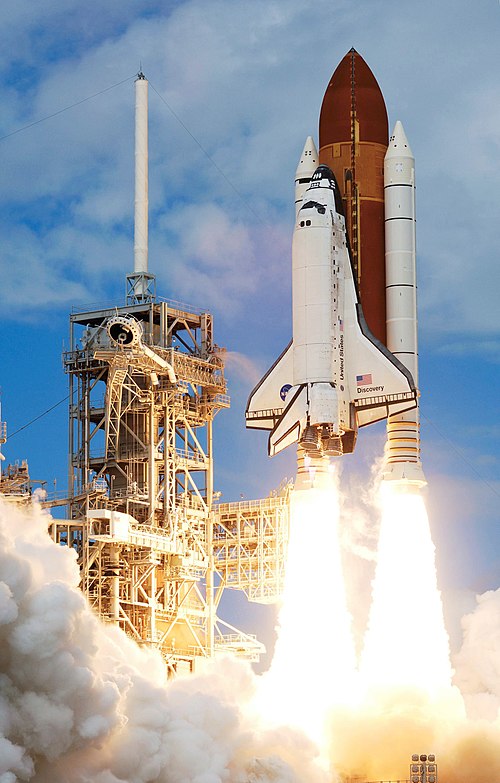
NASA's Space Shuttle re-entered the atmosphere at roughly 17,500 mph — about Mach 25 — making it the fastest crewed vehicle ever to fly like an aircraft and land on a runway. It did this 133 times across 135 missions between 1981 and 2011. A faster absolute human speed record, however, belongs to the Apollo 10 capsule, which was not a winged aircraft.
Yes, in principle: scientists say collapsed lava tubes beneath pits such as Marius Hills and Mare Tranquillitatis could shield astronauts from radiation, micrometeorites and extreme temperature swings far better than any surface habitat. NASA has now selected a mission, GIMLI, to find out whether one of these pits actually opens into a cave large enough to matter.