Space · Article
Black Holes Explained: How They Form, What They Look Like, and the Proof They Exist
Published:

In brief
A black hole is a region where gravity is so strong that nothing, not even light, can escape once it crosses the event horizon. Most black holes form from the collapse of massive dying stars, while the origin of the largest, supermassive black holes remains poorly understood, according to NASA. Their existence has been confirmed both by a 2015 gravitational-wave detection and a 2019 direct image.
Black holes are regions of space where gravity is strong enough that, past a certain boundary, not even light can escape. That boundary is called the event horizon, and NASA describes it as the point where the velocity needed to escape exceeds the speed of light.
How black holes form
The most common route is the death of a massive star. According to NASA, a star with more than 20 solar masses that exhausts the nuclear fuel in its core collapses under its own weight. Once a collapsing core exceeds roughly three solar masses, no known force can stop the collapse, and a black hole results.
Supermassive black holes, which sit at the centers of large galaxies and weigh between 100,000 and billions of solar masses, are harder to explain through stellar collapse alone. NASA states that the origin of supermassive black holes is poorly understood, even though they are known to have existed since the earliest days of a galaxy's lifetime.
Black holes also grow after they form, by pulling in surrounding gas and dust through a process called accretion, and by merging with other black holes.
The structure of a black hole
NASA's description of black hole anatomy lists several distinct parts. The singularity is the theoretical point at the center where, according to general relativity, matter is crushed to infinite density. Surrounding it is the event horizon, the point of no return.
Farther out, infalling gas and dust form an accretion disk, a rotating structure that is heated as it spirals inward, making it one of the main ways astronomers detect black holes at all. Near the black hole, light can orbit multiple times before escaping, producing a thin, distorted ring known as the photon sphere. Some black holes also generate a billion-degree corona of particles above the disk, and pairs of jets that fire matter outward at close to the speed of light, with jets from supermassive black holes extending hundreds of thousands of light-years, per NASA.
Types of black holes
Astronomers group black holes by mass. Stellar-mass black holes range from about three to several dozen solar masses and are scattered throughout galaxies such as the Milky Way. Supermassive black holes anchor the centers of large galaxies and weigh from 100,000 to billions of solar masses; the one at the heart of the galaxy Messier 87 weighs more than 6 billion solar masses, NASA states. Intermediate-mass black holes, in the range of 100 to more than 10,000 solar masses, have few confirmed examples; NASA calls the 2019 merger event GW190521, which produced a black hole of 142 solar masses, the most convincing example of this category to date.
| Type | Typical mass range | Example |
|---|---|---|
| Stellar-mass | ~3 to dozens of solar masses | Scattered across the Milky Way |
| Intermediate-mass | 100 to more than 10,000 solar masses | Merger product GW190521 (142 solar masses) |
| Supermassive | 100,000 to billions of solar masses | M87* (more than 6 billion solar masses) |
How scientists proved black holes are real
Direct images of a black hole are impossible in the normal sense, since no light escapes from inside the event horizon. Instead, researchers look for indirect effects, and two landmark results in the past decade turned black holes from a theoretical prediction into an observed reality.
The first came on September 14, 2015, when the twin Advanced LIGO detectors in the United States picked up a gravitational-wave signal, later named GW150914, according to Physics World's report on the discovery. The signal came from two black holes, with masses of 36 and 29 times the Sun, merging into a single spinning black hole of 62 solar masses roughly 1.3 billion light-years away. The difference, equivalent to 3 solar masses, had been radiated away as gravitational waves. The detection was measured at a statistical significance above 5.1 sigma and confirmed, among other things, that gravitational waves travel at the speed of light, as predicted by Einstein's general relativity.
The second landmark came on April 10, 2019, when the Event Horizon Telescope collaboration released the first-ever image of a black hole's silhouette, as reported by MIT News. The target was the supermassive black hole at the center of M87, 55 million light-years from Earth, with a mass of 6.5 billion Suns and an event horizon roughly 40 billion kilometers across. Eight ground-based radio telescopes, from Hawaii and Arizona to Mexico, Spain, Chile and Antarctica, worked together as a single virtual instrument to capture the image, which showed a bright ring of glowing gas surrounding a dark central "shadow."
This shadow, caused by the gravitational bending and capture of light by the event horizon, reveals a lot about the nature of these fascinating objects.
More than 200 researchers from 13 partner institutions contributed to the 2019 result, according to MIT News, and the observed shadow matched predictions from general relativity.
Gravitational effects on surrounding space
Close to a black hole, infalling matter spirals into the accretion disk, which NASA describes as a "hot, bright, rapidly spinning disk" — one of the main ways astronomers detect black holes even though the black hole itself emits no light. These same gravitational effects bend the path of light passing nearby, which is what produces the glowing ring seen in the EHT images rather than a simple dark circle.
Frequently asked questions
Questions
- Can anything escape a black hole?
- No. NASA defines the event horizon as the boundary beyond which the escape velocity exceeds the speed of light, meaning nothing, including light, can escape once it crosses that point.
- How do black holes form?
- Stellar-mass black holes form when a star of more than 20 solar masses runs out of nuclear fuel and its core, if it exceeds about three solar masses, collapses under its own gravity, according to NASA. The origin of supermassive black holes is less clear; NASA states it is poorly understood, though these objects are known to have existed since the earliest days of a galaxy's lifetime.
- Has a black hole ever actually been photographed?
- In April 2019 the Event Horizon Telescope collaboration released the first image showing a black hole's shadow and surrounding ring of glowing gas, for the supermassive black hole at the center of the galaxy M87, as reported by MIT News.
- What was the first direct evidence of black holes merging?
- On September 14, 2015, LIGO detected gravitational waves from two black holes, of 36 and 29 solar masses, merging into a 62-solar-mass black hole about 1.3 billion light-years away, per Physics World's coverage of the discovery.
- How big is the largest known black hole category?
- Supermassive black holes range from about 100,000 to billions of solar masses and sit at the centers of large galaxies; the one in M87 weighs more than 6 billion solar masses, according to NASA.
Sources
This piece was prepared with artificial intelligence and passed an automated source check before publication. If you see an error, ask for a correction. Request a correction or reply · How we make this
Related
SpaceNews
Perseverance Rover Sets Mars Driving Record at 28.1 Miles, Topping Opportunity
NASA's Perseverance rover has driven farther than any other vehicle on another world, reaching 28.10 miles (45.22 km) on Mars on October 11, 2026, according to NASA's Jet Propulsion Laboratory. The new mark edges past the 28.06 miles (45.16 km) logged by the Opportunity rover between 2004 and 2018 — a distance Opportunity needed nearly 15 years to cover, versus about 5.5 years for Perseverance.
SpaceGuide
Beginner's Guide to Choosing and Using a Telescope
For a first telescope, aperture — the diameter of the main lens or mirror — matters more than magnification, since it determines how much light the instrument gathers. Beginners are generally steered toward a 75–100 mm refractor or a 150–200 mm Dobsonian reflector, paired with realistic expectations about what planets and deep-sky objects actually look like through an eyepiece.
SpaceArticle
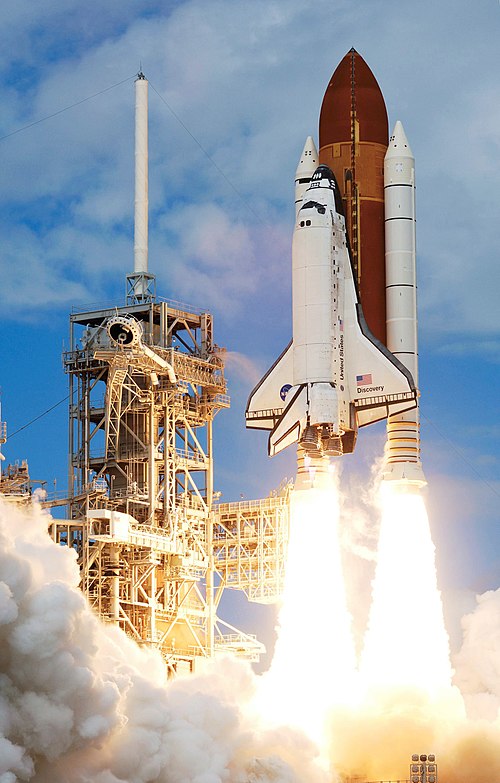
NASA's Space Shuttle Hit Mach 25: Why It's Called the Fastest Crewed "Aircraft"
NASA's Space Shuttle re-entered the atmosphere at roughly 17,500 mph — about Mach 25 — making it the fastest crewed vehicle ever to fly like an aircraft and land on a runway. It did this 133 times across 135 missions between 1981 and 2011. A faster absolute human speed record, however, belongs to the Apollo 10 capsule, which was not a winged aircraft.

SpaceArticle
Could We Live in Caves on the Moon? Inside the Search for Lunar Lava-Tube Habitats
Yes, in principle: scientists say collapsed lava tubes beneath pits such as Marius Hills and Mare Tranquillitatis could shield astronauts from radiation, micrometeorites and extreme temperature swings far better than any surface habitat. NASA has now selected a mission, GIMLI, to find out whether one of these pits actually opens into a cave large enough to matter.