No telescope is needed to watch a meteor shower — NASA says simply lying down away from city lights is enough. Comets are harder to spot and usually require binoculars or a small telescope, according to Celestron and the American Meteor Society. This guide lays out the timing, gear and viewing techniques recommended by these sources for both.
Meteor showers and comets are two of the most accessible targets in amateur astronomy, but they require different approaches. NASA, the American Meteor Society (AMS) and telescope maker Celestron each publish observing guidance that converges on a few core principles: get away from city lights, let your eyes adapt to darkness, and know when and where to look.
Watching a meteor shower
According to NASA's skywatching guidance, meteor showers are best enjoyed by simply lying down and looking up — no binoculars or telescope needed, since meteors can streak across almost any part of the sky. NASA recommends finding a spot away from city lights with an unobstructed view of the sky.
The AMS says the best viewing window is the period just before the start of morning twilight. At that time of night, the side of Earth you are standing on faces into the stream of meteoroids head-on — similar, the AMS notes, to looking through a car windshield while driving through rain or snow. Observers who watch only at dusk are instead looking at the sky region Earth is moving away from, where fewer meteors appear.
When the major showers peak
The AMS's 2026/2027 meteor shower calendar lists the following showers among the year's most active, along with their peak dates.
Meteor showers and their peak dates (AMS calendar, 2026–2027)
Shower
Peak date
Orionids
Oct 21–22, 2026
Southern Taurids
Nov 4–5, 2026
Northern Taurids
Nov 11–12, 2026
Leonids
Nov 16–17, 2026
Geminids
Dec 13–14, 2026
Ursids
Dec 21–22, 2026
Quadrantids
Jan 3–4, 2027
Lyrids
Apr 21–22, 2027
Eta Aquariids
May 5–6, 2027
Southern Delta Aquariids / Alpha Capricornids
Jul 30–31, 2027
Perseids
Aug 12–13, 2027
The AMS describes the Geminids as usually the strongest shower of the year by meteor count, while the Perseids are called the most popular, likely because they peak during warm Northern Hemisphere summer nights.
Finding and watching a comet
Comets behave very differently from meteors and are generally much harder to see. Celestron's observing guide recommends starting with binoculars that have large 50mm objective lenses — it specifically cites its own Cometron 7x50 and SkyMaster Pro ED 7x50 models — because they gather enough light to reveal a comet's tail across a wide field of view. For telescopes, Celestron suggests a wide-field instrument with low-to-medium magnification eyepieces, which can reveal more of the tail without having to reposition the telescope.
Celestron advises allowing at least one hour for your eyes to fully dark-adapt, choosing a remote location away from light pollution, and finding a spot with a clear, unobstructed horizon, since comets can appear low in the sky. The guide also recommends checking the internet, astronomy magazines, sky reports or apps such as Celestron's own SkyPortal for a comet's predicted position and visibility window before heading out.
Celestron highlights averted vision — looking roughly 20 degrees off to the side of the target rather than straight at it — as a technique for spotting faint objects. The guide says this exposes more light-sensitive parts of the eye to the comet's light, making a faint, fuzzy comet easier to detect against the night sky.
Most of the meteors will be striking the Earth from a head-on position, much like looking through the front windshield of a vehicle during rain or snow.
— American Meteor Society, Visual Observing guidance
Quick checklist before heading out
Check the Moon phase and shower or comet forecast for your date and location.
Pick a site away from city lights with a clear, unobstructed horizon.
Give your eyes time to dark-adapt before watching — NASA recommends this for meteor showers, and Celestron advises at least one hour specifically for comet viewing.
For meteors, lie back and watch a wide area of sky rather than fixing your eyes on one spot.
For comets, scan slowly with binoculars or use a wide-field telescope eyepiece, and try averted vision (looking slightly to the side) for faint objects.
Dress for the temperature and bring something comfortable to sit or lie on, since sessions can last hours.
Avoid bright phone screens, or switch to a red-light flashlight, to protect your night vision.
Questions
Do I need a telescope to see a meteor shower?
No. NASA states that meteor showers are best seen by simply lying down and looking up at the sky, without needing binoculars or a telescope.
What is the best time of night to watch a meteor shower?
The American Meteor Society says the period just before the start of morning twilight is best, because Earth is then moving head-on into the meteoroid stream, producing more visible meteors than at dusk.
What equipment is best for spotting a comet?
Celestron's observing guide recommends starting with 50mm binoculars, such as its own Cometron 7x50 and SkyMaster Pro ED 7x50 models, which provide enough light-gathering power to reveal a comet's tail across a wide field of view; a wide-field telescope with low-to-medium magnification can show more detail but a narrower view of the tail.
Which meteor showers are considered the strongest?
According to the American Meteor Society's calendar, the Geminids (peaking mid-December) are usually the strongest shower by meteor count, while the Perseids (peaking in August) are described as the most popular shower to watch.
Does the Moon affect comet or meteor viewing?
Celestron advises seeking dark, light-pollution-free conditions to spot faint comets, noting that bright moonlight can wash out faint objects in a similar way to city lights. The NASA and AMS pages reviewed for this guide do not specifically address the Moon's effect on meteor-shower viewing.
This piece was prepared with artificial intelligence and passed an automated source check before publication. If you see an error, ask for a correction. Request a correction or reply · How we make this
Rockets move by expelling exhaust in one direction so the vehicle is pushed in the other, under Newton's third law of motion. Thrust depends on how much exhaust mass flows out per second and how fast it leaves the nozzle, while staying in orbit depends on balancing forward speed against the pull of gravity. Multistage designs and, for some missions, electric propulsion are used to manage the enormous amount of propellant spaceflight requires.
Astronaut training is a multi-year process that starts with a selection screening for education, experience and physical fitness, then moves into years of ground training before any flight. According to NASA and the European Space Agency (ESA), candidates learn spacecraft systems and practice spacewalks underwater, and ESA candidates also study Russian, while life aboard the International Space Station (ISS) runs on a fixed daily schedule of work, exercise and sleep.
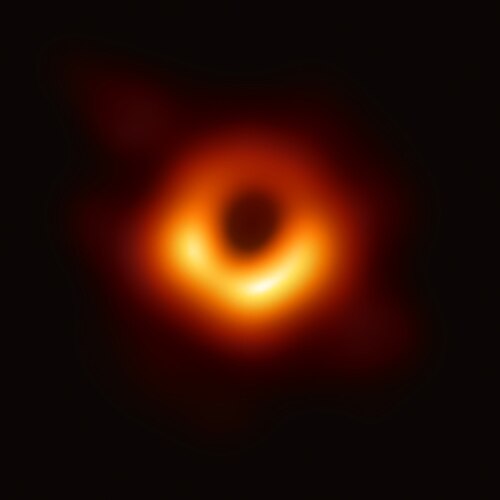
A black hole is a region of space where gravity is so strong that nothing, not even light, can escape once it crosses the event horizon. Most form when a massive star runs out of nuclear fuel and its core collapses; supermassive versions grow at galaxy centers over billions of years. Direct images and gravitational-wave detections have confirmed their existence and tested Einstein's general relativity.
The Moon's phases change because sunlight hits different parts of its surface as it moves around Earth, not because of Earth's shadow; one full cycle of phases, called a synodic month, averages 29.5 days. The same Moon also pulls on Earth's oceans with uneven gravitational force, creating two high tides and two low tides roughly every 24 hours and 50 minutes, with the Sun strengthening or weakening that pull twice a month.