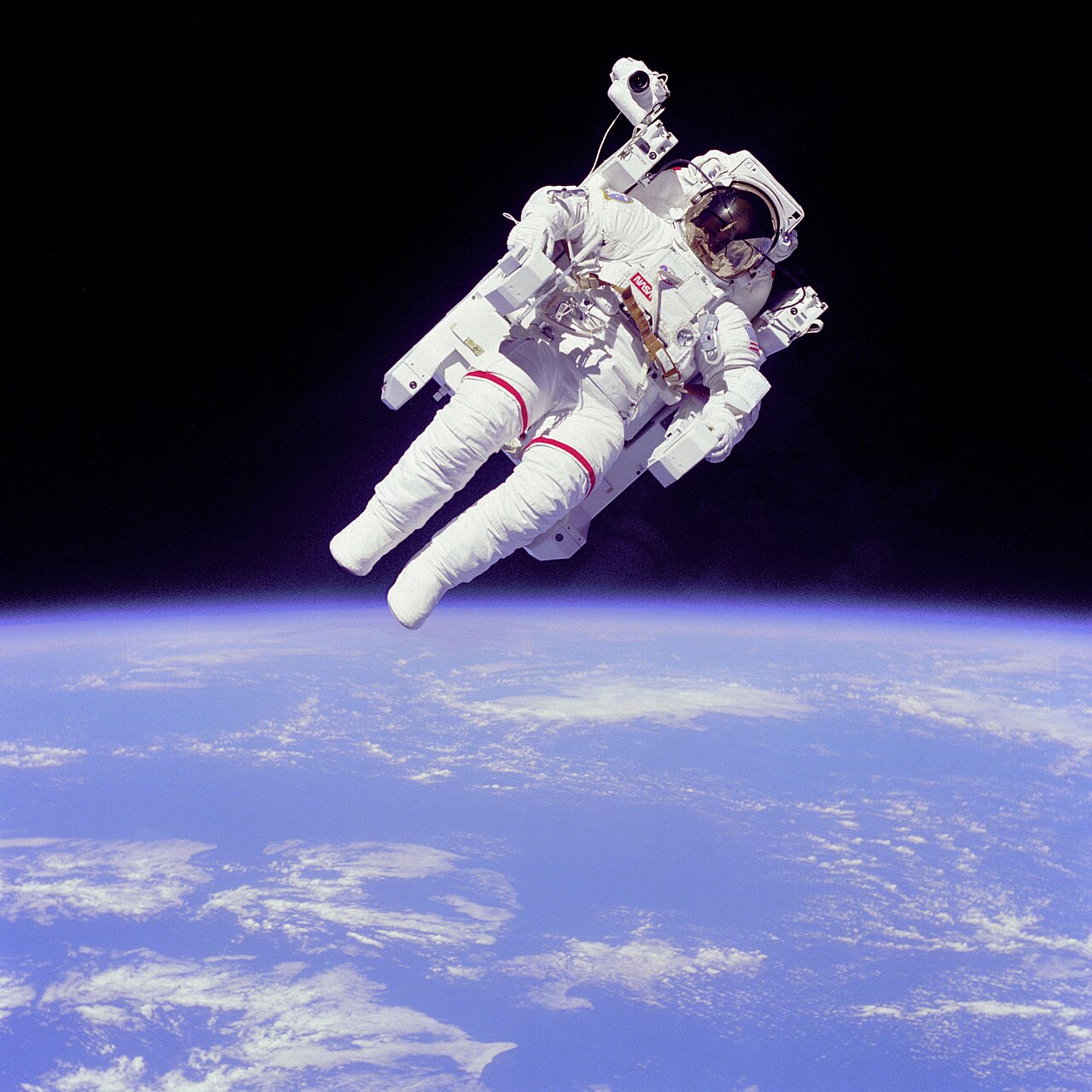
Spaceflight agencies do not send people into orbit after a short course. NASA and ESA both describe multi-year pipelines that begin with a competitive selection process and continue with specialized ground training long before a candidate is assigned to a mission.
Who Can Apply, and What They Need
NASA requires applicants to be U.S. citizens, including dual citizens, and to hold a master's degree in engineering, biological science, physical science, computer science or mathematics from an accredited institution, according to NASA's official astronaut FAQ page. Candidates must instead show either three years of related professional experience or at least 1,000 hours of pilot-in-command time, with a minimum of 850 hours in high-performance jet aircraft.
NASA sets no age limit; the agency's FAQ notes that past selected classes ranged from 26 to 46 years old, averaging 34. There is no waiver system for medical standards: candidates must be free of any condition that could impair their ability to fly or be made worse by spaceflight, and they must complete NASA's long-duration flight physical. Pay for an active astronaut was listed at $152,258 per year under 2024 federal pay rates.
Ground Training Before Any Flight
Once selected, NASA astronaut candidates train for roughly two years at Johnson Space Center in Houston, Texas, NASA's official astronaut recruitment page states. The agency describes the program as teaching 'basic astronaut skills like spacewalking, operating the space station, flying T-38 jet planes and controlling a robotic arm.' Spacewalk practice takes place underwater at the Neutral Buoyancy Laboratory (NBL), which NASA's Johnson Space Center training page calls 'one of the world's largest indoor pools,' used to simulate weightlessness for suited crew members rehearsing extravehicular activity.
ESA structures its program in three phases. Basic training lasts about one year at the European Astronaut Centre in Cologne, Germany, and covers ISS systems, the SpaceX, Boeing and Soyuz spacecraft used to reach the station, plus spacewalks, robotics, docking procedures, Russian language instruction and survival training, according to ESA's training page. A pre-assignment phase of variable length follows, during which astronauts build expertise across NASA, Roscosmos, JAXA and CSA systems at partner sites worldwide. Once assigned to a specific flight, astronauts enter an 'increment' training phase of about two years focused on the roughly six-month ISS stay ahead of them.
ESA also lists analogue courses as part of preparation, including CAVES, an underground expedition-style program, and NEEMO, which uses an underwater habitat to simulate some conditions of spaceflight, alongside geology fieldwork training called PANGAEA.
A Scheduled Day Aboard the ISS
Life on the ISS follows a planned timetable rather than a loose routine. An ESA Outpost42 blog post describing the station's daily schedule says the crew's workday is built around a morning planning conference, roughly 6.5 hours split between experiments, payload installation, repairs and housekeeping, a dedicated midday meal hour, and an evening planning conference before free time and sleep.
- Exercise: a strict 2.5-hour block using a cycle ergometer, a treadmill and a Resistance Exercise Device, intended to limit the bone and muscle loss that occurs in microgravity, according to the ESA blog.
- Sleep: the ESA blog describes roughly 8.5 hours of sleep time in microgravity.
- Free time: the ESA blog notes crews can use evening hours for dinner, personal communication or viewing Earth from the station's Cupola window before sleep.
Scheduling is tracked through an onboard planning tool called the Onboard Short Term Plan Viewer (OSTPV), which displays each day's activities as individual time blocks, the ESA blog post states, which is why ISS days are often described as tightly timed rather than flexible.
Selection and Training at a Glance
NASA vs. ESA astronaut selection and training| Criterion | NASA | ESA |
|---|
| Citizenship | U.S. citizen (dual citizenship allowed) | Not detailed in the sources reviewed |
|---|
| Minimum education | Master's degree in engineering, biological or physical science, computer science or math | Not detailed in the sources reviewed |
|---|
| Experience alternative | 3 years' professional experience or 1,000+ flight hours (850+ in jets) | Not detailed in the sources reviewed |
|---|
| Selection process length | Not specified in NASA's FAQ | Not detailed in the sources reviewed |
|---|
| Basic ground training length | About 2 years at Johnson Space Center | About 1 year at the European Astronaut Centre |
|---|
| Pre-flight assignment training | Not separately itemized in sources reviewed | Variable-length phase at partner-agency sites |
|---|
| Mission-specific training | Not separately itemized in sources reviewed | About 2 years ('increment' training) for a roughly 6-month ISS stay |
|---|
Questions
- How long does it take to become an astronaut?
- At NASA, selected candidates complete about two years of ground training at Johnson Space Center before joining the active astronaut corps, according to NASA's official recruitment page. ESA astronauts go through roughly one year of basic training, a variable-length pre-assignment phase and about two years of mission-specific training once assigned to a flight, per ESA's training page.
- Do astronauts need to be pilots?
- Not necessarily. NASA accepts either three years of professional experience in a qualifying field or at least 1,000 hours as pilot-in-command, including 850+ hours in high-performance jets, as alternative paths to the same application requirement, according to NASA's astronaut FAQ.
- What is the Neutral Buoyancy Laboratory?
- It is a large indoor pool at NASA's Johnson Space Center used to simulate weightlessness so suited astronauts can rehearse spacewalk, or extravehicular activity, procedures before flying, according to NASA's crew training page.
- How many hours a day do astronauts exercise in space?
- ISS crews follow a scheduled 2.5-hour exercise block each day using a treadmill, a stationary bicycle and a resistance device, intended to offset bone and muscle loss caused by microgravity, according to ESA's description of the station's daily schedule.
- How much do NASA astronauts get paid?
- NASA's FAQ page lists an active astronaut's salary at $152,258 per year under 2024 federal pay rates, subject to later adjustment.
This piece was prepared with artificial intelligence and passed an automated source check before publication. If you see an error, ask for a correction. Request a correction or reply · How we make this