Planning a multi-country trip starts with mapping a logical route before booking flights, then checking visa limits such as the Schengen area's 90/180-day rule and each border's passport-validity requirement. The sequence matters: route first, visa math second, bookings last, according to EU immigration guidance and established travel-planning resources.
Trips that cross several countries fail most often not because of bad luck but because of planning order: travelers book flights and hotels before they have checked visa limits or built a logical route. The steps below follow guidance from the European Commission's migration department, Rick Steves' trip-planning site and The Points Guy's passport-rules guide.
Build the Route Before You Book Anything
Rick Steves' itinerary-planning guidance recommends starting with a list of every place a traveler wants to see, then grouping those places by geography and circling them on a map to find a logical order, rather than booking destinations in the sequence they came to mind.
List every place you want to visit, then group them by geography and circle them on a map to find a logical order, as recommended in Rick Steves' itinerary-planning guidance.
Choose a one-way flight structure — arriving in one city and departing from another — which, per the same source, can cost roughly half the combined price of two separate round-trip fares, even if the ticket itself looks more expensive upfront.
Assign at least two consecutive nights to each stop. Arriving around midday and leaving around midday otherwise means no full sightseeing day, according to Rick Steves' guidance.
Sequence destinations from culturally milder to more intense experiences — for example, starting in Britain before moving toward Southern Europe — following the same recommendation.
Match season to geography: Rick Steves' guidance suggests touring Mediterranean-area countries in spring, then moving toward areas north of the Alps in summer, to keep weather comfortable and avoid peak-season crowds.
Add roughly one buffer day per week of travel to absorb delays, fatigue or schedule changes, per the same source.
Check visa rules for every border before booking — multi-country trips can hit regional limits that single-country trips never encounter.
Confirm passport validity separately for each destination, since the required number of months remaining varies by country and region.
Flying into one airport and out from another typically costs just half the round-trip fare for each airport.
— Rick Steves travel-tips site
Visa Limits That Can Break a Multi-Country Route
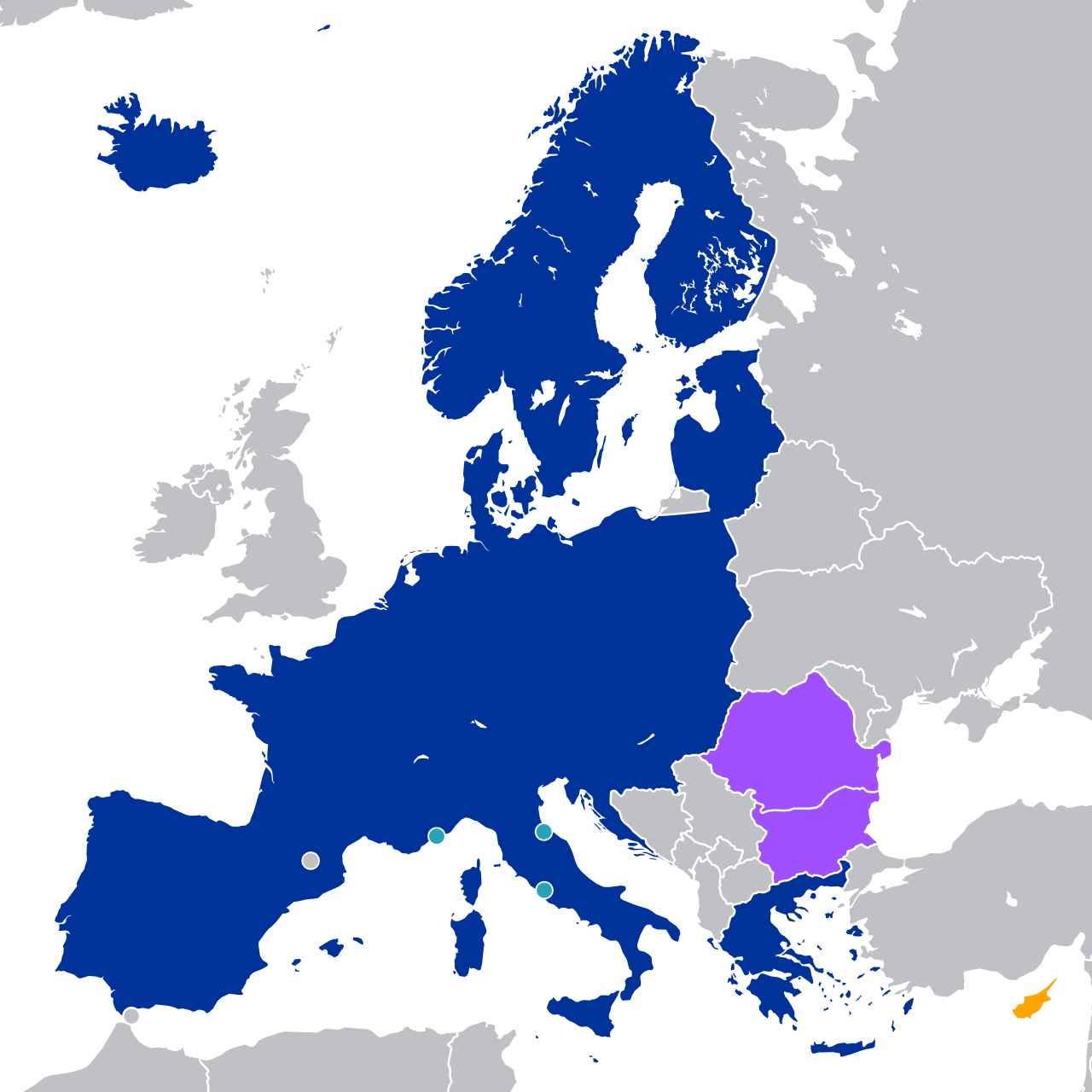
For routes that include Europe's Schengen Area, the European Commission's migration and home affairs department states that non-EU travelers who don't need a visa can stay a combined total of 90 days within any rolling 180-day period — across all 29 Schengen countries together, not 90 days in each one. The 180-day window starts counting from the first entry into any Schengen country, and crossing internal borders between Schengen states does not reset the clock.
This single-pool rule is the most common planning mistake on multi-country European itineraries: time spent in France, time spent in Italy and time spent in Greece all draw from the same 90-day allowance. The European Commission notes that stays longer than 90 days require a national visa or permit from the specific country where the traveler will spend most of their time, since that part of the process is handled individually by each Schengen state rather than through the unified short-stay rule.
Passport Validity Rules Differ by Region
Even when no visa is required, immigration officials can deny boarding or entry if a passport does not have enough validity left. The required buffer is not uniform worldwide, which matters most on routes that cross several regions in one trip.
Passport validity typically required beyond the trip, by region
Region / agreement
Validity required beyond departure
Source
Schengen Area (29 countries)
At least 3 months after the planned departure date — the "three plus three" rule
The Points Guy
Many countries in Asia, the Middle East, Africa, the Caribbean and the Pacific (examples cited: Thailand, UAE, Egypt, Fiji)
At least 6 months beyond the stay
The Points Guy
Because the margin varies by country rather than by region alone, The Points Guy's guide advises checking each destination's specific requirement individually and confirming with the passport issuer well before departure, leaving enough time for renewal if needed.
Putting the Pieces Together
A workable order of operations is: map the route and sequence first, tally how many days inside any visa-limited zone like the Schengen Area the trip will use, confirm every passport-validity requirement on the route, and only then lock in non-refundable flights and hotels. Doing it in the opposite order — booking first — is what most often forces travelers to cut a country from the trip after the fact.
Questions
Does the Schengen 90-day limit apply separately in each country?
No. The European Commission's migration and home affairs department states the 90-day allowance covers the entire 29-country Schengen Area as one combined total within any rolling 180-day period, not 90 days per country.
How many nights should I spend in each city on a multi-country trip?
Rick Steves' itinerary-planning guidance recommends a minimum of two consecutive nights per stop, since arriving and leaving around midday otherwise fails to give travelers one full sightseeing day.
Do I need six months of passport validity for every country?
Not for every country. The Points Guy's guide notes Schengen countries require three months of validity beyond departure, while many countries across Asia, Africa, the Caribbean and the Pacific require six months, so each destination should be checked individually.
In what order should I visit countries on a multi-country trip?
Rick Steves' guidance recommends sequencing from culturally milder stops toward more intense ones and matching climate to geography, such as touring Mediterranean-area countries in spring before moving toward areas north of the Alps in summer.
Is it cheaper to fly into one city and out of another rather than book round trips?
Rick Steves' trip-planning site states that flying into one airport and departing from another typically costs about half the combined price of two separate round-trip fares, even when the single ticket looks more expensive upfront.
This piece was prepared with artificial intelligence and passed an automated source check before publication. If you see an error, ask for a correction. Request a correction or reply · How we make this
Harrison Ford bought an 800-acre ranch along Wyoming's Snake River in 1985 and began donating conservation easements the same year. Decades later, 389 acres of that Jackson Hole property remain permanently protected as wildlife habitat under agreements held by the Jackson Hole Land Trust.
Etiquette norms differ sharply by country: a gesture that means "great job" in one place can mean an insult in another, and dress or touch rules at religious sites are often strict and enforced. This guide collects concrete, source-checked rules for Japan, Thailand and the United Arab Emirates, plus global gesture pitfalls, so travelers can prepare before they go.
A multi-week backpacking trip is planned by setting a realistic daily budget for each region, booking flexible transport and insurance in advance, and tracking spending against fixed and daily costs. Daily budgets vary widely by region, from around $25 in South Asia to $170 in Australia, according to cost-index data and budget-travel guides.
A travel budget starts with a target amount that covers transportation, lodging, food, activities and a 10–15% contingency buffer, built on a realistic timeline before departure. Opening a dedicated savings account, locking in flights and accommodation early, and tracking daily spending are the core steps that keep a trip on budget from booking to landing back home.