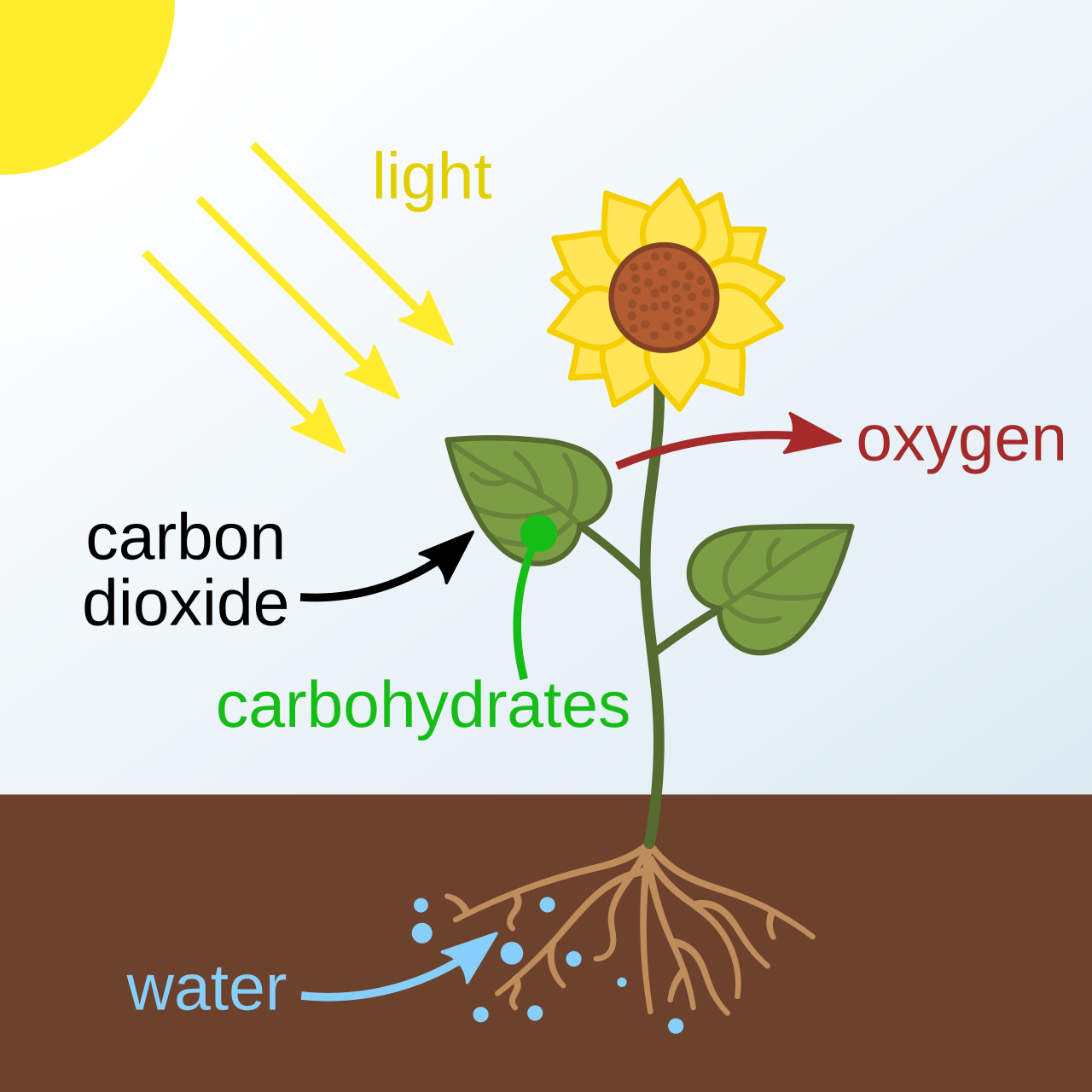
Photosynthesis is the biological process that converts light energy into chemical energy stored in sugar. According to National Geographic Education, plants use sunlight, water and carbon dioxide to create oxygen and energy in the form of sugar, taking in carbon dioxide and water and releasing oxygen while storing energy in glucose molecules.
Where it happens: inside the chloroplast
The process takes place in chloroplasts, organelles found in plant and algal cells, according to National Geographic Education. Chloroplasts contain two key regions described in biology references on bio.libretexts.org: the thylakoid membranes, where light-dependent reactions occur, and the stroma, the fluid space where the light-independent reactions of the Calvin cycle take place.
Chlorophyll, the green pigment packed into the thylakoid membranes, absorbs energy mainly from blue and red light wavelengths while reflecting green light, which is why most leaves appear green, National Geographic Education notes.
Stage one: the light-dependent reactions
In the thylakoid membrane, light energy absorbed by chlorophyll in a structure called photosystem II is used to split water molecules, according to bio.libretexts.org. That splitting releases two electrons, two hydrogen atoms and one oxygen atom; the oxygen is released as a byproduct, which is the source of the oxygen plants give off.
The freed electrons travel through an electron transport chain from photosystem II through a complex called cytochrome b6f to photosystem I, losing energy along the way and being re-energized by light absorbed at photosystem I, per bio.libretexts.org. As electrons move through cytochrome b6f, hydrogen ions are pumped across the thylakoid membrane, building a concentration gradient. That gradient drives chemiosmosis, in which ATP synthase adds a phosphate group to ADP to form ATP. At photosystem I, high-energy electrons are ultimately used to convert NADP+ into NADPH.
The net result of this stage, as summarized by bio.libretexts.org, is the reaction: 2 H2O + 2 NADP+ + 3 ADP + 3 Pi → O2 + 2 NADPH + 3 ATP. The ATP and NADPH produced here carry chemical energy into the second stage.
Stage two: the Calvin cycle
The Calvin cycle occurs in the stroma and does not require light directly, according to bio.libretexts.org. It runs in three stages. First, in carbon fixation, the enzyme RuBisCO combines carbon dioxide with a five-carbon molecule called RuBP, producing two molecules of 3-phosphoglyceric acid (3-PGA) for each CO2 fixed.
Second, in reduction, ATP and NADPH made during the light-dependent reactions convert 3-PGA into glyceraldehyde 3-phosphate (G3P), the building block plants use to make glucose and other carbohydrates. Third, in regeneration, most of the G3P produced is used to rebuild RuBP, using additional ATP, so the cycle can continue, per bio.libretexts.org.
Producing one molecule of G3P requires three turns of the cycle, consuming three molecules of CO2, nine of ATP and six of NADPH; building one molecule of glucose requires six turns of the cycle, according to bio.libretexts.org.
Why photosynthesis matters beyond the plant
National Geographic Education states that most life on Earth depends on photosynthesis: herbivores get energy by eating plants, and carnivores get it indirectly by eating herbivores, making photosynthesis the entry point for energy into most food chains. The process is also the primary source of atmospheric oxygen.
Land plants are not the only photosynthesizers that matter for the planet's oxygen supply. According to NOAA's National Ocean Service, roughly half of Earth's oxygen originates from the ocean, produced by phytoplankton — drifting plants, algae and some bacteria capable of photosynthesis. NOAA highlights Prochlorococcus, described as the smallest photosynthetic organism on Earth, as a species that alone produces up to 20% of the oxygen in the entire biosphere, more than all tropical rainforests combined.
NOAA also notes an important caveat: in the ocean, roughly as much oxygen is produced by photosynthesis as is consumed by marine life through respiration and decomposition, so the ocean functions more as a balanced oxygen cycle than a net atmospheric gain.
The two stages at a glance
Light-dependent reactions vs. the Calvin cycle| Feature | Light-dependent reactions | Calvin cycle |
|---|
| Location in chloroplast | Thylakoid membrane | Stroma |
|---|
| Needs light directly? | Yes | No |
|---|
| Main inputs | Light, water (H2O) | CO2, ATP, NADPH |
|---|
| Main outputs | ATP, NADPH, O2 | G3P (building block of glucose), ADP, NADP+ |
|---|
| Key molecule/enzyme | Chlorophyll, photosystems I & II | RuBisCO |
|---|
This piece was prepared with artificial intelligence and passed an automated source check before publication. If you see an error, ask for a correction. Request a correction or reply · How we make this