Science · Article
Photosynthesis Explained: How Plants Turn Sunlight Into Chemical Energy
Published:

In brief
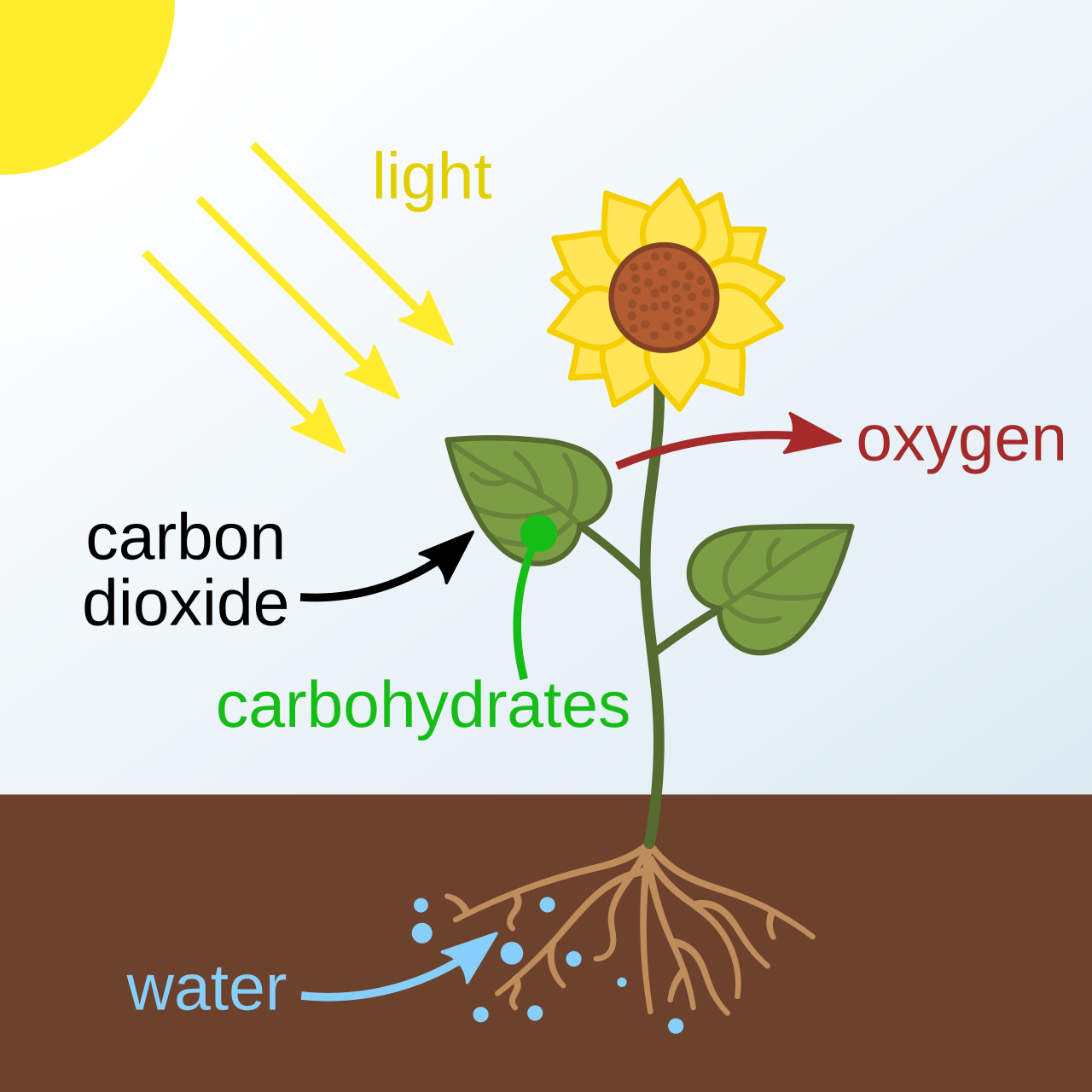
Photosynthesis is the process by which plants, algae and some bacteria use sunlight, water and carbon dioxide to make sugar and oxygen. It happens in two linked stages inside chloroplasts: light-dependent reactions that capture solar energy, and the Calvin cycle that uses that energy to build carbohydrates.
Photosynthesis is the biological process that converts light energy into chemical energy stored in sugar molecules. According to National Geographic Education, plants use sunlight, water and carbon dioxide to create oxygen and energy in the form of glucose, a process that sustains most life on Earth.
NASA's Earth Observatory describes the same transformation in chemical terms: plants absorb carbon dioxide and water and, using solar energy, convert them into carbohydrates while releasing oxygen as a byproduct. The overall reaction is commonly written as CO2 + H2O + light energy → CH2O (a carbohydrate) + O2.
Where it happens: the chloroplast
In plants, photosynthesis takes place inside chloroplasts, specialized structures found mainly in leaf cells. Chloroplasts contain an internal membrane system called the thylakoid, where light-capturing reactions occur, and a surrounding fluid called the stroma, where carbon is converted into sugar, as explained by National Geographic Education.
The role of chlorophyll
Chlorophyll is the green pigment inside chloroplasts that absorbs light energy to start the process. NASA's Earth Observatory notes that chlorophyll strongly absorbs the visible light in the solar spectrum for use in photosynthesis, while leaf cell structures reflect near-infrared light instead. Because chlorophyll absorbs red and blue wavelengths but reflects green light, leaves appear green, according to National Geographic Education.
Stage one: the light-dependent reactions
The first stage occurs in the thylakoid membranes and requires sunlight. Light energy excites electrons in chlorophyll, and this energy is used to split water molecules, releasing oxygen as a byproduct. The energy captured in this stage is stored temporarily in molecules of ATP and NADPH, which are then used in the next stage, as summarized by National Geographic Education.
Stage two: the Calvin cycle
The second stage, known as the Calvin cycle or light-independent reactions, takes place in the stroma and does not require light directly. Instead, it uses the ATP and NADPH produced in the first stage to convert carbon dioxide into glucose and other carbohydrates that the plant uses for growth and energy storage.
| Stage | Location | Requires light? | Main inputs | Main outputs |
|---|---|---|---|---|
| Light-dependent reactions | Thylakoid membrane | Yes | Sunlight, water | Oxygen, ATP, NADPH |
| Calvin cycle (light-independent) | Stroma | No (uses products of stage one) | Carbon dioxide, ATP, NADPH | Glucose/carbohydrates |
Why it matters beyond the plant
Photosynthesis is the foundation of most food chains on Earth: herbivores gain energy by eating plants, and carnivores gain it indirectly by eating herbivores, as noted by National Geographic Education. NASA's Earth Observatory adds that land plants and ocean phytoplankton together form the basis of what scientists call the fast, or biological, carbon cycle, drawing down atmospheric carbon dioxide as they grow.
NASA's Earth Observatory also states that plants currently absorb roughly 25 percent of excess carbon dioxide emitted by human activity, though this capacity is limited by water availability, nutrients and rising temperatures. Because photosynthesis removes carbon dioxide from the atmosphere on a seasonal basis, scientists can track the Northern Hemisphere's growing season through measurable dips in atmospheric CO2 each spring, according to the same source.
Remote sensing and real-world monitoring
The distinct way chlorophyll absorbs visible light while leaf structures reflect near-infrared light allows satellites such as NASA's MODIS instrument to estimate vegetation density and plant health from orbit, NASA's Earth Observatory explains. This remote-sensing application is a direct, practical use of the basic light-absorption principle that drives photosynthesis.
Questions
- What is photosynthesis in simple terms?
- It is the process by which plants, algae and some bacteria use sunlight, water and carbon dioxide to produce sugar (chemical energy) and oxygen, according to National Geographic Education.
- Where in the plant does photosynthesis occur?
- It happens inside chloroplasts, specifically in the thylakoid membrane for the light-dependent reactions and in the stroma for the Calvin cycle, per National Geographic Education.
- What is the chemical equation for photosynthesis?
- NASA's Earth Observatory writes it as CO2 + H2O + light energy → CH2O (carbohydrate) + O2, showing carbon dioxide and water converting into carbohydrate and oxygen.
- Why do leaves look green?
- Chlorophyll absorbs red and blue light for use in photosynthesis but reflects green light, which is why leaves appear green, according to National Geographic Education.
- How much atmospheric carbon dioxide do plants currently absorb?
- NASA's Earth Observatory states that plants currently absorb roughly 25 percent of the excess carbon dioxide emitted by human activity, a capacity limited by water, nutrients and temperature.
Sources
This piece was prepared with artificial intelligence and passed an automated source check before publication. If you see an error, ask for a correction. Request a correction or reply · How we make this
Related

ScienceArticle
How Vaccines Work: From Lab Development to Immune Protection
Vaccines work by showing the immune system a harmless piece of a pathogen — called an antigen — so the body builds antibodies and memory cells without suffering the actual disease. Getting a vaccine to that point takes years of preclinical testing and three phases of human trials before regulators such as the FDA license it. Full protection after vaccination typically takes a few weeks, as the immune system needs time to produce lasting defenses.

ScienceArticle
Warhound: Startup Raises $200M to Genetically Engineer Dogs for the US Military
Warhound, co-founded by Colossal Biosciences' Ben Lamm and Anduril's Palmer Luckey, raised $200 million on October 22, 2026 to genetically edit and clone dogs for the US military, aiming to remove inherited diseases from breeds such as the Belgian Malinois. Independent scientists call the genetic goals technically achievable, but bioethicists warn that cloning remains inefficient and raises unresolved animal-welfare and regulatory questions.

ScienceArticle
Why the World Is Abolishing the Leap Second, and What Changes in 2027
Leap seconds, the one-second adjustments used since 1972 to keep clocks aligned with Earth's rotation, will stop entirely. The world's timekeeping authority, the International Bureau of Weights and Measures (BIPM), confirmed on 15 October 2026 that continuous UTC takes effect on 20 May 2027. The move, first agreed in principle in 2022, was accelerated after experts flagged a growing risk of a disruptive "negative" leap second.

ScienceArticle
Leap Seconds Explained: How World Time Works and Why They're Being Scrapped
A leap second is a one-second correction added to Coordinated Universal Time (UTC) to keep it within 0.9 seconds of Earth's actual rotation. On 15 October 2026 the General Conference on Weights and Measures (CGPM) voted to stop inserting leap seconds from 20 May 2027, letting UTC drift from Earth's rotation by up to one hour instead of one second.