SpaceX Crew-13 Astronauts Launch to International Space Station
Published:
In brief
Four astronauts lifted off aboard a SpaceX Falcon 9 rocket on October 1, 2026, from Cape Canaveral, Florida, bound for a six-month stay on the International Space Station. The Dragon spacecraft docked at the station's Harmony module in under eight hours, which NASA and UPI describe as the fastest launch-to-docking time of any U.S. crewed spacecraft to the ISS.
NASA's SpaceX Crew-13 mission launched at 11:10 a.m. EDT on October 1, 2026, from Space Launch Complex 40 at Cape Canaveral Space Force Station in Florida, according to a NASA news release. The Falcon 9 rocket carried a SpaceX Dragon spacecraft with four crew members toward the International Space Station (ISS).
Who is on board
The crew consists of NASA astronauts Jessica Watkins, serving as commander, and Luke Delaney, serving as pilot. Canadian Space Agency astronaut Joshua Kutryk and Roscosmos cosmonaut Sergey Teteryatnikov are both flying as mission specialists, according to NASA and UPI. For Kutryk and Teteryatnikov, this is their first spaceflight.
Crew-13 crew members
Name
Agency
Role
Jessica Watkins
NASA
Commander
Luke Delaney
NASA
Pilot
Joshua Kutryk
Canadian Space Agency
Mission Specialist
Sergey Teteryatnikov
Roscosmos
Mission Specialist
A record-fast docking
The Dragon spacecraft docked autonomously at the forward port of the ISS's Harmony module at about 7:05 p.m. EDT, roughly 7 hours and 55 minutes after liftoff, UPI reported. NASA and UPI both described this as the fastest launch-to-docking time achieved by a U.S. spacecraft in the history of the space station. Hatches between the Dragon capsule and the ISS opened later that evening, allowing the Crew-13 astronauts to float into the station.
I cannot believe I'm here. What a crazy day. A long day. I just can't believe it. But it feels really good to have CSA back, the Canadian flag back.
— Joshua Kutryk, Canadian Space Agency astronaut, quoted by UPI
What happens to the outgoing crew
Crew-13 is joining the station's existing Expedition crew and will carry out a handover with the Crew-12 astronauts, who have been aboard the ISS for about seven months, according to UPI. Crew-12 consists of NASA astronauts Jessica Meir and Jack Hathaway, ESA astronaut Sophie Adenot and Roscosmos cosmonaut Andrey Fedyaev. Once the handover period is complete, the Crew-12 members are expected to return to Earth aboard their own Dragon capsule.
Research planned during the mission
NASA said Crew-13's roughly six-month stay will include experiments on stem cell-derived tissue production, crop growth systems and plant development, as well as studies of blood-flow abnormalities and ongoing astronaut health monitoring. UPI separately reported that planned research also touches on studies related to heart disease and Parkinson's disease treatment, alongside crop-production work and blood-flow monitoring.
NASA's commercial crew program relies on SpaceX Falcon 9 rockets and Dragon spacecraft to rotate crews to and from the ISS as part of its partnership with the agency.
Questions
Who are the SpaceX Crew-13 astronauts?
The crew is NASA astronauts Jessica Watkins (commander) and Luke Delaney (pilot), Canadian Space Agency astronaut Joshua Kutryk, and Roscosmos cosmonaut Sergey Teteryatnikov, both serving as mission specialists, according to NASA.
When did Crew-13 launch and when did it reach the ISS?
The mission launched at 11:10 a.m. EDT on October 1, 2026, from Cape Canaveral Space Force Station and docked with the ISS's Harmony module at about 7:05 p.m. EDT the same day, per NASA and UPI.
Why is this launch described as a record?
NASA and UPI both reported that the roughly 7-hour, 55-minute launch-to-docking time is the fastest achieved by any U.S. crewed spacecraft heading to the International Space Station.
What happens to the Crew-12 astronauts already on the ISS?
After a handover period with Crew-13, the Crew-12 members—Jessica Meir, Jack Hathaway, Sophie Adenot and Andrey Fedyaev—are expected to return to Earth, having spent about seven months aboard the station, according to UPI.
How long will Crew-13 stay on the space station?
NASA and UPI reported the Crew-13 mission is planned to last about six months, during which the crew will conduct research including stem cell, crop-growth and blood-flow studies.
This piece was prepared with artificial intelligence and passed an automated source check before publication. If you see an error, ask for a correction. Request a correction or reply · How we make this
Stars form when gravity collapses cold clouds of gas and dust until a core reaches about 10 million Kelvin, hot enough to ignite hydrogen fusion. From there, a star's mass determines everything else: how long it shines, how it dies, and whether it leaves behind a white dwarf, a neutron star, or a black hole.
Rockets move by expelling exhaust in one direction so the vehicle is pushed in the other, under Newton's third law of motion. Thrust depends on how much exhaust mass flows out per second and how fast it leaves the nozzle, while staying in orbit depends on balancing forward speed against the pull of gravity. Multistage designs and, for some missions, electric propulsion are used to manage the enormous amount of propellant spaceflight requires.
Astronaut training is a multi-year process that starts with a selection screening for education, experience and physical fitness, then moves into years of ground training before any flight. According to NASA and the European Space Agency (ESA), candidates learn spacecraft systems and practice spacewalks underwater, and ESA candidates also study Russian, while life aboard the International Space Station (ISS) runs on a fixed daily schedule of work, exercise and sleep.
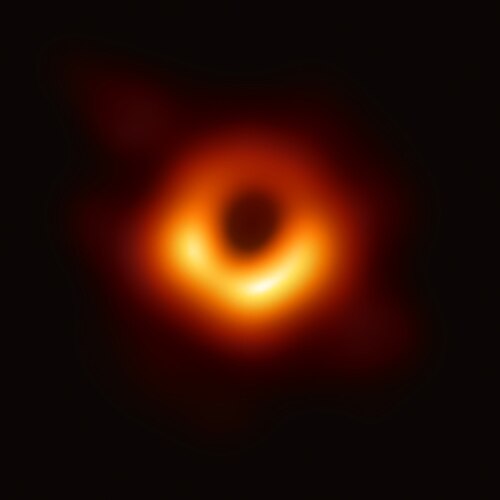
A black hole is a region of space where gravity is so strong that nothing, not even light, can escape once it crosses the event horizon. Most form when a massive star runs out of nuclear fuel and its core collapses; supermassive versions grow at galaxy centers over billions of years. Direct images and gravitational-wave detections have confirmed their existence and tested Einstein's general relativity.