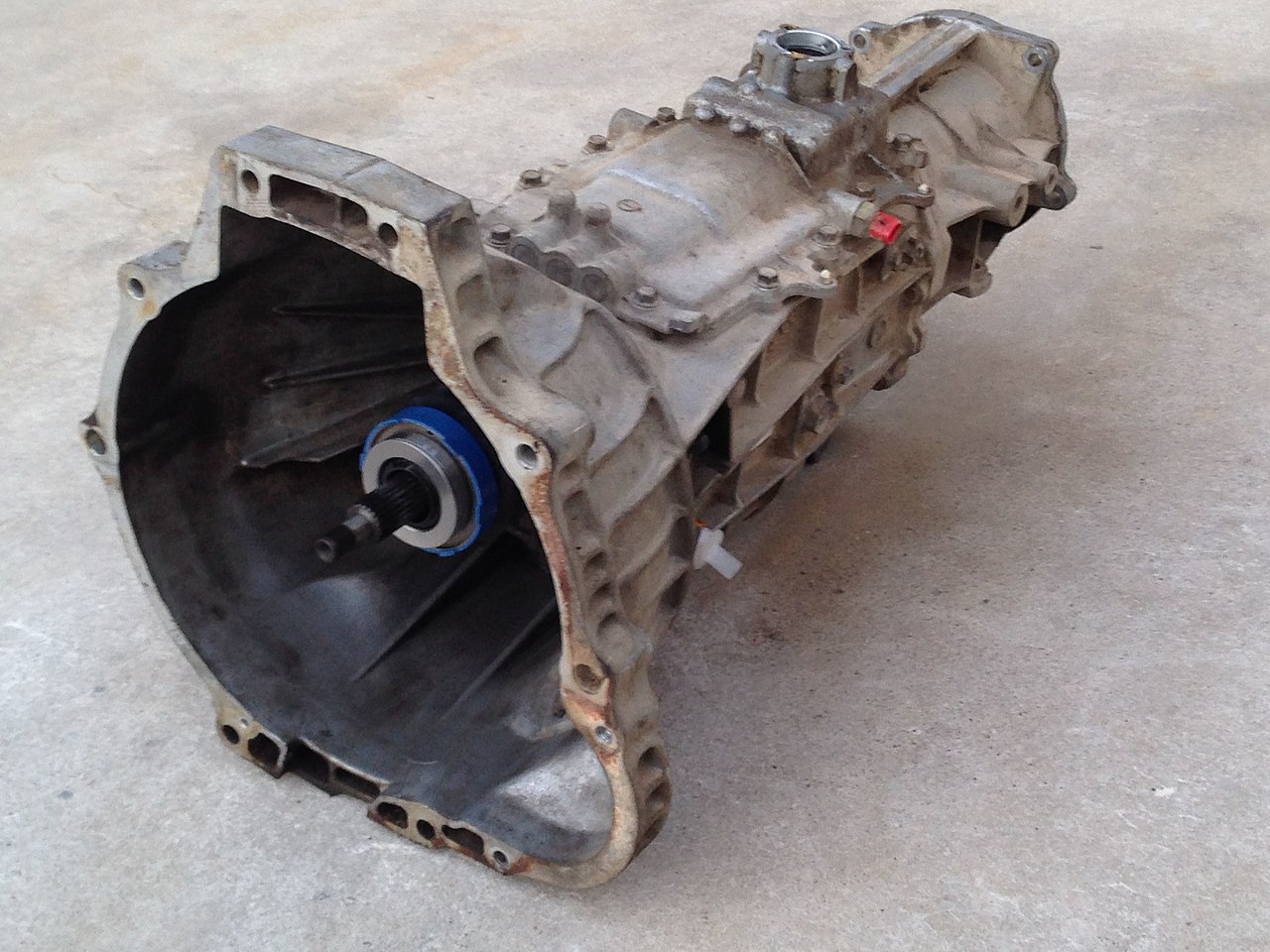
Choosing between a manual and an automatic transmission used to be a major decision for car buyers. Today the choice is largely made for them: automatics have taken over nearly the entire new-car market in the United States, while manuals survive mainly in sports cars and a handful of budget models.
How rare are manual transmissions now?
According to the US Environmental Protection Agency's 2024 Automotive Trends report, which covers model years 1975 through 2023, manual transmissions have accounted for less than 1% of new US vehicle sales every year since 2021. That compares with about 35% of new vehicles sold with a manual in 1980, based on the same EPA dataset, as reported by The Autopian. J.D. Power separately reported a 1.7% manual take rate for 2023, though The Autopian noted that figure came from partial-year data; JATO Dynamics' numbers aligned with the EPA's sub-1% figure for the same period.
The EPA figures also show that, as of model year 2024, US automakers offered only one five-speed manual, 27 six-speed manuals and two seven-speed manuals across the entire new-car lineup, per The Autopian's review of the report.
Manuals have not disappeared everywhere equally. Reporting by Motor1, based on figures supplied by automakers for 2025, shows manual take rates concentrated in sports and performance models: the Subaru BRZ reached 90% (up from 77.8% in 2024), the Lotus Emira 88%, the Porsche 911 83%, and the Mazda MX-5 Miata roughly 70%. Mainstream models tell a different story — the Honda Civic Si/Type R manual take rate was 6% in 2025, down from 7.2% in 2024, and the Toyota Tacoma's was about 1%.
What each transmission offers
The UK motoring organisation RAC summarises the trade-offs for everyday drivers. Automatics are easier to drive in congested traffic because there is no clutch pedal to manage and both hands stay on the wheel, which reduces driver fatigue. The downside, per RAC, is that automatics generally cost more to buy new or used and tend to be costlier to insure, reflecting the complexity of the hardware.
Manuals, RAC notes, give drivers more direct control over the vehicle — useful in winter conditions where choosing a lower gear can aid traction — and have historically been cheaper to maintain because of their simpler mechanical design. The trade-offs are clutch-related leg fatigue in stop-start traffic, a risk of stalling that automatics don't have, and the need to take a hand off the wheel to shift.
On fuel economy, RAC states that modern automatic technology has closed or reversed the old gap: today's automatics can match or exceed manual fuel efficiency, contrary to the outdated assumption that manuals always use less fuel.
Licensing and legal factors
In the United Kingdom, taking a driving test in an automatic car restricts the licence to automatic vehicles only, according to RAC. Passing the test in a manual car allows a driver to legally operate both manual and automatic vehicles, which gives manual-licence holders more flexibility when choosing or renting a car.
Key differences at a glance
Manual vs automatic: what the sources report| Factor | Manual | Automatic |
|---|
| New-car market share (US) | Under 1% since 2021 (EPA, via The Autopian) | Over 99% (EPA) |
|---|
| Typical maintenance | Simpler design, traditionally cheaper upkeep (RAC) | More complex hardware, generally costlier (RAC) |
|---|
| Purchase/insurance cost | Generally cheaper to buy and insure (RAC) | Generally pricier to buy and insure (RAC) |
|---|
| Driving in heavy traffic | Clutch use causes fatigue (RAC) | Easier, hands stay on wheel (RAC) |
|---|
| Fuel economy | Historically more efficient; gap now narrowed or reversed (RAC) | Modern automatics can match or beat manuals (RAC) |
|---|
| UK licence flexibility | Can drive manual and automatic (RAC) | Automatic-only test restricts to automatics (RAC) |
|---|
| Where it's still common (2025 US take rate) | Sports cars: Subaru BRZ 90%, Lotus Emira 88%, Porsche 911 83% (Motor1) | Mainstream cars: Honda Civic Si/Type R 6%, Toyota Tacoma ~1% (Motor1) |
|---|
How to decide
- Check what is actually available: in the US, only a small number of mostly sports and performance models still offer a manual option, per Motor1's 2025 automaker survey.
- Think about your daily driving conditions — RAC notes automatics reduce fatigue in heavy traffic, while manuals offer more control in winter or on technical roads.
- Factor in upfront and insurance costs — RAC reports automatics tend to cost more to buy and insure than manual equivalents.
- Consider licence rules where relevant — in the UK, learning in a manual preserves the right to drive automatics later, per RAC, while an automatic-only test does not.
- Don't assume a manual is automatically more fuel-efficient — RAC says modern automatics have closed or reversed that historical gap.
For most buyers today, the decision is less about weighing two equally common options and more about whether a manual is even offered on the model they want. EPA data cited by The Autopian shows that outside a narrow band of sports and enthusiast vehicles tracked by Motor1, automatics are now effectively the default.
This piece was prepared with artificial intelligence and passed an automated source check before publication. If you see an error, ask for a correction. Request a correction or reply · How we make this