Ancient Greece: How Its Philosophy and Ideas Still Shape Western Thought
Published:
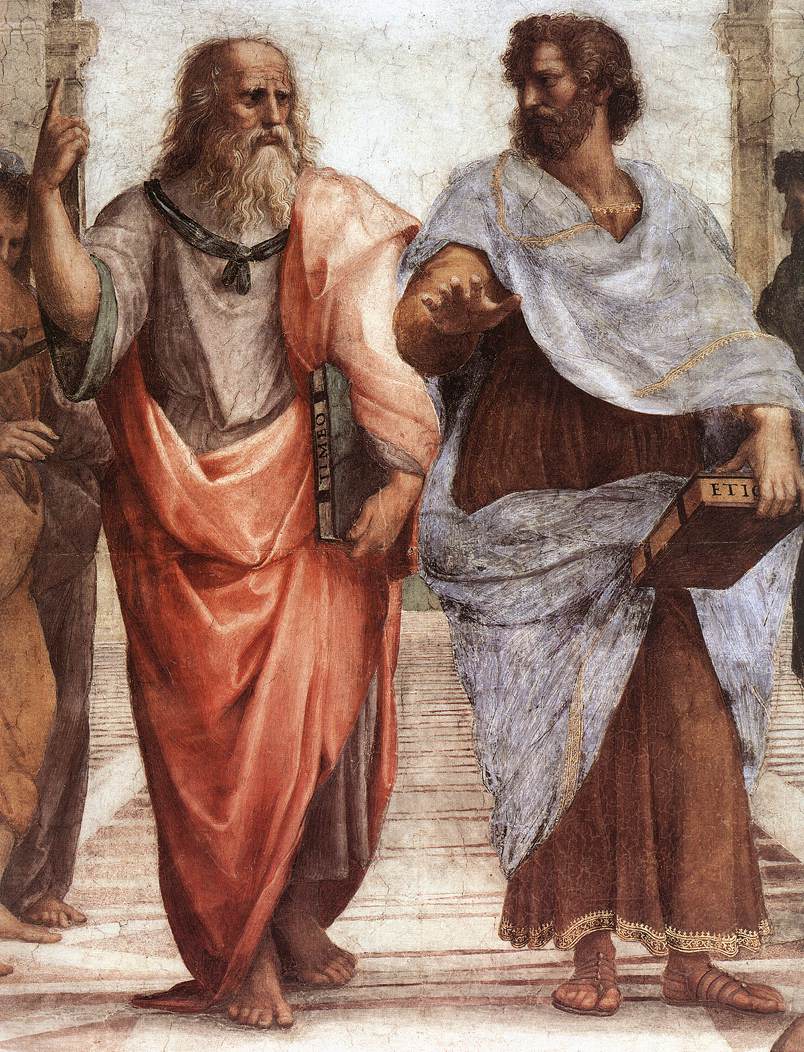
Image credit: Raphael · Public domain · Wikimedia Commons
In brief
Ancient Greek thinkers from the 6th century BCE onward replaced mythological explanations with rational inquiry, laying the groundwork for Western philosophy, political theory, and science. Figures such as Thales, Socrates, Plato and Aristotle introduced methods and concepts — from the Socratic method to the theory of forms to empirical observation — that later shaped Roman, medieval and modern thought.
Ancient Greece refers to the Greek-speaking world from roughly the 8th century BCE to the Roman conquest, a period that produced philosophical, political and artistic ideas still referenced today. According to the World History Encyclopedia, the shift began in the 6th century BCE when thinkers started seeking natural rather than religious explanations for the world.
From Myth to Reason: The Birth of Philosophy
The World History Encyclopedia dates the start of Greek philosophy to Thales of Miletus, around 585 BCE, who proposed that water was the fundamental substance underlying existence — an early attempt at a rational, rather than mythological, explanation of reality. Later Pre-Socratic thinkers offered their own candidates: Pythagoras (c. 571–497 BCE) pointed to number, Heraclitus (c. 500 BCE) to constant change, and Democritus (c. 460–370 BCE) to indivisible atoms, the source states.
Socrates (c. 469–399 BCE) redirected philosophy from questions about the physical world toward ethics and self-examination. The World History Encyclopedia notes his emphasis on self-knowledge and virtue, summarized in his well-known principle that an unexamined life has no value, and describes his method of posing probing questions — still taught in law schools today as the Socratic method, according to National Geographic Education.
An unexamined life is not worth living.
— Socrates, as cited by World History Encyclopedia
Plato, Aristotle and the Invention of Political Philosophy
Plato (c. 424/423–348/347 BCE), a student of Socrates, developed the Theory of Forms, arguing that an eternal realm of ideal truths lies beyond the observable world, the World History Encyclopedia explains. In the Republic, according to the Stanford Encyclopedia of Philosophy, Plato linked ethics, psychology and politics through a tripartite theory of the soul and argued that justice means each part of the soul, and each class in the city, performs its own proper function. His vision of an ideal state, known as the kallipolis, included philosopher-rulers and radical measures such as communal property for the guardian class — proposals his own successors largely rejected, the Stanford entry notes.
Aristotle (384–322 BCE), who studied under Plato before tutoring Alexander the Great, took a more empirical approach. The World History Encyclopedia says he favored direct observation over Plato's abstract Forms. In politics, the Stanford Encyclopedia of Philosophy notes Aristotle held that human beings are by nature political beings and defined citizenship as sharing in both governing and being governed — though the same source states he also defended natural slavery and excluded women from political life, positions tied to the social norms of his era.
The Stanford Encyclopedia of Philosophy adds that Aristotle's Politics was translated into Latin and became widely available to medieval European scholars around 1260, reshaping later Western political philosophy, including debates over citizenship and constitutional government that continue in modified form today.
Beyond Philosophy: Legacy in Government, Science and Culture
Philosophy was only one strand of ancient Greek influence. National Geographic Education credits the Athenian statesman Pericles with funding the Parthenon and presiding over a cultural 'golden age,' while crediting Pythagoras with the theorem used today to calculate right triangles. The same source notes Aristotle is considered a founder of zoology for his classification of animals, and credits Hippocrates with shifting medicine toward diet, exercise and documented case histories — an approach still echoed in the modern Hippocratic Oath.
The World History Encyclopedia notes that Aristotle's role as tutor to Alexander the Great helped spread Greek philosophical ideas across the Near East after Alexander's conquests, and that later philosophers such as Plotinus blended Greek thought with mystical traditions that influenced early Christian and Islamic theology.
Key Figures at a Glance
Major ancient Greek philosophers and their core contribution
Figure
Approximate dates
Core contribution
Thales of Miletus
c. 585 BCE (active)
Proposed water as the first cause of existence; early rational inquiry
Pythagoras
c. 571–497 BCE
Argued number underlies reality; the Pythagorean theorem
Socrates
c. 469–399 BCE
Shifted philosophy toward ethics; the Socratic method
Plato
c. 424/423–348/347 BCE
Theory of Forms; founded political philosophy as a genre in the Republic
Aristotle
384–322 BCE
Empirical method; foundational work in politics, ethics and zoology
Rational, non-mythological inquiry into nature, credited to Thales and the Pre-Socratics (World History Encyclopedia).
The Socratic method of questioning, still used in legal and academic teaching (National Geographic Education).
Political philosophy as a field, originating with Plato's Republic and developed further by Aristotle (Stanford Encyclopedia of Philosophy).
Early classification systems in zoology and medicine, linked to Aristotle and Hippocrates (National Geographic Education).
Sources describe slightly different birth and death years for some philosophers, reflecting the uncertainty of ancient chronology; the World History Encyclopedia and Stanford Encyclopedia of Philosophy both give Plato's dates as c. 424/423–348/347 BCE, while National Geographic Education rounds this to 427–347 BCE.
Questions
Why is ancient Greek philosophy considered the foundation of Western thought?
According to the World History Encyclopedia, Greek thinkers from the 6th century BCE onward were the first in the Western tradition to seek natural, rational explanations for the world instead of mythological ones, a shift that underlies later Western philosophy, science and law.
Who are the most influential ancient Greek philosophers?
Sources commonly cite Thales, Pythagoras, Socrates, Plato and Aristotle as foundational figures, each associated with a distinct contribution: rational inquiry, mathematics, ethics, the Theory of Forms, and empirical political science, respectively (World History Encyclopedia; Stanford Encyclopedia of Philosophy).
What is the Socratic method?
It is a method of teaching through a series of probing questions rather than direct instruction, developed by Socrates and still used in fields such as law education today, according to National Geographic Education.
Did Aristotle support democracy?
The Stanford Encyclopedia of Philosophy states Aristotle saw citizenship as sharing in governing and being governed, but his views on ideal government were more nuanced than modern democracy, and he held positions — including defending natural slavery and excluding women from political life — that reflect the norms of his time rather than modern democratic principles.
How did Greek philosophy spread beyond Greece?
The World History Encyclopedia notes that Aristotle's tutoring of Alexander the Great helped carry Greek philosophical ideas across the territories Alexander conquered, and later philosophers helped transmit Greek thought into Roman, Christian and Islamic intellectual traditions.
This piece was prepared with artificial intelligence and passed an automated source check before publication. If you see an error, ask for a correction. Request a correction or reply · How we make this
Long before European colonization, the African continent was home to powerful states that built pyramids, ran trans-Saharan gold-and-salt economies, and raised cities of carved stone. This list ranks seven ancient African kingdoms by the scale of their political, economic or architectural reach, based on dates and figures from historians, UNESCO and museum records.
The internet began as a U.S. defense research network called ARPANET in 1969 and became the World Wide Web two decades later through a 1989 proposal at CERN. Today roughly 6 billion people — about three-quarters of the world's population — use the internet, according to the UN's International Telecommunication Union (ITU).
Archaeologists use two broad approaches: relative dating, which orders finds by layer or style without giving a year, and absolute (scientific) dating, which uses physical or chemical changes — such as carbon-14 decay, tree-ring patterns or potassium-argon decay — to estimate a calendar-based age range. Most sites are dated by combining several of these methods rather than relying on one alone.
Ancient Rome ran its affairs through elected magistrates, a senate of former officials and popular assemblies for roughly five centuries before power concentrated in a single emperor from 27 BCE. Its rigid social hierarchy, its legal code and its Latin tongue went on to shape European and wider Western institutions long after the empire itself fell.