News & Articles
History
What the world is talking about, with sources. Every piece is prepared with artificial intelligence, and every claim links to where it came from.

Expedition reaches Nikumaroro to search for Amelia Earhart's lost plane
A 16-to-17-member expedition led by the Archaeological Legacy Institute and Purdue University is approaching the remote Pacific atoll of Nikumaroro to inspect a sonar/satellite anomaly called the "Taraia Object," which researchers say could be wreckage of Amelia Earhart's Lockheed Electra 10-E. The team departed Tarawa, Kiribati on October 7, 2026 and expected to reach the atoll around midday on October 12 local time, after which it plans about five days of diving, dredging and remote-sensing work.

The Renaissance: How Art and Science Reshaped Europe, 14th–17th Centuries
The Renaissance was a cultural and intellectual movement that began in 14th-century Florence and spread across Europe by the 17th century, reviving classical learning and reshaping art, science, and education. It bridged the medieval and modern worlds through humanism, new artistic techniques such as linear perspective, and scientific breakthroughs including the heliocentric model of the solar system.

The Crusades Explained: Medieval Religious Wars, Causes and Lasting Impact
The Crusades were a series of religious wars fought mostly between 1095 and 1291, in which Western European Christians tried to capture or defend Jerusalem and other sites from Muslim rule. They began after the Byzantine emperor asked for Western military help and Pope Urban II turned that appeal into a holy war. Their political, economic and religious effects still shape relations between the Christian and Muslim worlds today.

The Industrial Revolution: Innovations, Social Change and Global Reach
The Industrial Revolution was the shift from hand production and farming to machine-based manufacturing, beginning in Britain around the 1760s and spreading worldwide over the next century. It was driven by innovations such as the steam engine and new textile machinery, and it reshaped where people lived, how they worked, and how goods were made and traded.

Ancient Egypt Explained: Pharaohs, Pyramids and a 3,000-Year Civilization
Ancient Egypt was a civilization along the Nile that lasted roughly thirty centuries, from unification around 3100 BCE to the conquest by Alexander the Great in 332 BCE. Its rulers, the pharaohs, were regarded as god-kings, and the Great Pyramid of Giza, the civilization's best-known monument, was built for King Khufu around 2560 BCE.

The Cold War Explained: Origins, Key Events and Its Legacy in Today's Geopolitics
The Cold War was a decades-long rivalry between the United States and the Soviet Union that began after World War II and ended with the Soviet collapse in December 1991. It never became a direct military war between the two superpowers but shaped alliances, nuclear policy and regional conflicts whose effects, from NATO's structure to U.S.-Russia tensions, are still visible today.
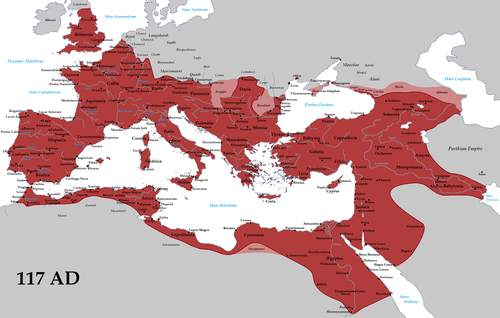
The Roman Empire: How Rome Rose, Peaked Under Trajan, and Fell in 476 CE
The Roman Empire began in 27 BCE when Augustus became its first emperor, reached its largest territorial extent under Trajan in 117 CE, and ended in the west in 476 CE when Odoacer deposed the last emperor, Romulus Augustulus. Historians point to a mix of military, economic, political, and external pressures over roughly two centuries as the causes of its decline.
The Renaissance Explained: How Art, Science and Printing Remade Europe
The Renaissance was a cultural movement, running roughly from the 14th to the 17th century, that began in Florence and revived interest in Greek and Roman antiquity. It reshaped European art, science and scholarship through innovations such as linear perspective, Copernicus's 1543 heliocentric theory, and the printing press, developments historians link to the shift from medieval to modern thought.
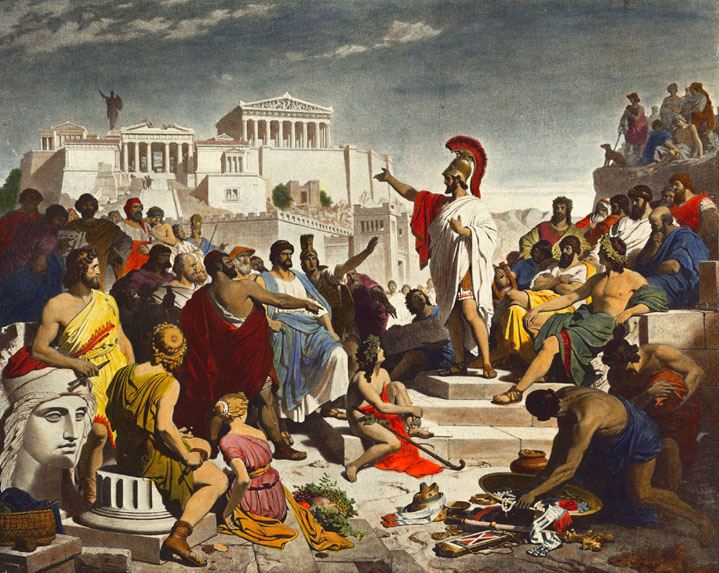
The History of Democracy: From Ancient Athens to Modern Governance
Democracy as a system of rule by citizens dates back to Athens around 508–507 BC, when the reformer Cleisthenes restructured the city-state's constitution. From there it spread unevenly through Roman representative institutions, medieval limits on royal power, Enlightenment theory, and later expansions of political rights to today's mix of electoral and liberal democracies worldwide.

The Byzantine Empire: History, Culture, and the 1453 Fall of Constantinople
The Byzantine Empire was the Greek-speaking, Christian continuation of the Roman Empire, ruled from Constantinople from 330 to 1453. It reached its territorial height under Justinian I in the 6th century and ended on 29 May 1453, when Ottoman forces led by Sultan Mehmed II captured the city and killed the last emperor, Constantine XI Palaiologos.

Vajont Dam Disaster: 63 Years On, New Research Reexamines How the 1963 Landslide Killed Thousands
On October 9, 1963, a landslide of roughly 270 million cubic metres plunged into the Vajont reservoir in northeastern Italy, pushing a wave over the dam that killed 1,917 people, 400 of whom were never found. The 63rd anniversary this year brought new scientific findings on how the slope failed and a renewed local dispute over a planned power plant near the site.

From Machine Code to ChatGPT: How Programming Changed in Eight Decades
Software programming began with engineers setting raw binary instructions by hand, then moved through languages built for people — Fortran, C, Python — before today's AI systems, built on the 2017 Transformer architecture, started generating code and text themselves. This piece traces that shift through dated milestones confirmed by IBM, the IEEE Computer Society, Dartmouth College and the original Transformer research paper.

How Sneakers Evolved From Sportswear Into a Global Fashion Industry
Sneakers began as specialized rubber-soled shoes for sports like croquet, tennis and basketball in the 19th and early 20th centuries. Their shift into mainstream fashion accelerated through 1950s skateboarding culture, 1980s celebrity and hip-hop endorsements, and 2000s-2010s luxury-brand collaborations, turning athletic footwear into a multibillion-dollar style category.

How Archaeologists Determine the Age of Artifacts and Historical Sites
Archaeologists date artifacts and sites by combining relative methods, such as stratigraphy, with absolute methods that produce calendar-year estimates, including radiocarbon dating, dendrochronology and luminescence dating. Each technique measures a different physical process, so researchers often use several together and cross-check the results.

Medieval Feudalism Explained: How Lords, Knights and Castles Shaped Europe
Feudalism was a web of land-for-service bonds that structured much of medieval Europe from roughly the 9th to the 15th century: a king granted land, called a fief, to lords and knights who swore military service and loyalty in return, while peasants worked that land under the lord's protection. Castles anchored the system, serving as seats of lordly power and strongholds in war. Many historians today debate whether "feudalism" ever existed as a single, coherent system.

Ottoman Empire explained: how it rose, reached its golden age, and fell
The Ottoman Empire grew from a small Anatolian principality founded around 1299 by Osman I into a state spanning three continents, reaching its height under Suleiman the Magnificent (1520–1566). It declined over the 17th–19th centuries and was formally dissolved in the early 1920s, after World War I, through the abolition of the sultanate and the 1923 Treaty of Lausanne.
How Ancient Rome Still Shapes Law, Language and Engineering Today
The Roman Empire did not disappear in 476 CE — its legal codes, Latin vocabulary, road-building methods and architectural forms kept shaping Europe and, later, the rest of the world. Modern civil-law systems, Romance languages, government structures and even new "self-healing" concrete trace directly back to Roman originals.
The Renaissance: How Europe's 14th-17th Century Rebirth Reshaped Art and Thought
The Renaissance was a European cultural movement, generally dated from the 14th to the 17th century, that revived interest in classical Greek and Roman learning and reshaped art, science, and philosophy. It began in Florence, Italy, under patrons such as the Medici family and later spread to France and northern Europe.

How Seismic Records, Not Sonar, Helped Find France's Lost Submarine Minerve
The French submarine Minerve vanished off Toulon on 27 January 1968 with 52 crew aboard and was not located until 21 July 2019 — more than 51 years later. The breakthrough came not from sonar sweeps or divers but from re-analysed seismic recordings made the day the vessel was lost.

Why India skipped the 1950 FIFA World Cup despite qualifying for it
India qualified for the 1950 FIFA World Cup in Brazil by default after Burma and the Philippines withdrew from its qualifying group, but the All India Football Federation pulled the team out before the tournament. The federation said the decision reflected a disagreement over team selection and insufficient practice time, while money problems and a preference for the Olympics also played a role. The popular story that FIFA banned barefoot play is not supported by the record.

Saint Francis of Assisi: 800th anniversary of his death marked in Assisi and Italy
October 4, 2026 marks the feast day of Saint Francis of Assisi and the 800th anniversary of his death in 1226. The Vatican, Italy and Franciscan communities are marking the occasion with a public display of his relics, commemorative events in Assisi, and joint postage stamps, reflecting his continuing influence on themes of peace, poverty and care for the environment.
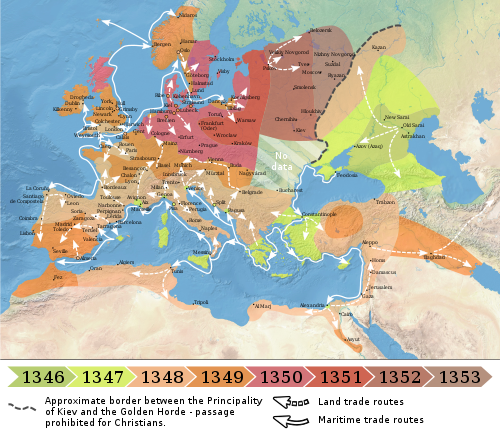
The Black Death: How a 14th-Century Plague Reshaped World Civilization
The Black Death was a pandemic caused by the bacterium Yersinia pestis that killed tens of millions of people across Europe, the Middle East and North Africa between 1347 and 1352. Historians say it killed roughly 30–50% of Europe's population, reshaping labor markets, weakening feudalism, and shifting religious and social structures for generations.
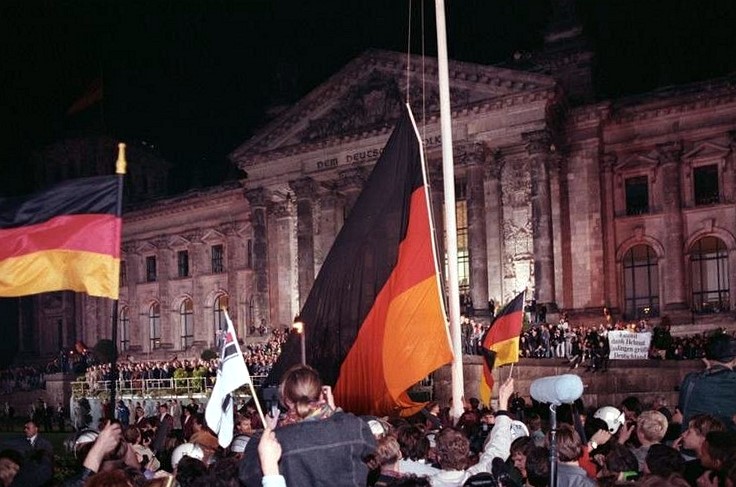
German Unity Day: What October 3 Commemorates and Why It Still Matters
German Unity Day, marked every October 3, commemorates the moment in 1990 when East Germany formally joined West Germany, ending more than four decades of Cold War division. It is Germany's only nationwide public holiday and is marked by a rotating "Bürgerfest" hosted by whichever state currently holds the presidency of the Bundesrat, Germany's upper legislative chamber.

Mehmed the Conqueror and the Ottoman Empire: how one sultan reshaped three continents
Mehmed II, who became Ottoman sultan at age 12 and took sole power at 19, captured Constantinople in 1453 and ended the roughly 1,000-year-old Byzantine Empire. His conquest and the administrative system he built helped the Ottoman Empire grow into one of history's largest states, lasting from 1299 until its formal abolition in 1922-1924.

Gandhi's First Political Fight: The 1894 Struggle for Indian Voting Rights
Mohandas Gandhi's first major political campaign was not in India but in the British colony of Natal, South Africa, where in 1894 he helped organize petitions against a bill that stripped Indians of the vote. The fight led to the founding of the Natal Indian Congress and fed into a much longer debate that only ended with India's 1949 constitutional guarantee of universal adult suffrage.