How a record 2026 drought is pushing French companies like Vosges Transports toward bankruptcy
Published:
In brief
A months-long drought across eastern France has dried up canals and rivers, stranding barges and water-dependent businesses. Vosges Transports, a river-freight company in the Vosges, says it is "on the brink of bankruptcy" after its only barge was grounded for over three months. Authorities estimate the broader heatwave-drought damage to the French economy at €10–15 billion.
In the Vosges department of eastern France, a small river-freight company says drought has brought it to the edge of collapse. Vosges Transports, which moves earth, sand and gravel by barge on the Canal des Vosges, told Vosges Matin it is "on the brink of bankruptcy" after its vessel, the Feldspath, was grounded on rocks near Chavelot since late June 2026, according to the newspaper and a summary republished by Cedar News.
The barge could not navigate for more than three months because the canal, which is fed by the Moselle river, had almost dried up. Voies navigables de France (VNF), the state waterway authority, closed the nearby Épinal port to leisure boats on 5 August 2026 to conserve the little water that remained, according to Vosges Info.
Why the Vosges is officially in drought "crisis"
The Vosges department has been under the French government's highest drought alert level, called "crise," since 17 July 2026. On 4 September, prefect Blaise Goutray extended the maximum restrictions through 30 September, with officials saying the situation would be reassessed at the end of the month, France 3 Grand Est reported.
Officials said rivers and groundwater had not regenerated after a succession of summer heatwaves. Around twenty municipalities face drinking-water tension, four are supplied by tanker truck, and nearly eighty more are at risk, the prefecture said, as reported by France 3 Grand Est.
In the neighbouring department of Meurthe-et-Moselle, prefect Yves Séguy also kept three river basins — including the Moselle aval, Orne, Nied, Seille and Meuse aval zones — at crisis level as of 30 September, citing an accumulation of rainfall deficits since March 2026 that has hit aquifers, irrigation, livestock watering and industrial users, and has caused fish deaths, according to Magnum La Radio.
Magnum La Radio listed the restrictions in force in Meurthe-et-Moselle as of 30 September as follows:
Washing vehicles at home or commercially
Watering lawns and gardens (vegetable plots exempted)
Filling private or public swimming pools
Pressure-washing outdoor surfaces
Watering golf courses except greens
Daytime sprinkler irrigation of crops, limited to 8pm–8am
Breaching the restrictions in the Vosges can bring fines of up to €3,000, France 3 Grand Est reported.
The wider economic cost
The Vosges Transports case is a local illustration of a nationwide pattern. France's Treasury told a National Assembly hearing that the 2026 heatwaves and drought would cut roughly 0.1 percentage point off GDP growth, mainly through lost agricultural output, according to France 24, which reported the comments on 2 September 2026. Overall farm production was expected to fall about 8%, and corn output specifically by 35% this year, the Treasury said.
Ecological Transition Minister Monique Barbut said in mid-August that the direct and indirect impact of the summer heatwaves could cost the country €10–15 billion, after earlier, on 27 July, putting a lower-bound estimate above €5.6 billion based on comparisons with the 2022 drought, according to France 24 and Caliber.az. Caliber.az also reported that INSEE, the national statistics institute, later said it had not produced the €10–15 billion figure and could not assess the cost itself.
Barbut said more than 40,000 people had experienced drinking-water supply disruptions and over 550,000 faced strain on electricity supply linked to the heat, with nearly 3 million people under heightened alert, Caliber.az reported.
Key 2026 drought figures in France
Figure
Value
Source
Vosges drought crisis start
17 July 2026
France 3 Grand Est
Feldspath barge grounded since
Late June 2026 (3+ months)
Vosges Matin via Cedar News
Vosges municipalities with water tension
~20, of which 4 by tanker truck
France 3 Grand Est
National GDP growth impact
-0.1 percentage point in 2026
France 24 (Treasury hearing)
Corn output change
-35% in 2026
France 24 (Treasury)
Estimated total economic cost
€10–15 billion
Minister Monique Barbut, via France 24 and Caliber.az
People affected by water-supply disruption
40,000+
Minister Barbut, via Caliber.az
What is still unclear
Vosges Matin's report did not disclose Vosges Transports' revenue, debts or employee numbers, and the company has not announced a formal insolvency filing. INSEE's public denial that it issued the €10–15 billion figure means the full national cost of the 2026 drought remains disputed between the ministry and the statistics agency, as reported by Caliber.az.
Nous sommes au bord de la faillite.
— Vosges Transports, quoted by Vosges Matin
Questions
Why is Vosges Transports close to bankruptcy?
Its barge, the Feldspath, has been stuck on rocks in the Canal des Vosges near Chavelot since late June 2026 because drought left the canal almost dry, halting the company's river-freight operations, according to Vosges Matin.
When did the drought crisis in the Vosges start and how long will it last?
The department was placed at the highest "crisis" alert level on 17 July 2026. On 4 September, the prefect extended the maximum water restrictions through 30 September 2026, with officials saying the situation would be reassessed at the end of the month, according to France 3 Grand Est. In neighbouring Meurthe-et-Moselle, a comparable crisis-level status remained in force as of 30 September 2026, according to Magnum La Radio.
How much is the 2026 drought expected to cost the French economy?
France's Treasury says it will cut GDP growth by about 0.1 percentage point, while Ecological Transition Minister Monique Barbut has estimated direct and indirect costs at €10–15 billion, though INSEE says it did not produce that specific figure, according to France 24 and Caliber.az.
What water-use restrictions apply in crisis zones?
In Vosges and Meurthe-et-Moselle, crisis-level rules ban filling pools, washing vehicles, most lawn watering, and daytime crop irrigation, with fines up to €3,000 for violations in the Vosges, according to France 3 Grand Est and Magnum La Radio.
Is Vosges Transports the only business affected?
No. VNF closed the Épinal canal port to leisure boats in August 2026 to save water, and the Treasury hearing cited an 8% drop in overall farm output and a 35% fall in corn production nationwide in 2026, according to Vosges Info and France 24.
How the world is telling it
FrenchFrench regional outlets (Vosges Matin, France 3 Grand Est, Magnum La Radio) frame the story primarily as a local administrative and economic crisis, detailing prefectural restriction orders commune by commune and quoting the affected business directly, with less focus on national GDP figures.
This piece was prepared with artificial intelligence and passed an automated source check before publication. If you see an error, ask for a correction. Request a correction or reply · How we make this
Modern weather forecasts are produced by feeding billions of daily observations into supercomputers that solve physics equations on a global grid, a process called numerical weather prediction. Forecasters then run the model many times with slightly varied starting conditions — an "ensemble" — to gauge how confident a prediction is. Because the atmosphere is chaotic, forecasts lose reliability after roughly 9 to 15 days, according to researchers and national weather agencies.
Brazil's Amazonas state recorded 1,380 forest fire hotspots between October 1 and 10, 2026, a 271% rise from the 372 hotspots counted in the same period of 2025. Governor Roberto Cidade declared a state emergency, and the federal government recognized emergency status in 36 municipalities on October 10, releasing aircraft, firefighters and funds to fight the blazes.
A historically strong El Niño is the dominant signal behind winter 2026-2027, with NOAA's Climate Prediction Center giving it up to an 83% chance of record strength. Forecasters in the US and Europe expect a milder, wetter and stormier season overall, though short cold spells remain possible. Below is what agencies say so far, plus official steps for winterizing a home and car.
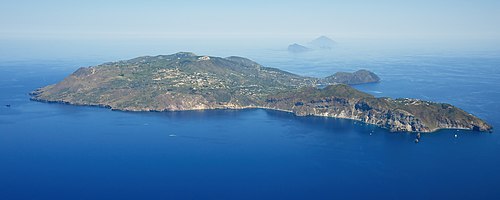
Overnight storms into October 10, 2026 triggered flooding, overflowing streams and landslides across southern Italy, with the worst damage reported on the Sicilian island of Lipari and in Calabria's Reggio area. Italy's Civil Protection Department had issued an orange weather alert for Sicily and parts of Calabria, Puglia and Campania, as mud and debris swept into homes, streets and the sea.