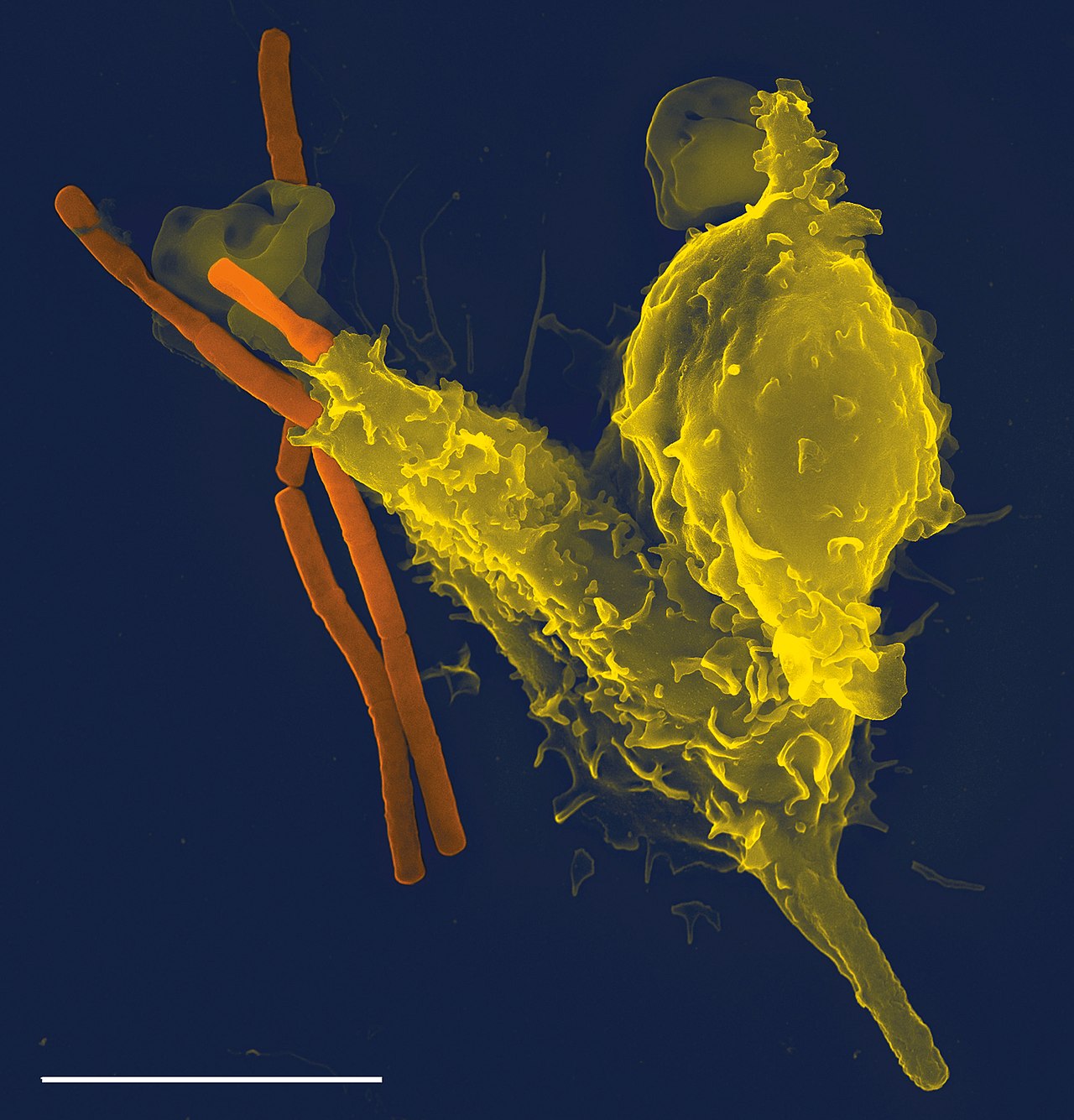
The immune system defends the body through two coordinated systems: innate immunity, which reacts within hours using barriers and general-purpose cells, and adaptive immunity, which takes days to build pathogen-specific antibodies and T-cells but leaves lasting memory. Together they explain why some illnesses feel sudden and brief while immunity to others builds over a first exposure.
Every day, the human body is exposed to bacteria, viruses, fungi and parasites. According to the U.S. National Institute of General Medical Sciences (NIGMS), part of the National Institutes of Health, the immune system works like a trained network of cells, tissues and organs that cooperate to block, detect and eliminate these threats.
Two Systems, Two Speeds
NIGMS divides the immune response into two main branches. Innate immunity is the first line of defense: it acts immediately or within hours and responds the same way to almost any microbe, without needing to recognize the specific invader. Its tools include physical barriers such as skin and mucous membranes, chemical defenses such as stomach acid and enzymes like lysozyme, and cells called phagocytes that engulf pathogens, along with complement proteins that help mark microbes for destruction.
Adaptive immunity is slower but far more precise. NIGMS notes it can take several days to mount an effective response because it targets a specific pathogen through antigen recognition, relying on B-cells and T-cells that are trained to that particular threat.
The Cells Doing the Work
The Cleveland Clinic identifies five main types of white blood cells, or leukocytes, each with a distinct role. Neutrophils, the most abundant type, kill bacteria, fungi and foreign debris and are usually first to respond. Lymphocytes — a category that includes T-cells, natural killer cells and B-cells — combat viral infections, with B-cells manufacturing antibodies. Eosinophils target parasites and cancer cells and assist with allergic responses; basophils help trigger allergic reactions such as coughing and sneezing; and monocytes clean up damaged cells.
The Cleveland Clinic states that the body produces roughly 100 billion white blood cells every day, with a normal circulating count of 4,000 to 11,000 cells per microliter of blood — making up only about 1% of total blood volume, far outnumbered by red blood cells.
An antigen is a substance, such as a protein found on a pathogen, that causes the immune system to start producing antibodies, according to the CDC. B-cells produce these antibodies, proteins that attach to the invader, according to the Cleveland Clinic. This tagging makes the pathogen easier for other white blood cells, including neutrophils and monocytes, to identify and destroy by engulfing it.
Immune Memory and Why It Matters for Vaccines
After an infection is cleared, most of the expanded white blood cell population declines, but some cells remain as long-term sentries, according to the U.S. Centers for Disease Control and Prevention (CDC). This retained population is what the CDC calls immunity — the body's acquired ability to resist a disease it has already encountered.
Vaccines use this same mechanism without causing the disease itself. The CDC describes vaccines as working by imitating an infection to engage the body's natural defenses, prompting the immune system to build the same antibodies and memory cells it would produce after a real infection. The agency notes that the immune response to a vaccine can cause temporary tiredness or discomfort, but the resulting protection can last for years or, in some cases, a lifetime.
The CDC also distinguishes between vaccine types: live-attenuated vaccines tend to provide durable, sometimes lifelong protection after two doses, while non-live vaccines often require three or more doses and periodic booster shots because protection can fade over time.
A vaccinated person is far less likely to die or become seriously ill than someone whose immune system is unprepared to fight an infection.
— U.S. Centers for Disease Control and Prevention
Why the Two Systems Work Together
NIGMS emphasizes that innate and adaptive immunity are not separate defenses but a collaborative system. Innate immune cells provide the rapid initial response and help flag threats, while adaptive immunity follows with a targeted, pathogen-specific attack and leaves behind the memory cells that allow faster, stronger responses the next time the same pathogen appears.
Questions
What is the difference between innate and adaptive immunity?
Innate immunity is the body's immediate, general-purpose defense that reacts within hours to any microbe using barriers and cells like phagocytes, according to NIGMS. Adaptive immunity takes several days to respond but targets a specific pathogen using B-cells and T-cells, and it leaves lasting memory.
What do white blood cells do?
The Cleveland Clinic lists five types of white blood cells — neutrophils, lymphocytes, eosinophils, basophils and monocytes — that kill bacteria and fungi, fight viruses, produce antibodies, respond to parasites and allergens, and clean up damaged cells.
How do antibodies help fight infection?
B-cells produce antibodies that attach to a pathogen, marking it so other white blood cells, such as neutrophils and monocytes, can recognize and destroy it, according to the Cleveland Clinic.
How does immune memory work after an infection or vaccination?
After clearing an infection, the CDC says most expanded white blood cells decline but some remain as long-term sentries, giving the body immunity to that pathogen. Vaccines trigger the same memory-cell process by imitating an infection without causing the disease.
How many white blood cells does the body make each day?
According to the Cleveland Clinic, the body produces about 100 billion white blood cells daily, maintaining a normal range of roughly 4,000 to 11,000 cells per microliter of blood.
This piece was prepared with artificial intelligence and passed an automated source check before publication. If you see an error, ask for a correction. Request a correction or reply · How we make this
A resident of La Séguinière, near Cholet in France's Maine-et-Loire department, tested positive for dengue in early October 2026, prompting the regional health agency to plan insecticide spraying in the person's neighbourhood. The operation follows similar interventions this year at Orvault, near Nantes, and last year at Trélazé, as the tiger mosquito that spreads the virus keeps expanding across the region.
A Nationwide Retirement Institute survey finds that 51% of current GLP-1 users worry they will have to choose between staying on the medication and saving for retirement, and 54% say they have already changed how they manage money to keep paying for it. The findings point to a widening gap between the drugs' price and what many households can absorb without touching long-term savings.
France's 2026–2027 COVID-19 and flu vaccination campaign began on 13 October, as doctors and emergency rooms reported more suspected COVID-19 cases nationwide. An epidemiologist described the rise as a new wave, but the Health Ministry said on 5 October that the increase did not justify moving the campaign's start date earlier.
Circadian rhythms are roughly 24-hour cycles, set mainly by light and darkness, that tell the body when to sleep, release hormones and digest food. When this internal clock falls out of sync with the environment — through irregular schedules, shift work or jet lag — sleep quality, mood, metabolism and alertness all suffer, according to U.S. federal health agencies and Harvard Medical School.