Health · News
Dengue case in Maine-et-Loire's La Séguinière triggers mosquito-control spraying
Published:

In brief
A resident of La Séguinière, near Cholet in France's Maine-et-Loire department, tested positive for dengue in early October 2026, prompting the regional health agency to plan insecticide spraying in the person's neighbourhood. The operation follows similar interventions this year at Orvault, near Nantes, and last year at Trélazé, as the tiger mosquito that spreads the virus keeps expanding across the region.
A resident of La Séguinière, a commune near Cholet in the Maine-et-Loire department, tested positive for dengue fever in early October 2026, according to the local outlet My-Angers.info. No information has been released about the patient's state of health.
In response, the Regional Health Agency (ARS) of Pays de la Loire planned an insecticide operation targeting the tiger mosquito population in the neighbourhood where the patient lives. The aim of such operations is to kill adult mosquitoes that may have bitten the infected person and could otherwise pass the virus on to others.
Why spraying follows a single case
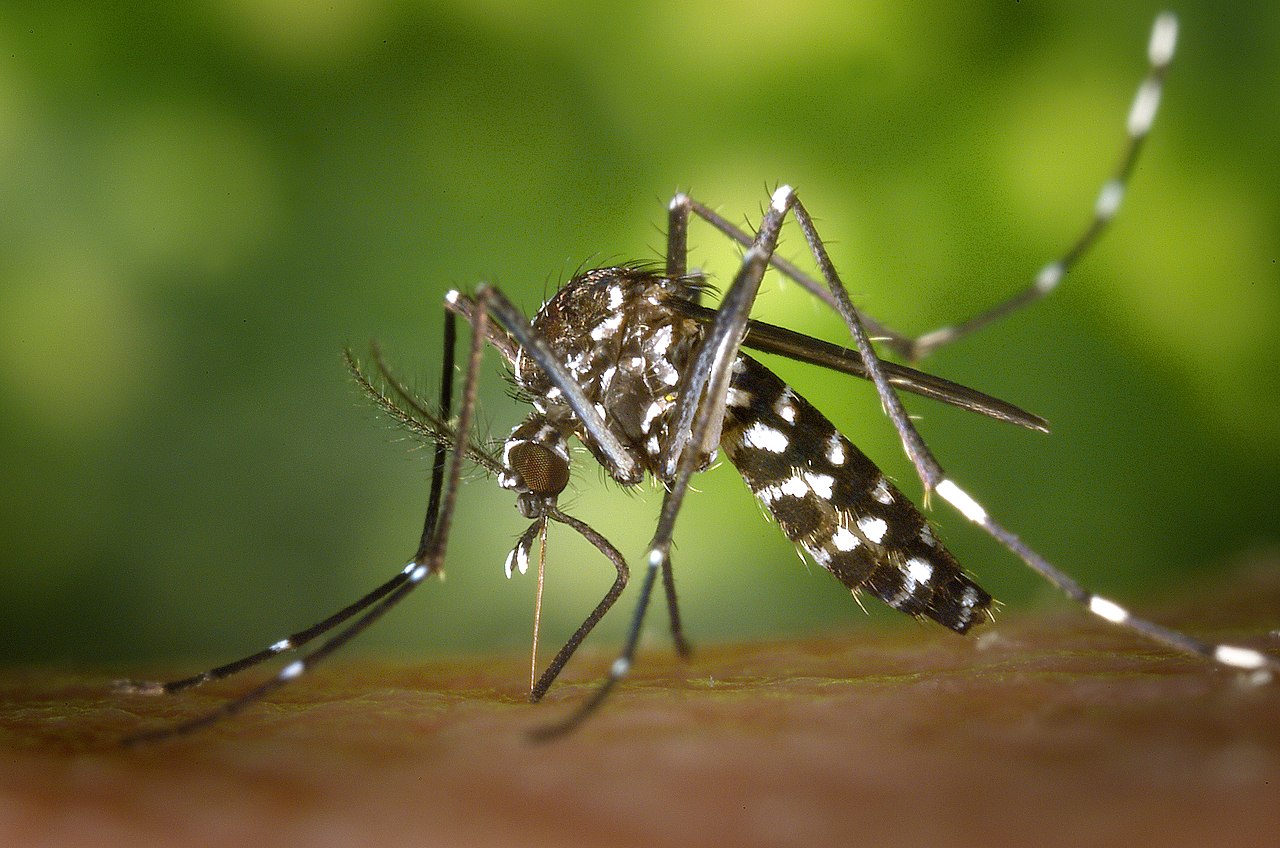
Dengue does not spread directly between people. It needs a mosquito — in metropolitan France, the Asian tiger mosquito, Aedes albopictus — to bite an infected person and then bite someone else. Health authorities therefore treat a single confirmed case as a trigger for rapid vector control: identifying and spraying the places the patient recently visited to break any possible chain of transmission before it starts, a protocol ARS Pays de la Loire has applied at previous sites in the region.
The ARS used the same approach in September 2025 at Trélazé, near Angers, where spraying in the La Chevalerie neighbourhood was carried out overnight between 11 and 12 September after a resident there was diagnosed with dengue. A comparable operation was organised overnight on 18–19 September 2026 at Orvault, near Nantes, after another person tested positive, according to the news aggregator Titrespresse.
Tiger mosquito now established in most of France
The tiger mosquito has been present in La Séguinière since 2023. Across the wider Pays de la Loire region, the ARS lists 44 colonised communes in Maine-et-Loire alone, with the insect's range still expanding — new communes such as Tiercé and Mazé-Milon were added to the list in 2026.
Nationally, Aedes albopictus is now established in 83 of France's 96 mainland departments, according to figures reported by Enerzine.com. That spread creates the conditions for local, or "autochthonous," transmission whenever an infected traveller returns from a country where dengue circulates and is bitten by a local tiger mosquito.
The 2026 season so far
France recorded its first autochthonous dengue case of the 2026 season on 20 July in Carmaux, in the Tarn department, according to franceinfo's La 1ère. The regional health agency said at the time that the patient's condition was not a cause for concern.
By 7 October, Santé publique France's weekly bulletin counted six confirmed autochthonous dengue cases across four separate clusters nationwide: Carmaux (1 case) and Sète, in the Hérault department (2 cases) in Occitanie; Mouleydier, in the Dordogne (1 case), in Nouvelle-Aquitaine; and Marseille, in the Bouches-du-Rhône (2 cases), in Provence-Alpes-Côte d'Azur. The agency reported that all four of those episodes were closed, with no new clusters at that point, as summarised by Enerzine.com. The La Séguinière and Orvault cases in Pays de la Loire, reported after that bulletin, were not included in the 7 October national count.
Enhanced seasonal surveillance for dengue, chikungunya and Zika runs each year from 1 May to 30 November, the period when the tiger mosquito is active, according to Enerzine.com.
| Commune | Department | When | Action taken |
|---|---|---|---|
| Trélazé | Maine-et-Loire | Night of 11–12 September 2025 | Targeted insecticide spraying in La Chevalerie neighbourhood |
| Orvault | Loire-Atlantique | Night of 18–19 September 2026 | ARS-organised anti-mosquito operation |
| La Séguinière | Maine-et-Loire | Early October 2026 | Spraying planned in patient's neighbourhood |
What is not yet known
Available reporting does not specify the exact date the La Séguinière spraying took place, nor how the patient contracted dengue — whether through travel or a local mosquito bite. No information on the patient's health status has been published.
Questions
- Can dengue spread from person to person in France?
- No. Dengue requires a mosquito bite to pass between people; in mainland France, the Asian tiger mosquito is the vector. A sick person cannot infect another person directly.
- Why does one dengue case lead to an insecticide spraying operation?
- Health authorities spray the areas an infected person recently visited to kill any mosquitoes that may have bitten them, aiming to stop a local transmission chain before it starts, as the ARS has done in La Séguinière, Orvault and Trélazé.
- How widespread is the tiger mosquito in France now?
- According to figures reported by Enerzine.com, the Asian tiger mosquito is established in 83 of France's 96 mainland departments, including 44 communes in Maine-et-Loire alone.
- How many autochthonous dengue cases has France recorded in 2026?
- Santé publique France's 7 October 2026 bulletin counted six autochthonous cases across four clusters in Occitanie, Nouvelle-Aquitaine and Provence-Alpes-Côte d'Azur, all considered closed at that date; separate cases in Orvault and La Séguinière in Pays de la Loire were reported afterward.
- Is the patient in La Séguinière seriously ill?
- No information about the patient's state of health has been released, according to My-Angers.info.
How the world is telling it
- FrenchFrench regional outlets (My-Angers.info, Titrespresse) and national health-focused sites (Enerzine.com, franceinfo) frame the story as routine public-health vigilance rather than alarm, emphasising that ARS-led spraying is a standard, localized precaution following isolated cases, while noting the tiger mosquito's steady geographic expansion as the underlying long-term trend.
Sources
- My-Angers.info — Dengue en Maine-et-Loire : une pulvérisation d'insecticide en prévision dans cette commune
- Enerzine — Dengue, quatre foyers et six cas autochtones recensés sous surveillance renforcée
- Titrespresse — Opération anti-moustique tigre près de Nantes : une personne infectée par la dengue
- franceinfo La 1ère — Dengue : un cas autochtone signalé dans l'Hexagone, le premier de la saison 2026
- ARS Pays de la Loire — Moustique tigre : les communes colonisées en Pays de la Loire
This piece was prepared with artificial intelligence and passed an automated source check before publication. If you see an error, ask for a correction. Request a correction or reply · How we make this
Related
HealthArticle
GLP-1 Weight-Loss Drugs Are Forcing a Choice: Medication or Retirement Savings
A Nationwide Retirement Institute survey finds that 51% of current GLP-1 users worry they will have to choose between staying on the medication and saving for retirement, and 54% say they have already changed how they manage money to keep paying for it. The findings point to a widening gap between the drugs' price and what many households can absorb without touching long-term savings.

HealthNews
France Launches 2026 COVID-19 and Flu Vaccination Campaign Amid Rising Infections
France's 2026–2027 COVID-19 and flu vaccination campaign began on 13 October, as doctors and emergency rooms reported more suspected COVID-19 cases nationwide. An epidemiologist described the rise as a new wave, but the Health Ministry said on 5 October that the increase did not justify moving the campaign's start date earlier.

HealthArticle
How Circadian Rhythms Shape Sleep Quality, Health and Daily Performance
Circadian rhythms are roughly 24-hour cycles, set mainly by light and darkness, that tell the body when to sleep, release hormones and digest food. When this internal clock falls out of sync with the environment — through irregular schedules, shift work or jet lag — sleep quality, mood, metabolism and alertness all suffer, according to U.S. federal health agencies and Harvard Medical School.

HealthNews
Indonesia Haze: Jambi Air Quality 'Hazardous', Respiratory Cases Top 12,000
Forest and land fires in Sumatra have pushed air quality in Indonesia's Jambi province into the "hazardous" category, with PM2.5 readings more than double the danger threshold and visibility dropping below 1 kilometer. Jambi City's health department says acute respiratory infection (ISPA) cases have reached 12,000 since the fires began, up from 10,151 a few days earlier.