Astronomers Identify the First Green Star: How a White Dwarf's Chemistry Sets Its Color
Published:
In brief
Astronomers at the University of Warwick say the white dwarf WD J1330+6435, located about 284 light-years away, is the first star ever credibly reported to look green to the human eye. The color comes from sodium absorbing yellow, orange and red light in its unusually dense atmosphere after it swallowed rocky debris from its own planetary system. The findings, published in the journal RAS Techniques and Instruments, also mapped other unexpected white dwarf colors, including pink, purple, cyan and yellow.
Astronomers led by Dr. Mark Hollands, a Warwick Prize Fellow in the Astronomy and Astrophysics Group at the University of Warwick, have identified the white dwarf WD J1330+6435 as the first star that would genuinely appear green to a human observer. The study was published in the journal RAS Techniques and Instruments.
Why Most Stars Never Look Green
Astronomers describe most stars as behaving like a 'perfect radiator,' meaning their color is governed almost entirely by surface temperature, in the same way a blacksmith's iron shifts from red to orange to white as it gets hotter. Cooler stars appear orange, stars like the sun appear white, and the hottest stars glow pale blue. White dwarfs typically follow this same temperature-based pattern — until unusual atmospheric conditions, as in WD J1330+6435, cause one to break from it.
What Makes WD J1330+6435 Different
WD J1330+6435 is a white dwarf, the dense, burned-out remnant left behind after a sun-like star exhausts its fuel, located roughly 284 light-years from Earth with a surface temperature of about 4,000 degrees Celsius (7,232 degrees Fahrenheit). Unlike ordinary stars, it has been accreting rocky material from a surviving planetary system, enriching its outer atmosphere with sodium, calcium and lithium.
The atmospheres of cool white dwarfs can reach densities close to that of water, millions of times denser than the sun's outer layer, or photosphere. Under those extreme conditions, sodium in WD J1330+6435's dense helium plasma absorbs much of the yellow, orange and red light passing through the atmosphere, letting mainly green wavelengths escape toward an observer.
The traces of sodium in the atmosphere of this white dwarf absorb the orange part of the spectrum, leaving behind a ghostly green glow.
— Dr. Mark Hollands, University of Warwick
How Researchers Worked Out the True Colors
To determine what a given white dwarf would actually look like, the Warwick team analyzed spectra, the wavelength-by-wavelength 'fingerprint' of a star's light, and ran that data through a model of human color vision to predict the hue the naked eye would perceive. As far as the researchers are aware, no other star, living or dead, has previously been credibly reported as green.
White dwarf atmospheric composition and apparent color
Atmospheric composition
Apparent color
Example or note
Sodium-rich, high-density helium
Green
WD J1330+6435, the only known case
Carbon-rich
Pink or purple
Reported among surveyed white dwarfs
Enriched with asteroid/comet debris
Yellow
Linked to accreted planetary material
Mixed hydrogen-helium
Cyan or pale blue
Common among surveyed white dwarfs
Typical/majority composition
White (median ~6,800 Kelvin)
146 of 151 white dwarfs studied within 65 light-years
How Rare Are Unusually Colored White Dwarfs
Among a sample of 151 white dwarfs within 65 light-years of Earth, the Warwick team found five with unusual coloring — a ratio the researchers said suggests roughly one in 30 white dwarfs in the universe may show an unusual color. The remaining 146 had a median color temperature of about 6,800 Kelvin, which the human eye perceives as white.
White dwarfs make up the final stage in the life cycle of stars like the sun, after they shed their outer layers and the remaining core cools over billions of years. Because they no longer generate energy through nuclear fusion, their observed color depends on temperature and on whatever elements have settled into or fallen onto their thin outer atmosphere, rather than on the fusion processes that color living stars.
Questions
What is the name of the first confirmed green star?
It is WD J1330+6435, a white dwarf about 284 light-years from Earth identified by University of Warwick astronomers led by Dr. Mark Hollands.
Why don't normal stars appear green?
A star's color is mainly set by its temperature, behaving like what astronomers call a 'perfect radiator.' White dwarfs normally follow this same pattern, appearing orange, white or pale blue depending on temperature, until unusual atmospheric conditions — as in WD J1330+6435 — cause one to break from it.
What makes WD J1330+6435 look green?
The white dwarf accreted rocky planetary debris rich in sodium, and in its unusually dense atmosphere that sodium absorbs yellow, orange and red light, leaving a greenish glow.
How common are oddly colored white dwarfs?
In a sample of 151 white dwarfs within 65 light-years of Earth, five showed unusual coloring. The Warwick researchers said this suggests about one in 30 white dwarfs in the universe may show an unusual color.
Where was this research published?
The findings appeared in the journal RAS Techniques and Instruments, in a study led by astronomers at the University of Warwick.
This piece was prepared with artificial intelligence and passed an automated source check before publication. If you see an error, ask for a correction. Request a correction or reply · How we make this
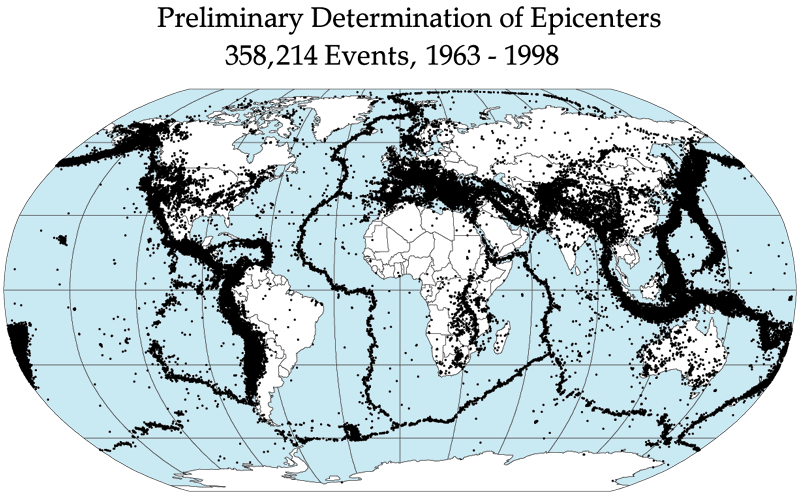
Earthquakes happen when stress that has built up for years, decades or centuries along a locked fault finally overcomes friction and the rock suddenly slips. That slip releases stored energy as seismic waves, which radiate outward and shake the ground. The U.S. Geological Survey (USGS) and Caltech describe this as a continuous cycle driven by the slow motion of Earth's tectonic plates.
Weather is the atmospheric condition at a specific place and moment — rain, wind, or temperature right now. Climate is the average of those weather patterns over a long period, usually 30 years or more, according to NASA and NOAA. The difference is essentially one of timescale, not of the phenomena themselves.
On 15 October 2026, the General Conference on Weights and Measures (CGPM) voted in Versailles to stop adding "leap seconds" to world clocks from 20 May 2027. The 53-year-old practice of occasionally inserting an extra second into Coordinated Universal Time (UTC) is being replaced by a system that lets clock time drift from Earth's actual rotation for up to an hour before any correction is needed.
A strong earthquake struck off Russia's Kamchatka Peninsula on October 16, 2026. The US Geological Survey measured it at magnitude 6.9; the European-Mediterranean Seismological Centre initially put the preliminary magnitude at 7.0 before revising it to 6.9, matching the USGS figure. Authorities in Hawaii and Japan said there was no tsunami threat, though Japan's Meteorological Agency briefly and mistakenly warned of a magnitude 9.9 quake before retracting it eight minutes later.