Science · Article
Why the World Is Scrapping Leap Seconds From 2027
Published:

In brief
On 15 October 2026, the General Conference on Weights and Measures (CGPM) voted in Versailles to stop adding "leap seconds" to world clocks from 20 May 2027. The 53-year-old practice of occasionally inserting an extra second into Coordinated Universal Time (UTC) is being replaced by a system that lets clock time drift from Earth's actual rotation for up to an hour before any correction is needed.
Representatives of the CGPM's 69 member states met at the organisation's 28th General Conference in Versailles, France, and adopted a resolution ending the leap second from 20 May 2027, which is World Metrology Day. The vote was reported by Euronews and confirmed by Scientific American, which quoted Noël Dimarcq, president of the BIPM's Consultative Committee for Time and Frequency, saying "After 30 years of debates, we are ready."
What a leap second actually is
Since 1972, timekeepers have occasionally added a single extra second to UTC, the world's civil time standard, to keep it aligned with UT1, a measure of time based on the Earth's actual rotation. According to Euronews and Scientific American, 27 leap seconds have been added since the system began, most recently at the end of 2016. The adjustment exists because atomic clocks tick at an extremely stable rate, while the planet's rotation speed varies slightly over time.
Why it is being dropped now
Euronews reports that leap seconds have periodically disrupted computer systems and online services; past insertions have been linked to problems at major platforms. The more pressing concern, cited by Euronews, GZT and Scientific American, is that the Earth's rotation has recently sped up at times, raising the possibility that a negative leap second—removing a second rather than adding one—could be required for the first time ever. Because no negative leap second has ever been implemented, Scientific American reports engineers warned this could cause infrastructure disruption similar to the Y2K computer-date problem.
Technology companies have raised concerns about leap seconds for years. The Conversation reports that in 2008, Google avoided a single abrupt one-second adjustment by spreading it gradually across a 20-hour window on its own servers, a technique known as "smearing," and that other companies later adopted similar workarounds.
What changes on 20 May 2027
Under the new rule, UTC will run continuously with no scheduled pauses or insertions. Euronews reports the resolution sets a maximum permissible gap of 3,600 seconds—one hour—between UTC and UT1, rather than the previous limit of under one second. Scientific American and Euronews both report that, at current rates of change, this one-hour gap is not expected to be reached for well over 1,000 years, meaning no timekeeping correction is likely to be needed for centuries.
Who is affected
Euronews and GZT note that the change mainly matters to sectors that depend on precise, uninterrupted time synchronisation: satellite navigation, telecommunications networks, financial trading systems, aviation and power infrastructure. For most people, clocks, phones and everyday scheduling will be unaffected, since the one-second adjustments were never visible in ordinary civil life.
Astronomers, however, lose a convenient link between civil time and the planet's rotation. The Conversation reports that once UTC and UT1 are allowed to diverge for centuries, astronomers can no longer treat UTC as a close proxy for solar time and will need separate methods to track the Earth's actual rotational position.
Background to the decision
The push to end leap seconds is not new. The Conversation and GZT report that a 2022 CGPM decision had initially targeted phasing out leap seconds by 2035, a timeline that was later moved up after concerns grew about the risk of a negative leap second. The October 2026 Versailles resolution finalised a concrete end date of May 2027 for the current system.
| Aspect | Current system (since 1972) | New system (from 20 May 2027) |
|---|---|---|
| Maximum UTC–UT1 gap allowed | About 0.9 seconds | 3,600 seconds (1 hour) |
| Leap seconds added so far | 27 (since 1972, last in 2016) | None planned |
| Correction method | Occasional 1-second insertions | Rare, long-interval adjustment if needed |
| Next correction expected | Irregular, every few years historically | Not expected for over 1,000 years |
Questions
- When does the leap second end?
- The change takes effect on 20 May 2027, World Metrology Day, following the resolution adopted by the General Conference on Weights and Measures (CGPM) on 15 October 2026 in Versailles.
- Who decided to eliminate leap seconds?
- The CGPM, the international body overseen by the International Bureau of Weights and Measures (BIPM), voted on the change with representatives from its 69 member states.
- Will this change how my phone or clock shows time?
- No. Reporting from Euronews and GZT indicates the change mainly affects systems requiring precise, continuous time synchronisation—satellites, telecoms, finance and aviation—not everyday clocks or phones.
- Why were leap seconds causing problems?
- Euronews and Scientific American report that leap second insertions have previously disrupted computer systems and online platforms, and that a possible future negative leap second—never attempted before—was seen as a risk comparable to the Y2K bug.
- How long before a correction is needed under the new system?
- Scientific American and Euronews report that, under the new one-hour drift allowance between UTC and Earth's rotation time (UT1), no correction is expected to be necessary for more than 1,000 years.
How the world is telling it
- TurkishTurkish outlets (TRT Haber, GZT) framed the story around the Versailles vote and Turkey's participation among 69 voting countries, emphasizing past technical disruptions (platform crashes, flight delays) caused by leap seconds and noting an earlier 2022 plan to phase them out by 2035 that was later accelerated to 2027.
Sources
- Euronews — Global timekeeping rules change: leap second scrapped from 2027
- Scientific American — Scientists vote to end leap seconds, redefining how the world keeps time
- The Conversation — Experts have voted to stop adding extra seconds to clock time
- GZT — Saat sistemi değişiyor: zaman kavramını değiştirecek oylama için geri sayım, 69 ülkenin arasında Türkiye de var
- TRT Haber — Dakikalar artık 61 saniye sürmeyecek: küresel saat sisteminde tarihi değişim
This piece was prepared with artificial intelligence and passed an automated source check before publication. If you see an error, ask for a correction. Request a correction or reply · How we make this
Related
ScienceArticle
How Earthquakes Form: Plate Tectonics, Stress and Seismic Waves Explained
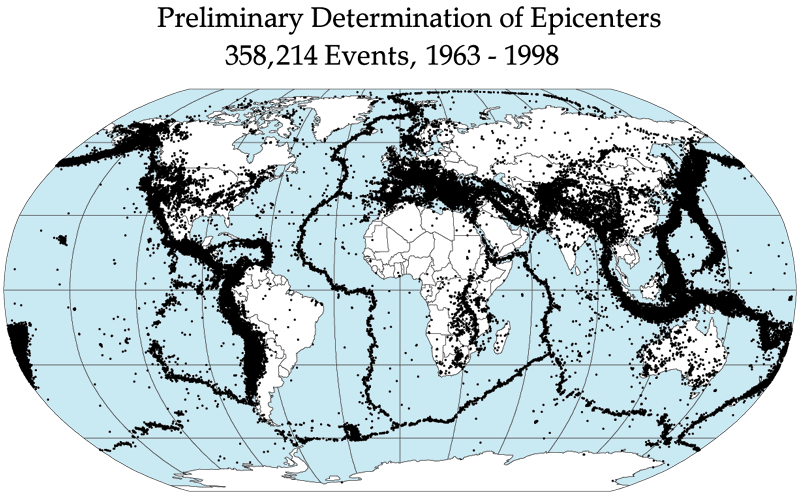
Earthquakes happen when stress that has built up for years, decades or centuries along a locked fault finally overcomes friction and the rock suddenly slips. That slip releases stored energy as seismic waves, which radiate outward and shake the ground. The U.S. Geological Survey (USGS) and Caltech describe this as a continuous cycle driven by the slow motion of Earth's tectonic plates.

ScienceGlossary
Weather vs. Climate: The Key Difference, Defined
Weather is the atmospheric condition at a specific place and moment — rain, wind, or temperature right now. Climate is the average of those weather patterns over a long period, usually 30 years or more, according to NASA and NOAA. The difference is essentially one of timescale, not of the phenomena themselves.
ScienceArticle
Astronomers Identify the First Green Star: How a White Dwarf's Chemistry Sets Its Color
Astronomers at the University of Warwick say the white dwarf WD J1330+6435, located about 284 light-years away, is the first star ever credibly reported to look green to the human eye. The color comes from sodium absorbing yellow, orange and red light in its unusually dense atmosphere after it swallowed rocky debris from its own planetary system. The findings, published in the journal RAS Techniques and Instruments, also mapped other unexpected white dwarf colors, including pink, purple, cyan and yellow.
ScienceNews
Magnitude 6.9 Earthquake Hits Russia's Kamchatka Peninsula; No Tsunami Threat
A strong earthquake struck off Russia's Kamchatka Peninsula on October 16, 2026. The US Geological Survey measured it at magnitude 6.9; the European-Mediterranean Seismological Centre initially put the preliminary magnitude at 7.0 before revising it to 6.9, matching the USGS figure. Authorities in Hawaii and Japan said there was no tsunami threat, though Japan's Meteorological Agency briefly and mistakenly warned of a magnitude 9.9 quake before retracting it eight minutes later.