Space · News
NOAA Issues G1-G2 Geomagnetic Storm Watch for Oct. 9, Aurora Possible in US
Published:
In brief
NOAA's Space Weather Prediction Center has issued a G1-to-G2 geomagnetic storm watch for Oct. 9, 2026, after a solar flare and coronal mass ejection left the sun on Oct. 6. Forecasters say the resulting storm could push the northern lights into northern-tier US states, with NOAA's own scale citing New York and Idaho as the historical southern edge for G2-level displays, though the storm's exact strength remains uncertain.
A flare triggers the watch
On Oct. 6, 2026, the sun produced an M1.4-class solar flare from sunspot region AR4549, located near the center of the Earth-facing solar disk, according to NOAA's Space Weather Prediction Center (SWPC). The eruption released a coronal mass ejection (CME), a burst of magnetized solar plasma, that SSBCrack News reported was traveling toward Earth at roughly 560 kilometers per second.
Hours after the first flare, the same active region produced a second flare, which Daily Galaxy described as M1.9-class and SSBCrack News described as M1.8-class. Both outlets reported that a neighboring region, AR4545, also showed increased activity.
Using SWPC's WSA-ENLIL solar-wind model, forecasters projected that the leading edge of the CME would reach Earth at around 1 a.m. EDT (0500 GMT) on Oct. 9, according to SSBCrack News.
NOAA's G1-G2 storm watch
SWPC issued a geomagnetic storm watch on Oct. 6 at 16:40 UTC, saying conditions on Oct. 9 could reach G1 (Minor) to G2 (Moderate) on NOAA's five-step geomagnetic storm scale, driven by the incoming CME. The agency added there was "a high chance for additional M-class flare activity" from AR4549 in the following days.
SWPC's three-day forecast, issued Oct. 7 at 00:30 UTC, put the Kp index — the standard 0-to-9 scale used to measure geomagnetic disturbance — at a peak of 5.67 in the three-hour window from 09:00 to 12:00 UTC on Oct. 9, within the G2 range. An earlier window that same day, 03:00 to 06:00 UTC, was forecast at Kp 5.00, at the threshold of G1 conditions.
How far south the aurora could reach
NOAA's space weather scale describes typical aurora visibility at each storm level based on past events, not a location-specific prediction for this particular CME. According to that scale, G1 storms commonly make the aurora visible over northern Michigan and Maine, while G2 storms have pushed visibility as far south as New York and Idaho, at roughly 55 degrees geomagnetic latitude.
| Storm level | Associated Kp | Example southern limit (NOAA scale) |
|---|---|---|
| G1 (Minor) | Kp 5 | Northern Michigan and Maine |
| G2 (Moderate) | Kp 6 | New York and Idaho (about 55° geomagnetic latitude) |
Because actual visibility depends on real-time storm strength, cloud cover and local light pollution, these are historical reference points rather than a guarantee for any single state on Oct. 9.
What forecasters say is still uncertain
Scientists said the storm's eventual strength was difficult to pin down before the CME arrived. "It is still too early to say how much of the CME has escaped the solar atmosphere and how much it is directed at Earth," Vincent Ledvina, a space physicist and aurora photographer, said, according to Daily Galaxy. SSBCrack News separately reported that Ledvina said additional data was needed to determine how much of the CME was directed at Earth.
SSBCrack News reported that people hoping to watch should keep camera batteries charged and monitor updated aurora alerts, since the CME's precise orientation and speed at arrival — not just its initial launch speed — determine how strong and how far south any resulting storm becomes.
Background: why this is being watched
SWPC tracks the sun's activity because CMEs and solar flares from active regions like AR4549 can disturb Earth's magnetic field for one to several days after launch. The agency's G-scale, from G1 to G5, is the US government's standard tool for communicating the expected severity of a geomagnetic storm to the public, utilities and satellite operators.
Questions
- When is the geomagnetic storm expected to hit Earth?
- NOAA's Space Weather Prediction Center modeled the CME's leading edge arriving around 1 a.m. EDT (0500 GMT) on Oct. 9, 2026, with the storm watch covering that full day.
- What caused this storm watch?
- An M1.4-class solar flare erupted from sunspot region AR4549 on Oct. 6, 2026, launching a coronal mass ejection toward Earth at about 560 km/s, according to NOAA and SSBCrack News.
- How strong will the storm be?
- NOAA's Oct. 7 three-day forecast put the peak Kp index at 5.67 on Oct. 9, within the G2 (Moderate) range, after an earlier window at Kp 5.00, around the G1 (Minor) threshold; the agency's watch covers both G1 and G2 outcomes.
- Which states might see the northern lights?
- NOAA's general storm scale lists northern Michigan and Maine as typical for G1 storms and New York and Idaho as the historical southern edge for G2 storms, though actual visibility on Oct. 9 depends on the storm's real-time strength.
- Is the forecast certain?
- No. Space physicist Vincent Ledvina said it was still too early to know how much of the CME was Earth-directed, and NOAA's watch itself spans a range from Minor to Moderate storm conditions.
Sources
- NOAA Space Weather Prediction Center — G2 (Moderate) Geomagnetic Storm Watch for 09 Oct
- NOAA SWPC — 3-Day Geomagnetic Forecast (text product)
- NOAA SWPC — NOAA Space Weather Scales Explanation
- Daily Galaxy — Aurora Watchers Are Tracking a Fresh Solar Eruption That Could Reach Earth and Intensify the Northern Lights This Week
- SSBCrack News — Sun's Powerful Eruption Set to Enhance Northern Lights as CME Heads for Earth
This piece was prepared with artificial intelligence and passed an automated source check before publication. If you see an error, ask for a correction. Request a correction or reply · How we make this
Related

SpaceArticle
How Stars Form and Evolve: The Science of the Stellar Lifecycle
Stars form when gravity collapses cold clouds of gas and dust until a core reaches about 10 million Kelvin, hot enough to ignite hydrogen fusion. From there, a star's mass determines everything else: how long it shines, how it dies, and whether it leaves behind a white dwarf, a neutron star, or a black hole.

SpaceArticle
How Rockets Work: Thrust, Propulsion Systems and Orbital Mechanics Explained
Rockets move by expelling exhaust in one direction so the vehicle is pushed in the other, under Newton's third law of motion. Thrust depends on how much exhaust mass flows out per second and how fast it leaves the nozzle, while staying in orbit depends on balancing forward speed against the pull of gravity. Multistage designs and, for some missions, electric propulsion are used to manage the enormous amount of propellant spaceflight requires.

SpaceArticle
How Astronauts Train, Prepare for Missions and Live in Space
Astronaut training is a multi-year process that starts with a selection screening for education, experience and physical fitness, then moves into years of ground training before any flight. According to NASA and the European Space Agency (ESA), candidates learn spacecraft systems and practice spacewalks underwater, and ESA candidates also study Russian, while life aboard the International Space Station (ISS) runs on a fixed daily schedule of work, exercise and sleep.
SpaceGlossary
How Black Holes Form, What They Are, and What They Reveal About the Universe
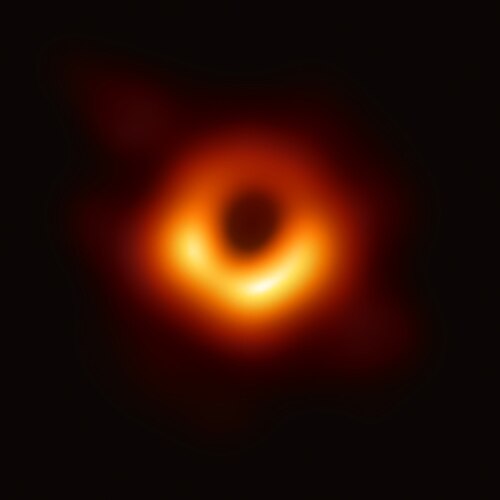
A black hole is a region of space where gravity is so strong that nothing, not even light, can escape once it crosses the event horizon. Most form when a massive star runs out of nuclear fuel and its core collapses; supermassive versions grow at galaxy centers over billions of years. Direct images and gravitational-wave detections have confirmed their existence and tested Einstein's general relativity.