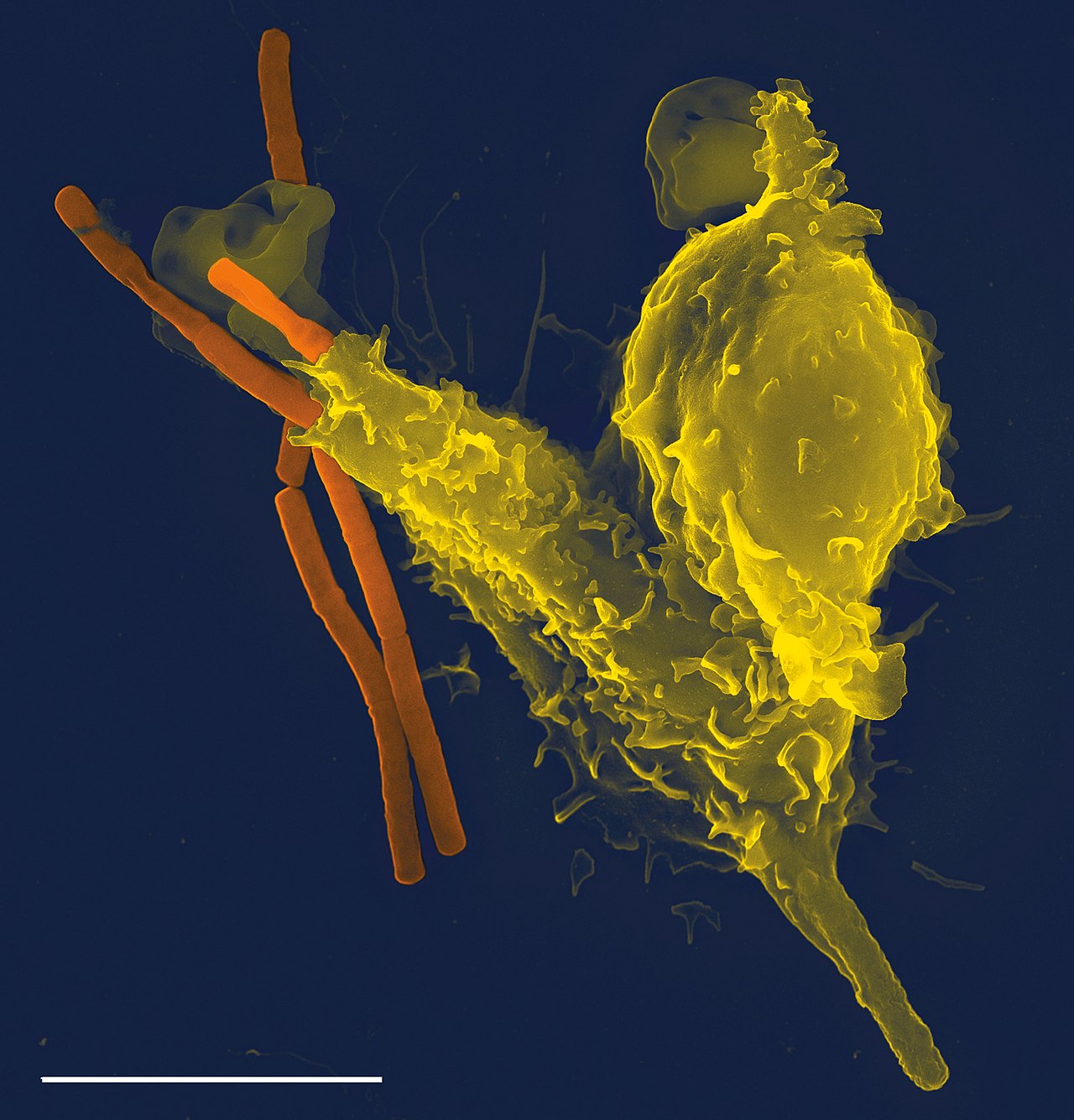
The human immune system is a network of organs, tissues and specialized blood cells that identifies and eliminates threats such as bacteria, viruses, fungi and parasites, according to the U.S. National Institute of General Medical Sciences (NIGMS), part of the National Institutes of Health. It is commonly described as operating in two interlocking branches: innate immunity and adaptive immunity.
Innate immunity: the first line of defense
Innate immunity is the protection a person is born with, and it responds immediately to any foreign organism without needing prior exposure, the Cleveland Clinic explains. Its components include physical barriers such as skin and mucous membranes in the nose, throat and lungs, stomach acid, enzymes found in saliva and tears, specialized cells called phagocytes that engulf invaders, and complement proteins circulating in the blood, according to NIGMS.
Because innate immunity reacts to broad patterns shared by many pathogens rather than to one specific germ, NIGMS describes it as nonspecific. This is also why innate defenses can act within minutes to hours of an infection, before a more targeted response is mounted.
Adaptive immunity: targeted and remembered
Adaptive immunity, also called acquired immunity, develops after the body is exposed to a specific germ and takes several days to become fully effective, according to NIGMS. It relies on B-lymphocytes, which produce antibodies that attach to a precise target called an antigen, and T-lymphocytes, which help coordinate and carry out the attack, the Cleveland Clinic notes.
A defining feature of adaptive immunity is memory. After the body defeats a pathogen, some antibody-producing cells survive as memory cells, according to the World Health Organization. If the same pathogen appears again, these memory cells allow the body to produce antibodies faster and more effectively than during the first encounter, the WHO states.
Where immune cells come from and gather
Several organs support this system throughout the body. Bone marrow functions as the factory that produces blood cells, including white blood cells, the Cleveland Clinic says. The thymus, a gland behind the breastbone, is where T-cells mature before being deployed. The spleen stores white blood cells and recycles damaged cells, while lymph nodes — small glands concentrated in the neck, underarms, groin and abdomen — filter body fluids and are sites where immune cells react to antigens.
Innate immunity vs. adaptive immunity| Feature | Innate immunity | Adaptive immunity |
|---|
| Response speed | Immediate | Takes several days to become effective |
|---|
| Specificity | Nonspecific, reacts to general danger patterns | Antigen-specific, targets one particular pathogen |
|---|
| Key players | Skin, mucous membranes, stomach acid, phagocytes, complement proteins | B-lymphocytes, T-lymphocytes, antibodies |
|---|
| Memory | None | Yes — memory cells enable faster future response |
|---|
Why this matters for vaccines
Immune memory is the mechanism vaccines are designed to exploit. A vaccine exposes the body to a weakened or inactivated piece of a pathogen, called an antigen, prompting B-lymphocytes to produce antibodies without causing the disease itself, according to the WHO. This process also generates memory cells, so a later encounter with the real pathogen triggers a faster, stronger antibody response.
Some vaccines require multiple doses spaced weeks or months apart specifically to allow the production of long-lived antibodies and the development of memory cells, the WHO says. The organization also notes that measles vaccination alone is estimated to have prevented about 60 million deaths worldwide between 2000 and 2023.
When the system malfunctions
The immune system does not always work as intended. In autoimmune diseases such as lupus or rheumatoid arthritis, the immune system mistakenly attacks the body's own healthy cells, according to the Cleveland Clinic. Immunodeficiency refers to a weakened immune response, which can be inherited or acquired, and leaves a person more vulnerable to infection. Allergies occur when the immune system overreacts to substances that are not actually harmful, producing symptoms that range from mild to severe.
These conditions illustrate that the same mechanisms that protect the body — recognition, response and memory — can also misfire, which is why persistent or unusual immune symptoms are generally evaluated by a qualified clinician rather than self-diagnosed.
This piece was prepared with artificial intelligence and passed an automated source check before publication. If you see an error, ask for a correction. Request a correction or reply · How we make this