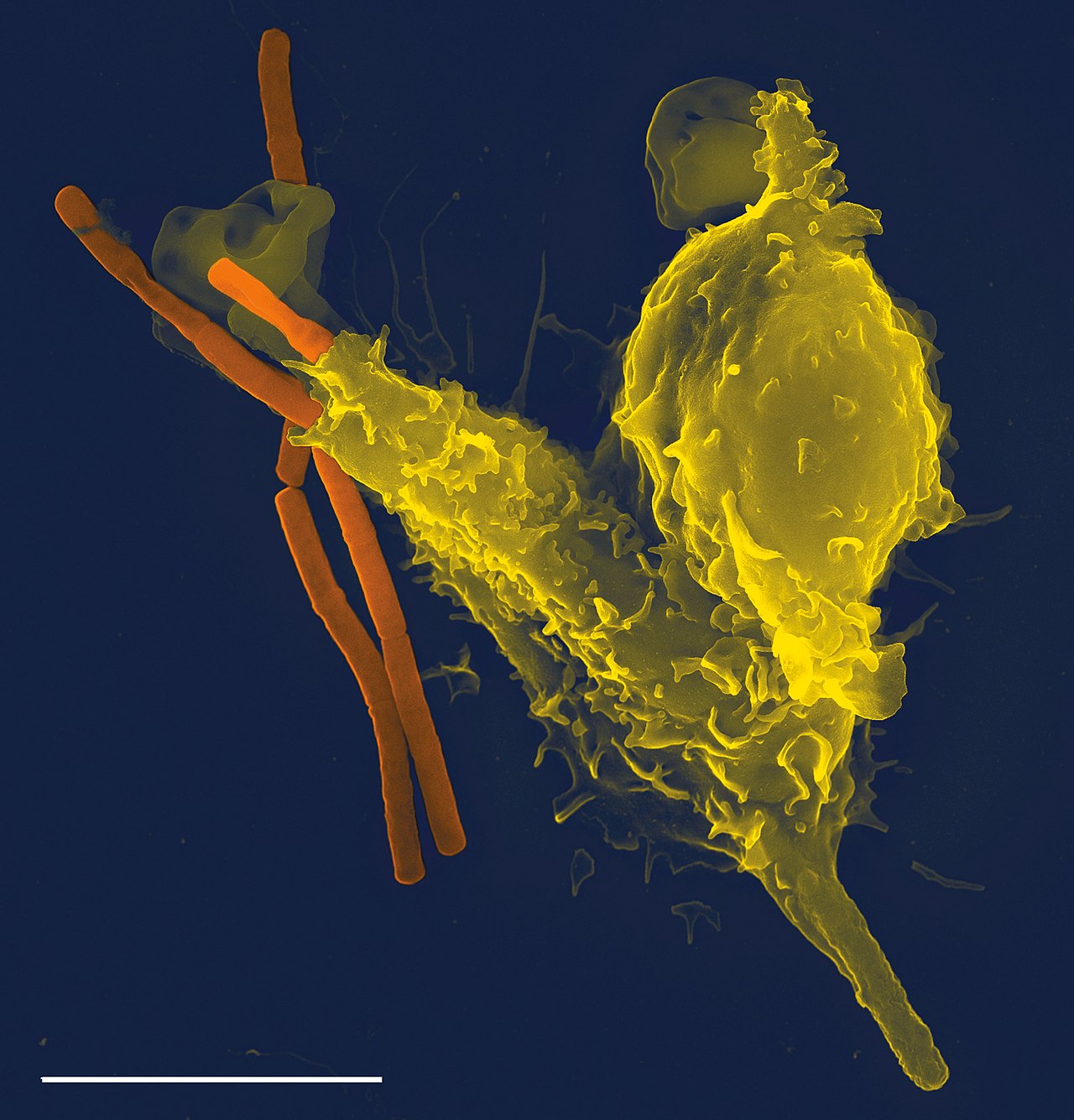
The immune system is described by the U.S. National Institute of General Medical Sciences (NIGMS) as a network of cells, tissues and organs that work together to block, detect and eliminate threats such as bacteria, viruses, fungi and parasites. The Cleveland Clinic adds that the same network also helps limit damage from injury, supports healing and targets cancer cells.
Barriers come first
Before any cell has to fight an invader, the body relies on physical and chemical barriers. NIGMS lists skin, the mucous membranes lining the respiratory passages, and stomach acid as the first obstacles that most microbes never get past. The Cleveland Clinic adds tonsils and adenoids, which trap invaders at entry points such as the nose and throat.
Two systems: innate and adaptive immunity
If a pathogen gets past the barriers, two complementary systems take over. Innate immunity, as NIGMS and the Cleveland Clinic both describe it, is the response someone is born with: it acts immediately and non-specifically, using cells such as phagocytes (which engulf microbes), natural killer cells, and complement proteins that attack a wide range of invaders without needing to recognize the specific one involved.
Adaptive immunity, also called acquired immunity, is slower to start — NIGMS says it can take several days to mount an effective response — but it is tailored to the exact pathogen. It relies on B-cells, which produce antibodies that bind to and help neutralize a specific invader, and T-cells, which can directly destroy infected cells or coordinate the wider response, according to MedlinePlus and the Cleveland Clinic.
Innate immunity vs. adaptive immunity| Feature | Innate immunity | Adaptive immunity |
|---|
| Speed of response | Immediate | Several days, per NIGMS |
|---|
| Specificity | Broad, non-specific | Tailored to one pathogen |
|---|
| Memory of past exposure | None, per the Cleveland Clinic | Yes — enables faster response later |
|---|
| Example cells | Phagocytes, natural killer cells, complement proteins | B-cells (antibodies), T-cells |
|---|
The organs that produce and coordinate immune cells
The Cleveland Clinic lists the organs that make up the immune system's infrastructure: bone marrow produces the blood cells the system needs, the thymus matures T-cells before they are deployed, lymph nodes filter fluid moving through the body while retaining useful components, and the spleen stores white blood cells and recycles damaged ones.
Immune memory and vaccination
After an adaptive immune response clears an infection, some of the lymphocytes involved persist as memory cells, according to MedlinePlus, which notes this memory allows a faster response if the same pathogen appears again — a process that underlies long-term immunity after infection or vaccination. NIGMS explains that vaccines work by mimicking an infection, using a weakened virus, a killed pathogen, a protein, or messenger RNA, so that the immune system builds the same kind of lasting memory without the risks of the actual disease.
When the immune system malfunctions
The same system that protects the body can also cause disease when it functions abnormally. MedlinePlus and the Cleveland Clinic both identify three broad categories: autoimmune diseases, in which the immune system mistakenly attacks healthy tissue (examples cited include lupus and rheumatoid arthritis); immunodeficiency, in which immune function is impaired, leading to frequent, prolonged or severe infections; and allergic conditions, including allergies and asthma, which result from an inappropriate immune response to substances that are not actually harmful.
The Cleveland Clinic also lists infectious diseases that directly target immune cells, such as HIV, and cancers affecting the bone marrow, as conditions that compromise the immune system's ability to carry out its normal functions.
Questions
- What is the main difference between innate and adaptive immunity?
- Innate immunity reacts immediately and non-specifically to almost any pathogen, while adaptive immunity takes several days to develop but produces a response tailored to that specific invader and leaves behind a lasting memory, according to NIGMS and the Cleveland Clinic.
- Which organs are part of the immune system?
- Per the Cleveland Clinic, they include the bone marrow, thymus, lymph nodes, spleen, tonsils and adenoids, along with the skin and mucous membranes that act as the first physical barriers.
- How does immune memory work?
- After the adaptive immune system fights off a pathogen, some lymphocytes remain as memory cells, letting the body mount a faster, stronger response if the same pathogen returns, as described by MedlinePlus.
- How do vaccines use the immune system?
- NIGMS explains that vaccines mimic an infection using a weakened virus, a killed pathogen, a protein or mRNA, prompting the immune system to build the same protective memory it would form from an actual infection, without causing the disease itself.
- What happens when the immune system does not work properly?
- MedlinePlus identifies three categories of malfunction: autoimmune diseases, where the system attacks the body's own tissue; immunodeficiency, where immune defenses are weakened; and allergic conditions, where the system overreacts to harmless substances.
This piece was prepared with artificial intelligence and passed an automated source check before publication. If you see an error, ask for a correction. Request a correction or reply · How we make this