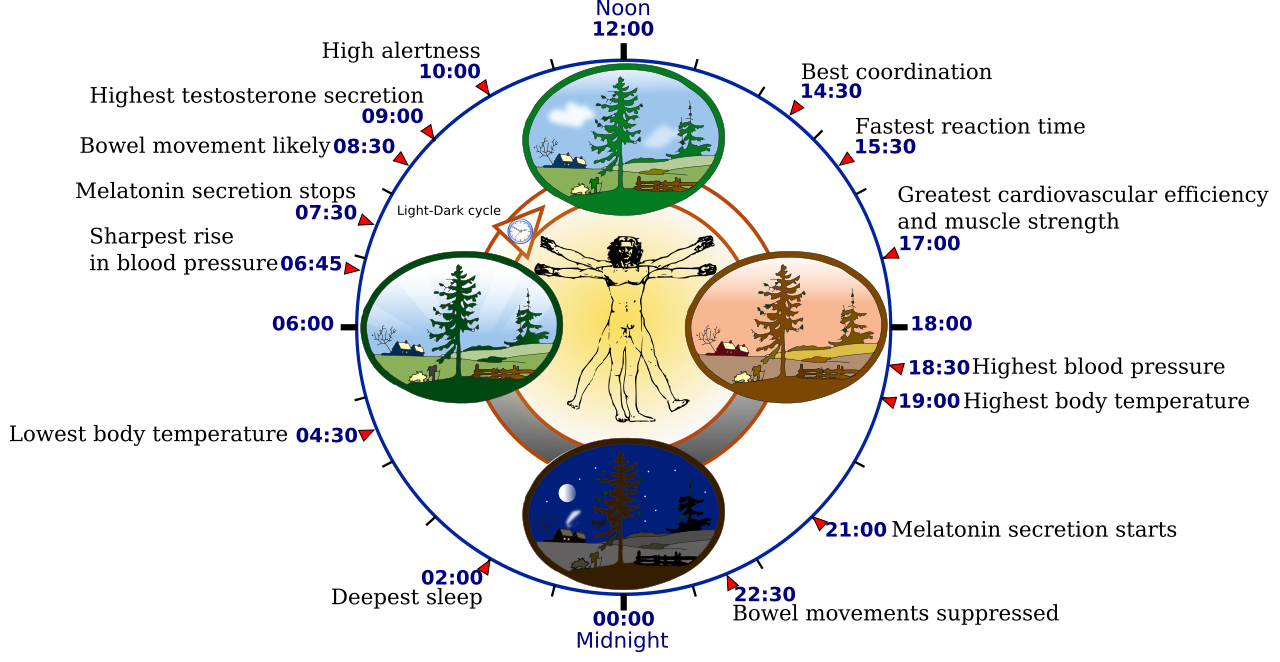
A study published in the British Journal of Psychiatry on 20 October 2026 found that roughly a quarter of people with severe, recurrent or persistent depression show a pattern researchers call "circadian depression," tied to disrupted sleep-wake rhythms rather than mood alone. The University of Sydney-led team says this subtype responds less to standard antidepressants and more to treatments that target the body clock, such as light therapy and melatonin.
Researchers at the University of Sydney's Brain and Mind Centre have described a subtype of depression they call "circadian depression," in which disruption of the body's roughly 24-hour internal clock appears to play a central role in the illness rather than being a side effect of it. The findings were published in the British Journal of Psychiatry on 20 October 2026.
What the study looked at
The team analysed clinical and genetic data from the Australian Genetics of Depression Study, a nationwide research project. The paper covered 11,380 participants with a lifetime diagnosis of depression. Researchers classified someone as having the circadian subtype if they met at least three of six criteria: a seasonal pattern to their illness, social jetlag, a delayed sleep midpoint, an evening chronotype (being a "night owl"), morning tiredness, and hypersomnia (sleeping longer than usual during depressive episodes), according to the journal article.
Using that threshold, 2,604 people were placed in the circadian group. The University of Sydney's own announcement describes this as nearly 25% of the sample, while the published abstract puts the figure at 23% of the total cohort — a small discrepancy between the institution's summary and the paper's own wording.
How the circadian group differed
According to the study, people in the circadian subtype reported an earlier age of depression onset and more severe symptoms, including hypomanic, manic or psychotic-like experiences and higher levels of suicidal ideation, compared with other participants with depression. The journal article also reports that the circadian group was more often female: about 80% of that group were women, compared with about 75% of the overall sample.
Genetically, the circadian group carried higher polygenic risk scores — statistical measures of inherited risk — for attention-deficit hyperactivity disorder (ADHD), major depression, anxiety, bipolar disorder, and for insomnia and an evening chronotype specifically. The researchers also reported associations with genetic markers for metabolic and inflammatory traits, using logistic regression with Bonferroni-corrected statistical thresholds across 28 polygenic risk scores, according to the journal abstract.
Why this matters for treatment
The paper reports that participants with circadian depression had a poorer response to selective serotonin reuptake inhibitors (SSRIs) and serotonin-noradrenaline reuptake inhibitors (SNRIs) — the most commonly prescribed classes of antidepressant. The University of Sydney's announcement states that this group instead tends to respond better to approaches that target the brain circuits governing the body clock, including light therapy, melatonin, and melatonin-targeted antidepressants.
Depression is not a uniform illness and understanding the characteristics of different subtypes mean that we can give people earlier access to treatments that will be most effective for them.
— Dr Emiliana Tonini, Brain and Mind Centre, University of Sydney (study's first author)
Circadian depression vs. other depression in the study
Feature
Circadian subtype (n=2,604)
Rest of cohort
Share of sample
23–25% (figures vary by source)
75–77%
Age at onset
Earlier, per the study
Later, per the study
Severity
More (hypo)manic, psychotic-like symptoms and suicidal ideation reported
Lower rates reported
SSRI/SNRI response
Poorer, per the study
Standard response
Response to light/melatonin therapy
Better, per University of Sydney summary
Not specifically highlighted
What is still unclear
The study is cross-sectional, meaning it captured associations at one point in time rather than tracking whether circadian disruption causes depression or results from it. It also relies on self-reported sleep and mood criteria rather than objective measures such as wearable sleep trackers. The University of Sydney materials and the journal abstract do not report a prospective trial testing whether light therapy or melatonin-based treatment improves outcomes specifically in this subgroup; the paper proposes the subtype based on existing clinical and genetic data rather than new treatment trials.
The researchers frame the work as a step toward classifying depression by underlying biological pattern rather than by symptoms alone, which they say could eventually help clinicians choose treatments faster for some patients.
Questions
What is "circadian depression"?
It is a proposed subtype of depression, described in a British Journal of Psychiatry study published 20 October 2026, in which disrupted sleep-wake timing — such as a seasonal illness pattern, hypersomnia, or an evening chronotype — accompanies the mood disorder and is linked to distinct genetic and treatment-response patterns.
How many people with depression have this subtype, according to the study?
The University of Sydney's summary of the research says nearly 25% of the 11,380-person sample met the criteria; the published journal abstract states the figure as 23% of the cohort (2,604 people in both cases).
Does circadian depression respond to standard antidepressants?
The study reports that this group had a poorer response to SSRIs and SNRIs, the most commonly prescribed antidepressant classes, and appeared to respond better to treatments aimed at the body clock, such as light therapy and melatonin, according to the University of Sydney.
Does the study prove disrupted circadian rhythm causes depression?
No. The research is cross-sectional and based on genetic and clinical data from one point in time, so it shows associations rather than establishing cause and effect, according to the published methodology.
Who conducted the research?
The study was led by Dr Emiliana Tonini and Dr Jacob Crouse, with Professor Ian Hickie as co-senior author, at the Brain and Mind Centre, University of Sydney, using data from the Australian Genetics of Depression Study.
How the world is telling it
FrenchFrench outlet Pourquoi Docteur frames the finding as the identification of a new clinical subtype ('dépression circadienne') and emphasizes practical implications for patients — noting that it resists classic serotonin-based antidepressants and may call for melatonin, melatonin-targeted antidepressants, or light-based treatment instead.
This piece was prepared with artificial intelligence and passed an automated source check before publication. If you see an error, ask for a correction. Request a correction or reply · How we make this
People who reach 110 or beyond — known as supercentenarians — tend to share traits such as leanness, disease-free aging and steady daily routines, according to Spanish cardiologist Manuel de la Peña. He attributes 75% of longevity to lifestyle and only 25% to genes, but a 2026 genetics study puts heredity's share closer to 50–55%, showing researchers still disagree on how much is nature versus habit.
Hospital hand-washing sinks can turn into long-term reservoirs for antibiotic-resistant bacteria that colonize drain pipes and splash onto nearby counters, according to peer-reviewed research and hospital outbreak reports. Documented outbreaks in Toronto and Tokyo show that cleaning or replacing a sink alone did not stop transmission; cases ended only after facilities combined sink redesign, stricter cleaning schedules and changes to staff hand-hygiene routines.
The FDA on October 19, 2026 classified a voluntary recall of more than 4.3 million tubes of toothpaste sold under the Brush Buddies, evo and ARU brands. The recall, covering children's products such as Barbie, Hot Wheels, My Little Pony and Crayola Silly Scents toothpaste, stems from manufacturing practice deviations; no illnesses have been reported.
Mindfulness meditation means paying attention to the present moment without judging it, and several reviews of clinical trials report it can ease stress and anxiety about as well as standard treatments for some people. This guide lays out evidence-based starting steps and the safety limits that health researchers have documented.