The Ottoman Empire grew from a small Turkic principality founded by Osman I around 1299 into a transcontinental power spanning the Balkans, the Middle East and North Africa, reaching its peak under Suleiman the Magnificent in the 16th century. Military setbacks from 1683 onward, mounting debt and the loss of territory led to its dissolution in 1922, after which the Republic of Turkey was declared in 1923.
Origins in Anatolia (1299–1453)
According to History.com and National Geographic, the Ottoman state was established around 1299 by Osman I, a Turkic tribal leader in northwestern Anatolia. National Geographic reports that in 1299 Osman declared himself the supreme leader of the region, beginning a campaign of conquest against neighboring territories, including lands held by the Byzantine Empire.
The decisive early turning point came in 1453, when Ottoman forces led by Sultan Mehmed II captured Constantinople, the capital of the Byzantine Empire, according to both History.com and National Geographic. The city, renamed Istanbul, became the new Ottoman capital and, per National Geographic, a major hub for trade between Europe and Asia. From there, Ottoman control expanded across the Balkans, the Middle East and North Africa.
Peak power under the sultans (1453–1683)
History.com states that Sultan Selim I conquered Syria, Arabia, Palestine and Egypt in 1517, extending Ottoman rule deep into the Arab world. His son, Suleiman I — known as Suleiman the Magnificent — ruled from 1520 to 1566 and is described by both History.com and National Geographic as presiding over the empire's greatest territorial extent and power.
National Geographic reports that at its height the empire stretched from Vienna in the north to the Persian Gulf in the east, Algeria in the west and Yemen in the south, with control over lucrative trade routes generating substantial wealth. History.com adds that this period also saw advances in calligraphy, painting, poetry, textiles, ceramics and music, along with scholarly progress in mathematics, astronomy and medicine, including the development of surgical instruments.
Key periods of Ottoman history
Period
Rulers/figures
Key event(s)
Territorial outcome
1299–1453
Osman I to Mehmed II
Founding of the state; capture of Constantinople (1453)
Expansion from Anatolia into the Balkans
1453–1683
Mehmed II, Selim I, Suleiman I
1517 conquest of Egypt, Syria, Arabia; peak under Suleiman (1520–1566)
Reached Vienna, Persian Gulf, Algeria and Yemen
1683–1870s
Various sultans
Failed second siege of Vienna (1683); Treaty of Balta Liman (1838); heavy foreign borrowing (1854–1875)
Gradual territorial loss and growing financial dependence on Europe
1912–1923
Mehmed V, Mehmed VI; later Mustafa Kemal Atatürk
Balkan Wars (1912–13); World War I (1914–18); sultanate abolished (1922)
Empire dissolved; Republic of Turkey declared October 29, 1923
Why the empire declined
Historians and the sources reviewed point to 1683 as a turning point: the Ottomans' failed second siege of Vienna marked the end of westward expansion, according to National Geographic, History.com and WorldAtlas. From the 17th century onward, the empire lost territorial control and economic strength relative to European rivals.
Decentralization: regional leaders collected taxes but often kept the revenue, limiting funds available for modernization, per WorldAtlas.
The janissaries, once an elite military corps, grew resistant to reform and were violently disbanded in 1826, according to WorldAtlas.
The 1838 Treaty of Balta Liman gave British merchants favorable trade access and low tax rates, per WorldAtlas.
Between 1854 and 1875 the Ottoman government borrowed heavily from European banks; by the 1870s, loan repayments consumed more than half of annual revenue, WorldAtlas reports.
Nationalist movements led to the loss of territory: History.com notes Greek independence in 1830 and the independence of Romania, Serbia and Bulgaria in 1878.
The sick man of Europe
— Tsar Nicholas I of Russia, as cited by WorldAtlas
WorldAtlas reports that Tsar Nicholas I used this phrase in the 1850s to describe the Ottoman Empire's perceived inevitable decline. In response to mounting internal and external pressure, the Ottoman government pursued the Tanzimat reforms in the mid-1800s, which, per WorldAtlas, included centralizing authority from Istanbul, expanding rights for non-Muslim subjects, broadening secular education and modernizing the military.
The empire's end and its legacy
National Geographic reports that the Balkan Wars of 1912–1913 cost the empire about a third of its remaining territory. The Ottomans then entered World War I allied with Germany and the Central Powers; according to National Geographic, more than two-thirds of the Ottoman military became casualties, and roughly 3 million civilians died during the war years, including an estimated 1.5 million Armenians. History.com identifies this event as the Armenian Genocide and notes that the Turkish government has historically disputed that characterization.
All three sources agree that the Ottoman sultanate was formally abolished in 1922 by Turkish nationalists. History.com adds that the Republic of Turkey was proclaimed on October 29, 1923, under Mustafa Kemal Atatürk, marking the definitive end of over six centuries of Ottoman rule.
Questions
When was the Ottoman Empire founded and by whom?
According to History.com and National Geographic, the Ottoman state was founded around 1299 by Osman I, a Turkic tribal leader in northwestern Anatolia.
When did the Ottoman Empire reach its peak?
The empire's peak is generally placed during the reign of Suleiman the Magnificent, from 1520 to 1566, when, per National Geographic, Ottoman territory stretched from Vienna to the Persian Gulf and from Algeria to Yemen.
Why was the Ottoman Empire called the 'sick man of Europe'?
WorldAtlas reports the phrase was coined by Tsar Nicholas I of Russia in the 1850s to describe the empire's perceived decline, dwindling territory and growing economic dependence on European powers.
What caused the Ottoman Empire's decline?
Sources point to the failed 1683 siege of Vienna, decentralized tax collection, resistance to reform by the janissary corps, unfavorable trade terms under the 1838 Treaty of Balta Liman, heavy foreign debt in the 1850s–1870s, and the loss of territory to nationalist independence movements in the Balkans.
When and how did the Ottoman Empire end?
The Ottoman sultanate was abolished in 1922 after defeat in World War I and the Balkan Wars; the Republic of Turkey was then declared on October 29, 1923, under Mustafa Kemal Atatürk, according to History.com.
This piece was prepared with artificial intelligence and passed an automated source check before publication. If you see an error, ask for a correction. Request a correction or reply · How we make this
Long before European colonization, the African continent was home to powerful states that built pyramids, ran trans-Saharan gold-and-salt economies, and raised cities of carved stone. This list ranks seven ancient African kingdoms by the scale of their political, economic or architectural reach, based on dates and figures from historians, UNESCO and museum records.
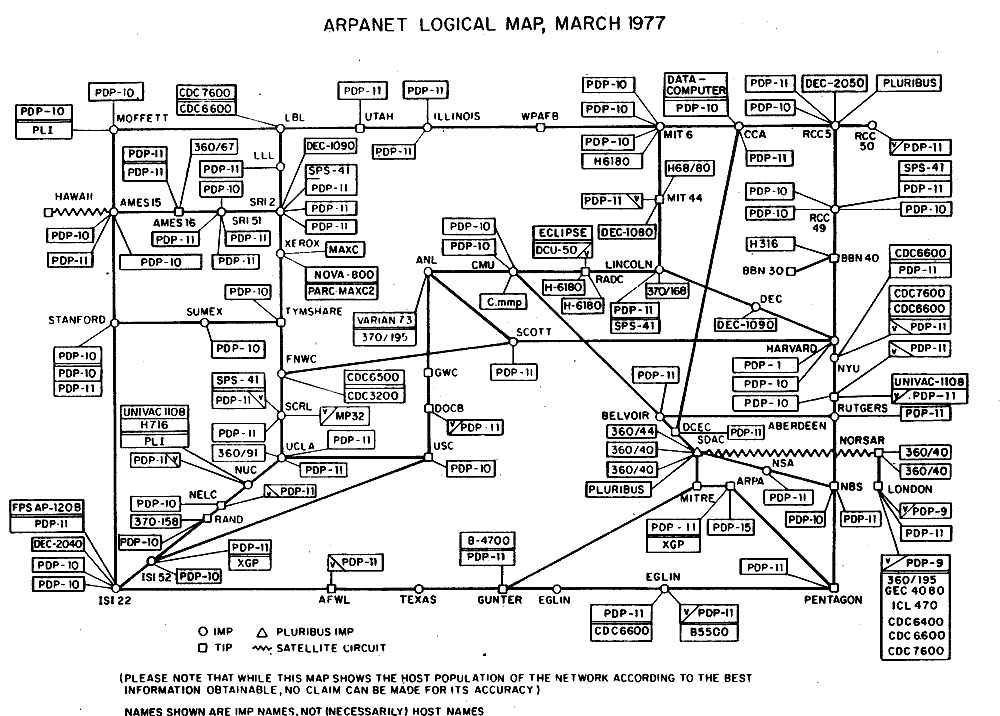
The internet began as a U.S. defense research network called ARPANET in 1969 and became the World Wide Web two decades later through a 1989 proposal at CERN. Today roughly 6 billion people — about three-quarters of the world's population — use the internet, according to the UN's International Telecommunication Union (ITU).
Archaeologists use two broad approaches: relative dating, which orders finds by layer or style without giving a year, and absolute (scientific) dating, which uses physical or chemical changes — such as carbon-14 decay, tree-ring patterns or potassium-argon decay — to estimate a calendar-based age range. Most sites are dated by combining several of these methods rather than relying on one alone.
Ancient Rome ran its affairs through elected magistrates, a senate of former officials and popular assemblies for roughly five centuries before power concentrated in a single emperor from 27 BCE. Its rigid social hierarchy, its legal code and its Latin tongue went on to shape European and wider Western institutions long after the empire itself fell.