Tatoi Palace, the former Greek royal family's estate north of Athens where Spain's Queen Sofía spent part of her childhood, is undergoing a restoration exceeding €70 million after decades of abandonment. Greece's Culture Ministry says the first museums at the 4,200-hectare site are due to open to the public in December 2026.
Tatoi Palace, the wooded former royal estate on Mount Parnitha north of Athens, is scheduled to open its first museums to the public in December 2026, according to Greek City Times. The Greek Ministry of Culture has spent decades letting the site decay before launching a restoration that Minister Lina Mendoni has called one of the country's largest cultural infrastructure projects.
From royal summer retreat to decades of decay
King George I of Greece bought the first 42 square kilometres of land at Tatoi in 1872 using his own money from Denmark, according to Wikipedia. The main palace building was completed between 1884 and 1886, designed by architect Ernst Ziller at the request of Queen Olga in a style inspired by Russian residences, Infobae reports. News.gtp.gr notes that King George II was born on the estate, which served as the royal family's summer, and later main, residence.
The Greek royal family's presence at Tatoi ended after the April 1967 military coup forced King Constantine II and his relatives into exile, El Debate reports. The monarchy was formally abolished by referendum in 1973 under the military government. What happened next to the estate's ownership is described differently by different sources: Wikipedia says the government of Andreas Papandreou confiscated the royal properties in 1994, while Infobae states that Tatoi passed definitively to Greek state control only in 2003, after the European Court of Human Rights ruled the estate had been private property and ordered compensation. Both sources agree the buildings fell into severe disrepair, suffering vandalism and looting, during the decades the dispute dragged on.
Queen Sofía's years at Tatoi
Queen Sofía of Spain, born Princess Sofía of Greece and Denmark, spent part of her childhood at Tatoi before marrying then-Prince Juan Carlos of Spain in 1962, according to El Debate.
I have wonderful memories of our family life in Tatoi. I seem to be smelling those breezes, among the eucalyptus, pine, chestnut and cypress trees.
— Queen Sofía of Spain, as quoted by Pilar Urbano in her biography of the queen, cited by El Debate
A restoration above €70 million
Greek City Times and The National Herald report that the current restoration programme, led by the Ministry of Culture, has passed €70 million. The funding mixes national and European money — including the EU's Recovery and Resilience Facility, the regional Operational Programme 'Attica' and the Operational Programme YMEPERAA — with private donations, chiefly from the Athanasios Laskaridis Charitable Foundation, which has backed feasibility studies since 2019, and the non-profit Aegeas, funded by Athanasios and Marina Martinou, which gave money for initial infrastructure in 2020. El Debate additionally reports that Britain's King Charles III contributed £12 million through a charitable trust toward the project.
Work has focused on the main palace, the royal mausoleum of King Constantine I and Queen Sophia — already finished with private funding, per Greek City Times — the former Stables of King George I, which will house a Museum of Royal Carriages, and a former dairy building being converted into an agricultural museum. An August 2021 wildfire damaged several estate buildings but spared the most valuable stored collections, El Debate reports.
Tatoi Palace: key dates
Year
Event
1872
King George I buys the first 42 km² of land at Tatoi (Wikipedia)
1884–1886
Main palace built by architect Ernst Ziller (Infobae)
1967
Military coup forces King Constantine II's family into exile (El Debate)
1973
Greek monarchy abolished by referendum under military rule (El Debate)
1994 / 2003
Greek state gains control of the estate — Wikipedia cites 1994 confiscation; Infobae cites 2003, after a European Court of Human Rights ruling
2021
Wildfire damages several estate buildings (El Debate)
Dec. 2026
First museums scheduled to open to the public (Greek City Times)
What visitors will see, and when
Greek City Times reports that Prime Minister Kyriakos Mitsotakis is expected to attend an inauguration in December 2026, when three museums are due to open: the Palace itself, displaying about 4,350 objects drawn from more than 100,000 items catalogued across the estate; the Museum of Royal Carriages, with eight restored vehicles including four Rolls-Royce limousines; and the Museum of Agricultural and Livestock Production, showing original dairy and farm equipment. A separate €3.2 million contract covers 24 months of site security, including CCTV and drone patrols, according to the same outlet. The former pigsty and winery buildings remain scheduled for later phases of the project.
The Palace museum: roughly 4,350 objects including royal gowns and porcelain, part of a wider collection of over 100,000 items
Museum of Royal Carriages: eight historic vehicles, including four Rolls-Royce limousines
Museum of Agricultural and Livestock Production: original dairy machinery and farm tools
Royal mausoleum of King Constantine I and Queen Sophia, already restored
Still unfinished: the estate's former pigsty and winery buildings
Questions
What is Tatoi Palace?
Tatoi Palace is a former summer residence of the Greek royal family on Mount Parnitha, north of Athens, built in the 1880s on land King George I bought in 1872, according to Wikipedia and Infobae.
Why is Tatoi Palace linked to Queen Sofía of Spain?
Queen Sofía of Spain, born a princess of Greece and Denmark, spent part of her childhood at Tatoi before marrying Juan Carlos of Spain in 1962, El Debate reports.
When will Tatoi Palace reopen to the public?
Greek City Times reports the first museums are scheduled to open in December 2026, with Prime Minister Kyriakos Mitsotakis expected to attend.
How much does the restoration cost and who is paying for it?
The project has passed €70 million, funded by EU recovery and regional programmes, Greek state funds, and private donors including the Laskaridis Foundation; El Debate also reports a £12 million contribution from Britain's King Charles III.
Why was Tatoi Palace abandoned for decades?
The royal family went into exile after the 1967 military coup and the monarchy was abolished in 1973; the estate then sat in legal limbo and disrepair, with Wikipedia citing state confiscation in 1994 and Infobae citing definitive state control only in 2003 after a European Court of Human Rights ruling.
How the world is telling it
SpanishSpanish-language outlets such as El Debate and Infobae frame the Tatoi restoration mainly through Queen Sofía's personal nostalgia, quoting her childhood memories of the estate's trees and breezes, and noting Spanish and British royal ties (including King Charles III's reported donation), rather than focusing on Greek domestic cultural-policy debates.
This piece was prepared with artificial intelligence and passed an automated source check before publication. If you see an error, ask for a correction. Request a correction or reply · How we make this
Pope Leo XIV confirmed Cardinal Luis Antonio Tagle, 69, as the new Dean of the College of Cardinals on October 8, 2026, making him the first Asian to hold the post. He succeeds Italian Cardinal Giovanni Battista Re, 92, who had led the college since 2020 and whose resignation Leo XIV accepted the same day.
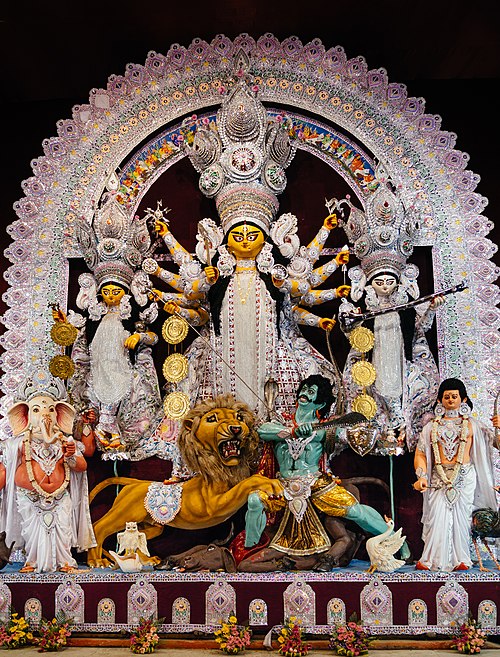
Durga Puja 2026 begins with Mahalaya on 10 October and the main five days run from Maha Shashthi (17 October) to Vijaya Dashami/Bijoya Dashami (20–21 October, depending on the panchang used). The ten-day festival honours the goddess Durga's victory over the demon Mahishasura and was added to UNESCO's Intangible Cultural Heritage list in 2021.
The Voice of Germany's 16th season is temporarily shifting its weekly broadcast slot in October 2026: new episodes move from SAT.1's Friday prime time to ProSieben's Saturday prime time on October 10 and 17, before returning to Fridays on SAT.1 from October 23. The change is tied to SAT.1 airing Promi Big Brother on the two affected Fridays.
Film dubbing replaces a movie's original dialogue with a newly recorded track in another language, matched to the actors' lip movements. The process runs through script translation, adaptation for timing and culture, voice casting, studio recording, and sound mixing, and it now faces disruption from AI voice-cloning tools that unions say threaten jobs.