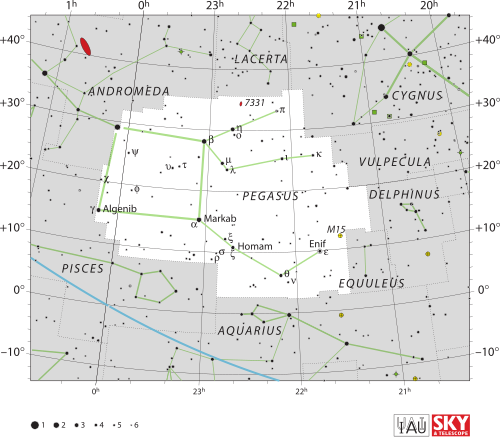
An exoplanet, short for "extrasolar planet," is a planet that orbits a star outside our solar system. The first confirmed exoplanets were found in 1992 around a pulsar, and the first one around a Sun-like star, 51 Pegasi b, followed in 1995, according to NASA's Jet Propulsion Laboratory-run science portal.
Why exoplanets are so hard to see
Stars are enormously brighter than the planets orbiting them, so a planet's own light is typically overwhelmed by its star's glare by a factor of a million or more, according to ESA's exoplanet detection-methods page. For that reason, most confirmed exoplanets have been found indirectly, by measuring how a planet affects the light or position of its host star rather than by photographing the planet itself.
The transit method: watching for tiny dips in starlight
The transit method looks for a periodic, slight dimming of a star's light when a planet passes in front of it from Earth's point of view. NASA's Kepler space telescope, launched in 2009, used this technique on a massive scale and is credited with transforming exoplanet science, per NASA's overview of the 5,000-exoplanet milestone. NASA's current Transiting Exoplanet Survey Satellite (TESS), launched in 2018, continues the approach by scanning patches of sky for these transit dips, according to NASA's exoplanets science page.
The radial-velocity (wobble) method
The radial-velocity method, also called the wobble method, detects the slight back-and-forth motion of a star caused by the gravitational pull of an orbiting planet. As the star and planet circle their shared center of mass, the star's light shifts slightly toward red and blue wavelengths in a repeating pattern, which spectrographs on the ground can measure. ESA notes this was the dominant detection technique until the early 2000s and was the method that found 51 Pegasi b, the first planet confirmed around a Sun-like star.
Microlensing, direct imaging and astrometry
Gravitational microlensing relies on a chance alignment: when a star with orbiting planets passes in front of a more distant star, its gravity bends and briefly magnifies the background star's light, and any planets produce small additional bumps in that light curve. ESA describes the method as highly sensitive but effectively unrepeatable, since each alignment is a one-time event.
Direct imaging means capturing an actual image of a planet by blocking out the star's light, usually with an instrument called a coronagraph. ESA's detection-methods page says this currently works only for young, massive planets orbiting far from their host star, because of the extreme brightness contrast between star and planet.
Astrometry detects a planet by measuring minute shifts in a star's position on the sky as it wobbles around the system's center of mass. ESA's page states that only a handful of exoplanets have been confirmed this way so far, though the agency's Gaia mission is expected to eventually detect tens of thousands of planets within about 500 parsecs (roughly 1,600 light-years) using this technique.
How many exoplanets have been found, and by which method
According to the NASA Exoplanet Archive, run by Caltech's IPAC for NASA, the confirmed exoplanet count stood at 6,451 as of mid-October 2026. The transit method accounts for the large majority of confirmed planets, followed by radial velocity and microlensing; direct imaging and astrometry contribute far smaller numbers because of their technical difficulty.
Confirmed exoplanets by primary detection method (NASA Exoplanet Archive)| Detection method | Confirmed planets |
|---|
| Transit | 4,785 |
|---|
| Radial velocity | 1,204 |
|---|
| Microlensing | 292 |
|---|
| Direct imaging | 98 |
|---|
| Transit timing variations | 29 |
|---|
| Eclipse timing variations | 17 |
|---|
| Pulsar timing variations | 8 |
|---|
| Orbital brightness modulation | 9 |
|---|
| Astrometry | 6 |
|---|
| Pulsation timing variations | 2 |
|---|
| Disk kinematics | 1 |
|---|
The archive notes that many planets have actually been detected or confirmed using more than one method; the table above reflects the primary technique attributed to each confirmed planet.
What comes next
NASA's science page on exoplanets states that the agency's planned Roman Space Telescope is expected to use microlensing and other techniques to find roughly 100,000 additional exoplanets once it becomes operational. The same NASA page notes that there are more planets than stars in the Milky Way galaxy, meaning the roughly 6,500 confirmed so far represent only a small fraction of what is thought to exist.
This piece was prepared with artificial intelligence and passed an automated source check before publication. If you see an error, ask for a correction. Request a correction or reply · How we make this