Science · News
Siberian lab worker dies after reported plague exposure; ~200 under observation
Published:

In brief
A 28-year-old laboratory assistant at the Irkutsk Anti-Plague Institute in Shelekhov, Siberia, died on October 2, 2026, days after reportedly breaking a test tube containing live plague bacteria. Russian authorities have not officially confirmed plague as the cause, citing "pneumonia of unknown aetiology," while media reports and regional officials describe nearly 200 contacts placed under medical observation and several hospitals temporarily closed.
Darya Shipilova, a 28-year-old laboratory assistant at the Irkutsk Research Anti-Plague Institute, died in the early hours of October 2, 2026, in the intensive care unit of the district hospital in Shelekhov, a town near Irkutsk in Siberia, according to the Moscow Times and Euronews.
Colleagues and local media reports cited by the Moscow Times and Newsweek say Shipilova broke a test tube containing live plague bacteria, Yersinia pestis, while collecting samples on September 25. Euronews reported that her condition worsened two days later, and the Moscow Times reported she was hospitalized with severe pneumonia symptoms, placed on mechanical ventilation, and died on October 2.
What officials have and have not confirmed
Russia's consumer health watchdog, Rospotrebnadzor, has not officially confirmed that plague caused Shipilova's death. Euronews reported that authorities listed her diagnosis as "pneumonia of unknown aetiology" after further testing, rather than confirming pneumonic plague — the lung-based form of the disease that can spread between people through respiratory droplets.
The sanitary and epidemiological situation in the Irkutsk region, the cities of Irkutsk and Shelekhov is stable.
Newsweek reported that Rospotrebnadzor denied any accident had occurred at the institute, even as police opened a criminal investigation into possible health and safety violations, according to the Moscow Times.
Quarantine and hospital closures
Regional governor Igor Kobzev said all identified contacts of Shipilova had been placed under medical observation and that their test results were negative for illness, the Moscow Times reported. Newsweek put the number of people under observation at roughly 197, including more than 100 held in hospital wards, while the Moscow Times described the figure as nearly 200.
Euronews reported that multiple hospitals in the Irkutsk region were placed under three-week quarantine with visitor restrictions. Newsweek specified that four Irkutsk hospitals were closed on this basis. Euronews also reported that a nearby aluminium plant made masks mandatory as a preventive measure, and that protective equipment was distributed in local kindergartens.
Public events in Irkutsk were canceled as part of what authorities called anti-epidemic measures, the Moscow Times reported. Alexei Tsydenov, a regional leader, said there were no signs of outbreak in the neighboring republic of Buryatia.
Background on the institute and the region
The Irkutsk Anti-Plague Institute studies and stores highly dangerous pathogens, including plague, as part of surveillance work tied to natural plague foci in Siberia and neighboring regions. Euronews cited Russian epidemiologist Gennady Onishchenko as saying that rodent carriers of plague typically enter winter dormancy in Siberia by early October.
Plague is caused by the bacterium Yersinia pestis. Newsweek described the pneumonic form, which affects the lungs, as the most virulent form of the disease and said it can be transmitted between people through respiratory droplets. Newsweek reported that the World Health Organization recorded close to 4,000 suspected plague cases worldwide between 2019 and 2025, with most occurring in Africa, particularly the Democratic Republic of Congo and Madagascar.
Questions
- Who died in the Russian plague lab incident?
- Darya Shipilova, a 28-year-old laboratory assistant at the Irkutsk Research Anti-Plague Institute in Shelekhov, Siberia, died on October 2, 2026, after being hospitalized with severe pneumonia.
- Has plague officially been confirmed as the cause of death?
- No. Russian authorities, through Rospotrebnadzor, have listed the diagnosis as "pneumonia of unknown aetiology" rather than officially confirming pneumonic plague, even though local media and colleagues reported she was exposed to live plague bacteria.
- How many people were quarantined or placed under observation?
- Reports vary slightly: the Moscow Times cited nearly 200 contacts under medical observation, while Newsweek put the figure at about 197, including more than 100 in hospital wards.
- Were hospitals closed because of the incident?
- Yes. Euronews and Newsweek reported that several hospitals in the Irkutsk region, described by Newsweek as four facilities, were placed under three-week quarantine with visitor restrictions.
- What is the Irkutsk Anti-Plague Institute?
- It is one of a network of specialized Russian laboratories that monitor and research dangerous pathogens such as plague, linked to historic natural plague-carrying rodent populations in Siberia and surrounding regions.
Sources
This piece was prepared with artificial intelligence and passed an automated source check before publication. If you see an error, ask for a correction. Request a correction or reply · How we make this
Related
ScienceNews
USGS: Deep-Sea Sulfide Rocks Can Spontaneously Catch Fire in the Lab
A USGS-led team reports that iron-sulfide-rich rocks collected from the seafloor off the Oregon–California coast spontaneously combusted after being brought into a laboratory. The study, published in Scientific Reports, says the reaction poses a possible fire hazard for future deep-sea mining operations that has not been fully accounted for in current safety rules.

ScienceNews
Northern Lights Reach Southern England After G3 Solar Storm
A strong (G3) geomagnetic storm pushed the aurora borealis far south of its usual range over the UK on October 10–11, 2026, with sightings reported from Scotland down to Devon, Hampshire and Kent in southern England. The display followed a coronal mass ejection that left the Sun on October 8 and reached Earth two days later, according to the US Space Weather Prediction Center (SWPC).
ScienceArticle
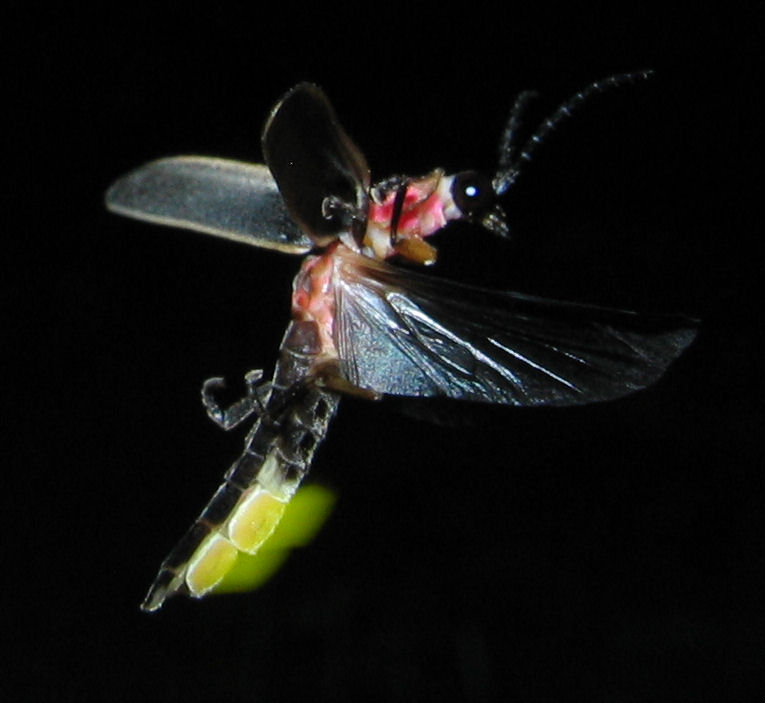
Bioluminescence Explained: The Chemistry Behind Light-Producing Organisms
Bioluminescence is light produced inside a living organism by a chemical reaction between a light-emitting molecule called luciferin, an enzyme (usually luciferase) and oxygen. Organisms use this self-made light to find food, attract mates, evade predators and communicate, and it is far more common in the ocean than on land.
ScienceArticle
Five infections linked to 1 in 8 cancers worldwide, new global study finds
An estimated 2.3 million new cancer cases in 2024—about 12% of all cancers diagnosed worldwide—were caused by infections, according to a study from the International Agency for Research on Cancer (IARC) published in The Lancet Oncology. Five pathogens accounted for most of this burden: H. pylori, HPV, hepatitis B, Epstein-Barr virus and hepatitis C. Most of these cancers are preventable through vaccination, screening or treatment of the underlying infection.