Space · News
Scientists Describe 'Superhabitable' Worlds That Could Outdo Earth for Life
Published:
In brief
Planetary scientists say some exoplanets could be more habitable to life than Earth. So-called "superhabitable" worlds — orbiting older, cooler K-dwarf stars with specific size, mass and temperature traits — could support more abundant, longer-lasting life, though none has been confirmed and all known candidates remain beyond the reach of current technology.
What makes a world 'superhabitable'
In 2020, a team led by Dirk Schulze-Makuch of Washington State University, with René Heller of the Max Planck Institute for Solar System Research and Edward Guinan of Villanova University, proposed criteria for what they called superhabitable planets — worlds that could theoretically support more and longer-lived life than Earth, according to a summary of the study, published in the journal Astrobiology, reported by the science news site EarthSky.
EarthSky reported that an ideal superhabitable planet would be older than Earth, in the range of 5 to 8 billion years, roughly 10% larger in diameter and about 1.5 times Earth's mass, with a global mean temperature about 8 degrees Fahrenheit warmer and a wetter surface than Earth's. Such a planet would also orbit a K-type star, which can shine steadily for 20 to 70 billion years — far longer than the sun's roughly 10-billion-year lifespan — giving life more time to evolve, EarthSky said.
24 candidates, none confirmed
Searching among more than 4,000 known exoplanets located in their stars' habitable zones, the researchers singled out 24 candidates that came closest to the superhabitable criteria, including Kepler-69c and Kepler-186f, EarthSky reported. None of the 24 met every criterion, and the study's authors said the conditions described remain largely untestable with current observational tools, according to EarthSky's account of the paper. EarthSky quoted Schulze-Makuch as saying humans have a great number of complex and diverse lifeforms on Earth, but that does not mean Earth has the best of everything.
Newer research points to cooler K-dwarf systems
A more recent study by Iva Vilović of the Technical University of Berlin and René Heller of the Max Planck Institute for Solar System Research modeled planets orbiting mid-type K dwarf stars, according to the science newsletter Centauri Dreams. The study found that a planet receiving about 80% of the sunlight Earth gets from the sun — positioned between the inner edge and the center of its star's habitable zone — could hold a stable surface temperature while needing far less atmospheric carbon dioxide than a planet orbiting in the middle of a sun-like star's habitable zone, Centauri Dreams reported.
Centauri Dreams said the modeled atmosphere on such a world would contain more oxygen (25% versus Earth's 21%) along with higher methane and nitrous oxide linked to microbial activity, and that the planet would still need plate tectonics and a strong magnetic field to stay habitable, with surface temperatures about 5 degrees Celsius warmer than Earth's today.
France 24 reported that researchers simulating conditions around K-dwarf stars described hypothetical worlds with better weather, smoother terrain, abundant flowing water and abundant plant and animal life; the outlet also said some plant leaves grew faster under light simulating a K-dwarf star than under the sun's light.
Why these worlds remain out of reach
K-type stars are not rare: Centauri Dreams reported that roughly 1,000 of them exist within 100 light-years of Earth. But confirming whether any orbiting planet is genuinely superhabitable — let alone inhabited — is far beyond current capabilities. Centauri Dreams reported that detecting a paired oxygen-and-methane biosignature with the James Webb Space Telescope would require about 150 transits, or roughly 43 years of observation, for a planet around a K-dwarf star, compared with about 1,700 transits — nearly 1,700 years — for an Earth-like planet orbiting a sun-like star.
France 24 summarized the practical conclusion of the coverage: the worlds described as potentially better suited to life are located outside the solar system, placing them beyond the reach of any current or foreseeable spacecraft.
| Trait | Earth | Hypothetical superhabitable planet |
|---|---|---|
| Age | ~4.5 billion years (baseline) | 5–8 billion years (Schulze-Makuch et al., via EarthSky) |
| Mass | 1 Earth mass (baseline) | ~1.5 Earth masses (EarthSky) |
| Diameter | 1 Earth diameter (baseline) | ~10% larger (EarthSky) |
| Mean temperature | baseline | ~8°F warmer (EarthSky, 2020 study); ~5°C warmer surface temperature in a separate K-dwarf model (Centauri Dreams) |
| Host star lifespan | Sun: ~10 billion years (EarthSky) | K-type star: 20–70 billion years (EarthSky) |
Questions
- What is a 'superhabitable' planet?
- It is a term used by researchers including Dirk Schulze-Makuch for a hypothetical class of planets that could support more abundant or longer-lasting life than Earth because of traits such as being older, somewhat larger, warmer and wetter, and orbiting a longer-lived star, according to EarthSky.
- Has a superhabitable planet actually been found?
- No. EarthSky reported that none of the 24 candidate planets identified in the 2020 study met every criterion for superhabitability, and the study's authors said the conditions remain largely untestable with current instruments.
- Why are K-dwarf stars considered good candidates for hosting life?
- According to Centauri Dreams, K-dwarf stars are cooler and less flare-prone than the sun and can shine steadily for tens of billions of years, giving any orbiting planet far more time for life to develop than Earth has had around the sun.
- Could humans ever reach or study these planets up close?
- Not with current technology. France 24 said the described worlds lie outside the solar system, and Centauri Dreams reported that even remote detection of biosignatures with the James Webb Space Telescope could take decades of observation time for a nearby K-dwarf system.
- Which planets are considered leading superhabitable candidates?
- EarthSky reported that Kepler-69c and Kepler-186f were among the 24 candidates identified by Schulze-Makuch's team, selected from more than 4,000 known exoplanets located in their stars' habitable zones.
Sources
This piece was prepared with artificial intelligence and passed an automated source check before publication. If you see an error, ask for a correction. Request a correction or reply · How we make this
Related

SpaceArticle
How rockets work: propulsion systems and launch technology explained
Rockets fly by throwing mass out of a nozzle at high speed, which pushes the vehicle the opposite way under Newton's third law — no air to push against is needed. Launch vehicles mainly use chemical propulsion (liquid, solid or hybrid), built in stages that are discarded as they burn out, while spacecraft already in space often switch to low-thrust electric (ion) propulsion for efficiency.
SpaceNews
Perseverance Rover Sets Mars Driving Record at 28.1 Miles, Topping Opportunity
NASA's Perseverance rover has driven farther than any other vehicle on another world, reaching 28.10 miles (45.22 km) on Mars on October 11, 2026, according to NASA's Jet Propulsion Laboratory. The new mark edges past the 28.06 miles (45.16 km) logged by the Opportunity rover between 2004 and 2018 — a distance Opportunity needed nearly 15 years to cover, versus about 5.5 years for Perseverance.
SpaceArticle
Black Holes Explained: How They Form, What They Look Like, and the Proof They Exist
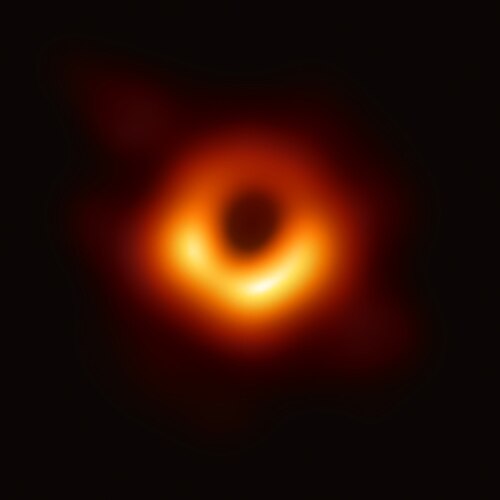
A black hole is a region where gravity is so strong that nothing, not even light, can escape once it crosses the event horizon. Most black holes form from the collapse of massive dying stars, while the origin of the largest, supermassive black holes remains poorly understood, according to NASA. Their existence has been confirmed both by a 2015 gravitational-wave detection and a 2019 direct image.
SpaceGuide
Beginner's Guide to Choosing and Using a Telescope
For a first telescope, aperture — the diameter of the main lens or mirror — matters more than magnification, since it determines how much light the instrument gathers. Beginners are generally steered toward a 75–100 mm refractor or a 150–200 mm Dobsonian reflector, paired with realistic expectations about what planets and deep-sky objects actually look like through an eyepiece.