On October 17, 1956, a 13-year-old Bobby Fischer defeated master Donald Byrne in a game later called the "Game of the Century." That win, his 1972 world title over Boris Spassky, and his later Chess960 variant remain the three moments most often cited as defining his influence on modern chess.
Seventy years ago this week, on October 17, 1956, a 13-year-old from Brooklyn sat down at the Marshall Chess Club in New York against Donald Byrne, a Penn State professor and International Master. The game that followed is still studied by players around the world and is widely known simply as the "Game of the Century."
The game that introduced Fischer to the chess world
The game was part of the third Lessing J. Rosenwald Trophy, an invitational tournament for promising American players. Byrne opened with a Grünfeld Defense. On move 17, Fischer sacrificed his queen, a decision that initially looked reckless but opened the way for his rook, two bishops and a pawn to overwhelm Byrne's position. The attack ended in checkmate on move 41, according to the Italian outlet AGI, which revisited the game on the occasion of its 70th anniversary.
Chess journalist Hans Kmoch annotated the game for the December 1956 issue of Chess Review and gave it the name that stuck, "the game of the century," as noted by chess history site ChessBase. The win earned the tournament's beauty prize.
The victory did not make Fischer the tournament winner. Sources differ slightly on his exact placement in the 12-player field: AGI reports he tied for eighth place, Uno Scacchista describes it as eighth-to-ninth, and ChessBase puts it at eighth-to-tenth; all three agree on a score of 4.5 points out of 11 games. The single game against Byrne nevertheless overshadowed the rest of the event and travelled through newspaper chess columns and magazines for decades, per ChessBase.
Notably, Fischer did not include this game when he compiled his own anthology, My 60 Memorable Games, published in 1969 — he had already annotated and published it separately years earlier, ChessBase reports.
From prodigy to world champion
The Byrne game set Fischer on a rapid trajectory. Within two years, in 1958, he became the youngest grandmaster in chess history at the time, a milestone noted by AGI. His career built toward the moment most historians consider the peak of his competitive life: the 1972 World Chess Championship against defending champion Boris Spassky of the Soviet Union.
Played in Reykjavik, Iceland, the match's opening ceremony was set for July 1, 1972, but Fischer skipped it while demanding more prize money and a cut of television and film rights, according to History.com. He arrived after a two-day delay, during which British financier Jim Slater doubled the prize fund; Spassky then won the first game, Fischer forfeited the second after further disputes, and play resumed on July 16 with a Fischer win. Fischer went on to win the match overall by a score of 12.5 to 8.5 — seven wins, three losses and eleven draws — with the decisive point reached on September 1, 1972.
The win made Fischer the first American to hold the world championship since the title's creation in 1866, History.com reports, and ended 24 consecutive years of Soviet dominance of the crown. The match carried Cold War weight: Fischer himself described it, according to History.com, as pitting "the free world against the lying, cheating, hypocritical Russians." Fischer ultimately earned $156,250 to Spassky's $93,750.
Really the free world against the lying, cheating, hypocritical Russians.
— Bobby Fischer, quoted by History.com, on the 1972 title match
A second legacy: rethinking how chess is played
Fischer's influence did not end with his 1972 title. After a 1992 rematch against Spassky, he worked out the rules for a chess variant designed to reduce the role of memorized opening preparation. He formulated the rules in September 1993 and presented them publicly on June 19, 1996, in Buenos Aires, according to Wikipedia's entry on the variant.
The variant, known as Chess960 or Fischer Random Chess, randomizes the starting arrangement of pieces on the back rank — keeping bishops on opposite-colored squares and the king between the two rooks — producing exactly 960 possible starting positions. The goal, Fischer argued, was to make rote opening memorization impractical and push players back toward creativity and over-the-board calculation.
The variant gained formal recognition when FIDE, the International Chess Federation, added it to the official Laws of Chess appendix in 2008, per Wikipedia. FIDE sanctioned the first official Chess960 World Championship in 2019, won by Wesley So over Magnus Carlsen; Hikaru Nakamura won the title in 2022, and Carlsen became champion again in 2026.
Fischer's three defining moments
Key moments in Bobby Fischer's chess career
Date
Event
Why it matters
July 20, 1956
Wins U.S. Junior Championship at age 13
First major title, per ChessBase
October 17, 1956
Defeats Donald Byrne — the "Game of the Century"
Queen sacrifice at move 17, mate at move 41; named by Hans Kmoch (ChessBase, AGI)
1958
Becomes youngest grandmaster in chess history to date
Confirms early promise as lasting strength (AGI)
Sept. 1, 1972
Beats Boris Spassky 12.5–8.5 in Reykjavik
First American world champion since 1866; ends 24 years of Soviet title dominance (History.com)
June 19, 1996
Unveils Fischer Random Chess (Chess960) in Buenos Aires
FIDE-sanctioned variant with its own World Championship since 2019 (Wikipedia)
Why the Byrne game is still called the century's best
Part of the game's enduring reputation lies in the contrast between Fischer's age and the depth of the combination he found. Kmoch's review, cited by both ChessBase and AGI, compared Fischer's positional maturity to that of earlier prodigies such as Paul Morphy and José Raúl Capablanca. The game is still used in chess instruction today as a model of how material sacrifice can be converted into an unstoppable attack.
Questions
What was Bobby Fischer's "Game of the Century"?
It was Fischer's October 17, 1956 win over Donald Byrne at the Rosenwald Trophy in New York, featuring a queen sacrifice on move 17 that led to checkmate on move 41. Chess journalist Hans Kmoch named it the "game of the century" when he published it in Chess Review.
How old was Fischer when he played the Byrne game?
He was 13 years old, according to both ChessBase and the Italian outlets AGI and Uno Scacchista.
When did Fischer become world chess champion?
He won the title on September 1, 1972, beating defending champion Boris Spassky 12.5–8.5 in Reykjavik, Iceland, per History.com.
What is Chess960 and did Fischer invent it?
Chess960, or Fischer Random Chess, is a variant with randomized back-rank starting positions. Bobby Fischer formulated its rules in 1993 and presented them publicly in 1996 in Buenos Aires; FIDE later added it to the official Laws of Chess and began sanctioning a world championship for it in 2019.
Did Fischer win the 1956 tournament where he played the famous Byrne game?
No. Sources differ slightly on his exact finish in the 12-player field — AGI says tied for eighth, Uno Scacchista says eighth-to-ninth, and ChessBase says eighth-to-tenth — but all agree he scored 4.5 out of 11 points, even though the single game against Byrne became the most famous result of the event.
How the world is telling it
ItalianItalian chess outlets AGI and Uno Scacchista marked the 70th anniversary of the Byrne game with detailed move-by-move retrospectives, framing it as the moment the world first noticed Fischer and treating his later tournament placing as a minor footnote next to the game's lasting fame.
This piece was prepared with artificial intelligence and passed an automated source check before publication. If you see an error, ask for a correction. Request a correction or reply · How we make this
Long before European colonization, the African continent was home to powerful states that built pyramids, ran trans-Saharan gold-and-salt economies, and raised cities of carved stone. This list ranks seven ancient African kingdoms by the scale of their political, economic or architectural reach, based on dates and figures from historians, UNESCO and museum records.
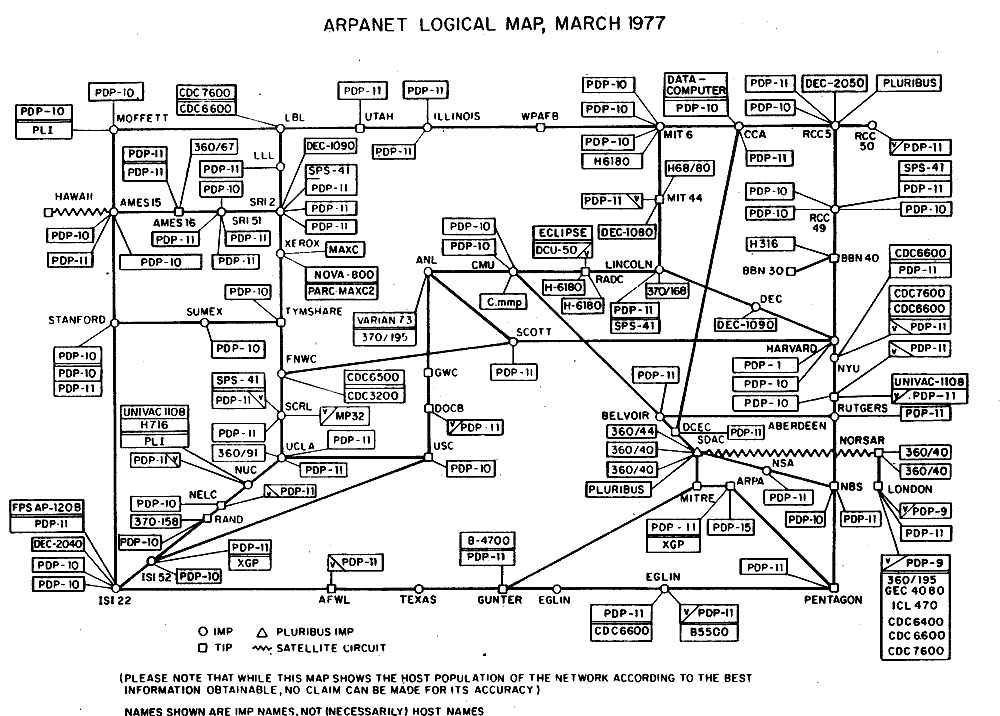
The internet began as a U.S. defense research network called ARPANET in 1969 and became the World Wide Web two decades later through a 1989 proposal at CERN. Today roughly 6 billion people — about three-quarters of the world's population — use the internet, according to the UN's International Telecommunication Union (ITU).
Archaeologists use two broad approaches: relative dating, which orders finds by layer or style without giving a year, and absolute (scientific) dating, which uses physical or chemical changes — such as carbon-14 decay, tree-ring patterns or potassium-argon decay — to estimate a calendar-based age range. Most sites are dated by combining several of these methods rather than relying on one alone.
Ancient Rome ran its affairs through elected magistrates, a senate of former officials and popular assemblies for roughly five centuries before power concentrated in a single emperor from 27 BCE. Its rigid social hierarchy, its legal code and its Latin tongue went on to shape European and wider Western institutions long after the empire itself fell.