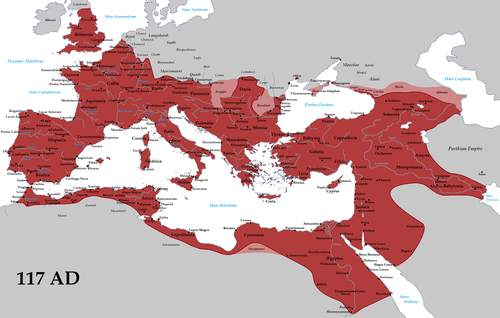
Ancient Rome grew from a small city-state on the Italian peninsula into an empire that, at its height, controlled roughly 5 million square kilometres and around 60 million people, connected by a road network researchers have now mapped at close to 300,000 kilometres, according to a 2025 study by Aarhus University archaeologist Tom Brughmans and colleagues, published via the Itiner-e project and reported by The Conversation.
That empire's institutions did not vanish when its western half collapsed in 476 CE. Roman law, Latin, Roman-style government and Roman engineering were absorbed, copied or rediscovered over the following centuries, and they remain visible in courtrooms, parliaments, languages and building sites today, according to the World History Encyclopedia.
Law: from the Twelve Tables to today's civil codes
Roman law rested on the idea that all citizens were subject to the same rules regardless of social class, and it produced early versions of trial by jury, civil rights protections, personal wills and business corporations, the World History Encyclopedia states. Its most influential later form was the Corpus Juris Civilis, commissioned by Byzantine Emperor Justinian I in February 528 CE and led by the jurist Tribonian with ten legal experts and 39 scribes, who condensed more than 2,000 books and roughly three million lines of Roman legal text, according to the World History Encyclopedia's account of the Corpus Juris Civilis.
The project produced four parts: the Codex Justinianus (529 CE, 12 books of imperial edicts), the Digestum and Institutiones (both completed in December 533 CE), and the Novellae Constitutiones issued between 534 and 565 CE. The code governed Byzantine law for almost a millennium, until the empire's fall in 1453 CE, and after being incorporated into legal study in 11th-century Europe it became the basis for many later legal systems, the World History Encyclopedia reports.
Government: separating powers before the United States existed
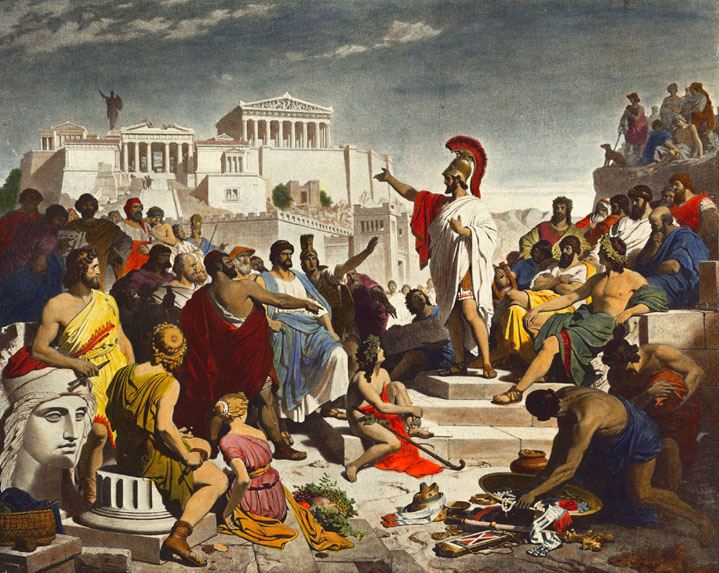
During the Roman Republic, elected consuls acted as an executive, the Senate and popular assemblies as a legislature, and judges called praetors as a judiciary — an early separation of powers meant to prevent any single person from seizing total control, according to the World History Encyclopedia. That structure is cited by the same source as a model later adopted by the United States and other representative republics.
Language: why Latin still sits inside English
Latin spread with Roman conquest and, after the empire's fragmentation, evolved regionally into the Romance languages — French, Italian, Spanish, Portuguese and Romanian, among others, per the World History Encyclopedia. The same source states that Latin informs roughly 80% of English vocabulary, either as root words or through direct borrowing, citing examples such as 'school' from the Latin schola and 'island' from insula.
Engineering: roads and concrete built to outlast their builders
The newly completed Itiner-e map, led by Brughmans' team at Aarhus University and published in 2025, puts the Roman road network at about 300,000 kilometres — a 59% increase over an earlier estimate of 188,555 kilometres — built using satellite imagery, archaeological records and historical maps rather than assuming idealised straight lines. The researchers note that only 2.7% of mapped segments have precisely confirmed locations, while most of the rest are estimated with varying confidence, as reported by The Conversation.
Roman concrete has drawn separate scientific attention for its durability. MIT associate professor Admir Masic, whose lab studies ancient materials, has highlighted that Roman concrete is still standing after two millennia and continues to repair small cracks in itself over time — a property modern concrete generally lacks, according to MIT News. Masic's team is now applying related principles to develop new 'multifunctional' concretes intended to also store energy or self-repair, the same report states.
Rome's reach in numbers
Roman legacy by the numbers| Legacy | Figure | Source |
|---|
| Road network | ~300,000 km mapped (Itiner-e, 2025), up from 188,555 km in earlier estimate | Aarhus University / The Conversation |
|---|
| Corpus Juris Civilis compilation | 2,000+ books, ~3 million lines of legal text condensed, 528–534 CE | World History Encyclopedia |
|---|
| Byzantine legal use of the Code | Almost a millennium, until 1453 CE | World History Encyclopedia |
|---|
| Imperial population connected by roads | ~60 million people across ~5 million km² | The Conversation |
|---|
| Roman concrete self-healing property | Studied by MIT's Admir Masic; largely absent in modern concrete | MIT News |
|---|
Questions
- Did Roman law directly become modern law?
- Not directly, but Justinian's Corpus Juris Civilis (528–534 CE) was incorporated into legal study in 11th-century Europe and became the basis for many later civil-law systems, according to the World History Encyclopedia.
- How many languages come from Latin?
- The major Romance languages — French, Italian, Spanish, Portuguese and Romanian — all evolved from spoken Latin as the empire fragmented, per the World History Encyclopedia, which also states Latin informs roughly 80% of English vocabulary.
- How long was the Roman road network?
- A 2025 mapping project called Itiner-e, led by researchers at Aarhus University, puts it at roughly 300,000 kilometres, a 59% increase over the previous estimate of 188,555 kilometres, as reported by The Conversation.
- Why is Roman concrete still studied today?
- MIT researchers, including associate professor Admir Masic, have studied why Roman concrete remains standing after roughly 2,000 years and can self-heal small cracks, a property most modern concrete lacks, and are now applying related principles to new 'multifunctional' concretes, according to MIT News.
- Did the Roman Republic influence modern government structures?
- Historians at the World History Encyclopedia point to the Republic's division of consuls, Senate/assemblies and praetors as an early separation of executive, legislative and judicial power, a model it states the United States later adapted.
This piece was prepared with artificial intelligence and passed an automated source check before publication. If you see an error, ask for a correction. Request a correction or reply · How we make this