News & Articles
Life
What the world is talking about, with sources. Every piece is prepared with artificial intelligence, and every claim links to where it came from.

How to Build a Work-From-Home Routine That Protects Your Focus
An effective remote-work routine combines fixed start and stop times, a dedicated workspace, and protected blocks for deep work, rather than open-ended flexibility. Research from Gallup, Microsoft and Stanford economist Nicholas Bloom shows that structure, manager communication and clear boundaries — not location alone — determine whether people working from home stay productive and avoid burnout.

First-Time Pet Owner Guide: How to Prepare Before Bringing a Pet Home
Preparing for a new pet means pet-proofing the home, buying the right supplies, booking a vet visit, and planning for the first days of adjustment before the animal arrives. Animal welfare organisations including the ASPCA and the RSPCA outline these steps as the core of responsible first-time ownership.

How to Build Habits That Actually Last, According to Research
Forming a lasting habit typically takes far longer than the popular "21 days" claim — research puts the average closer to 66 days, with wide individual variation. Scientists point to small, specific actions, consistent cues and self-tracking as the factors that most reliably make a new behavior stick.

When Should You Turn On the Heating in Autumn? What Energy and Health Guidance Say
There is no single outdoor temperature that should trigger switching on home heating. French energy agency ADEME advises watching indoor temperature instead, aiming for 19°C in living rooms and 17°C in bedrooms, while the World Health Organization sets 18°C as the minimum safe indoor winter temperature for health.

How to Build an Effective Morning Routine for Better Productivity
An effective morning routine combines a consistent wake-up time, early exposure to daylight, movement, hydration, a protein-forward breakfast, and tackling hard decisions before mental fatigue sets in. Sleep and behavioral-science research links these specific habits—not a long checklist—to better alertness, mood, and decision quality later in the day.

When Do Clocks Change in Europe in 2026? Daylight Saving Dates Explained
Clocks across the European Union and the United Kingdom go back one hour at 03:00 local time on Sunday, October 25, 2026, ending daylight saving time for the year. The 2000 EU directive still requires the twice-yearly switch, even though Spain, Finland and Poland are pushing Brussels to scrap it, and no EU-wide agreement exists yet.

How to Build Better Sleep Habits: A Science-Backed Step-by-Step Guide
Better sleep starts with a consistent schedule, a cool and dark bedroom, and limits on caffeine, alcohol and screens before bed, according to the CDC and the National Institutes of Health. Most adults need at least seven hours a night, and daily sunlight exposure helps keep the body's internal clock on schedule.

Home Emergency Preparedness: The Essential Supplies Every Household Needs
A basic home emergency kit should cover one gallon of water per person per day, a multi-day supply of non-perishable food, first aid supplies, a battery or hand-crank radio, a flashlight, medications, and copies of key documents, according to U.S. state and local emergency management agencies. How many days of supplies to store varies slightly by agency, from three to seven days.
How to Set Healthy Boundaries and Protect Work-Life Balance
Healthy work boundaries mean defining clear limits on your availability, workload and focus time, then communicating them directly and enforcing them consistently. Psychologists recommend starting with one small boundary, using tools like calendar blocking and "Do Not Disturb" settings, and reviewing limits regularly as circumstances change.
How to Prepare Your Home and Family for Extreme Weather Emergencies
Preparing for extreme weather starts with a basic emergency kit, a written family communication plan, and knowing how to avoid secondary hazards such as carbon monoxide poisoning and floodwater contamination. U.S. federal, state and weather agencies recommend every household store water and key documents, agree on meeting points, and learn these safety rules before a storm hits.

How to Winterize Your Home: A Step-by-Step Cold-Weather Checklist
Winterizing a home means sealing air leaks, insulating pipes and attics, servicing the heating system, and installing carbon monoxide alarms before freezing temperatures set in. US federal agencies — the Department of Energy, the National Weather Service and the Consumer Product Safety Commission — publish specific steps covering everything from water heater settings to generator placement that lower energy bills and reduce the risk of frozen pipes or carbon monoxide poisoning.

Why Many Young Adults Are Choosing Not to Have Children
Birth rates are falling across most of the world, and surveys show it is increasingly a choice rather than circumstance. Younger adults most often cite simply not wanting kids, a desire to focus on career and personal freedom, and the cost of raising a child — with climate concerns and world events also factoring in for a meaningful minority.
Spain Switches to Winter Time on October 25, 2026: How the Clock Change Works
Spain will set its clocks back one hour overnight between Saturday, October 24 and Sunday, October 25, 2026, ending daylight saving time (summer time) for the year. In mainland Spain and the Balearic Islands, 3:00 a.m. becomes 2:00 a.m.; in the Canary Islands, 2:00 a.m. becomes 1:00 a.m., making that Sunday 25 hours long.

How Scratch Lottery Tickets Work: Odds, Prize Tiers and Payout Rates
Scratch lottery tickets advertise large jackpots, but operators fix in advance how many winning tickets exist at each prize level and how much money comes back to players overall. Using France's newly launched €3 "Illiko Chambre Forte" ticket from FDJ as a worked example, this guide explains how overall odds, prize tiers and the payout rate (return to player) are calculated and printed on real tickets.

Photography Fundamentals: A Step-by-Step Guide to Better Pictures
Better photos come from controlling three camera settings together — aperture, shutter speed and ISO — and from a handful of composition habits like the rule of thirds and leading lines. This guide walks through both in order, with practical settings and framing tips drawn from photography educators.

How to Prevent and Remove Stink Bugs From Your Home in Autumn
Stink bugs move indoors in autumn to find warm, dry shelter for winter, slipping through cracks around windows, doors and vents. Sealing these gaps, fitting screens, and removing bugs with a cup-and-paper or soapy-water method — rather than crushing or vacuuming them — limits the smell and keeps more bugs from getting in.

Germany's Working-Time Reform: Weekly Caps Replace the 8-Hour Day Debate
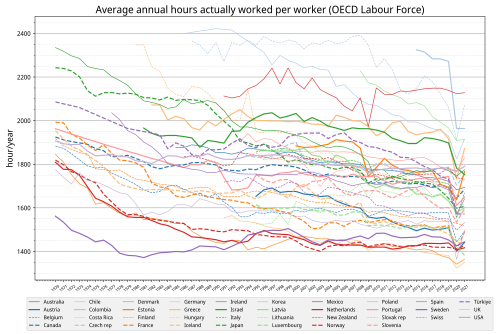
Germany's governing coalition is drafting a law that would let employers measure working time by the week instead of the day, replacing the current 8-hour daily limit with a 48-hour weekly average. Labor Minister Bärbel Bas has so far restricted the change to companies bound by collective agreements, a compromise that satisfies neither employers nor all unions, and has exposed a split inside her own SPD.

How to Choose a Hobby and Build Real Skill, According to Research
Choosing a hobby works best when it is matched to a specific need — relaxation, social connection, creativity or cognitive stimulation — rather than picked at random. Building real skill in that hobby afterward depends less on the number of hours put in than on how those hours are structured, according to research on hobbies, well-being and expert performance.

How to Start a Home Vegetable Garden: A Beginner's Step-by-Step Guide
Starting a home vegetable garden involves six basic steps: planning a small plot, picking a sunny site, preparing the soil, planting, maintaining the crop, and harvesting. University extension services recommend beginning with 50–75 square feet, at least 6 hours of daily sun, and soil enriched with 2–3 inches of compost before the first seed goes in the ground.

Where to Shop in Germany on October 3, 2026: Unity Day Falls on a Saturday
Most German shops close on October 3, 2026, because German Unity Day is a nationwide public holiday that this year falls on a Saturday, right before the regular Sunday closing. Exceptions exist at supermarkets inside major train stations and airports, at gas-station shops, and for bakeries during limited morning hours.
How daylight saving time works, and why clocks still change twice a year
Daylight saving time (DST) shifts clocks forward by one hour in spring and back in autumn so that daylight hours overlap more with waking hours in the evening. The US moves clocks on the second Sunday of March and first Sunday of November; most of Europe changes on the last Sunday of March and October. The practice began as a wartime energy measure, and debates over ending it continue in both the US and the EU.
How to Build an Effective Emergency Preparedness Plan for Natural Disasters
An effective household disaster plan combines four elements: knowing local hazards, agreeing on a communication and meeting plan, assembling a supply kit, and practicing the plan at least once a year. Official guidance from US, UK and Australian emergency agencies converges on the same basic framework, with flood-specific advice on evacuation routes and warning sign-ups.

Slow Walking as Exercise: What the Research Says About Pace and Results
Slow walking usually means a pace of roughly 3 to 3.4 mph (4.8–5.5 km/h), slow enough to hold a conversation. Studies reviewed here find it can help with fat loss and is easier on joints, but research also shows brisk walking cuts mortality risk by a larger margin — so pace, not just time spent walking, shapes the outcome.

Brazil Introduces Automatic INSS Benefit for Domestic Violence Leave
President Luiz Inácio Lula da Silva has approved a binding legal opinion requiring Brazil's Social Security Institute (INSS) to automatically pay women who leave work under a court-ordered protective measure against domestic violence. Signed on October 1, 2026, the measure allows up to six months of paid leave without a new medical exam, with the government seeking reimbursement from the aggressor afterward.