The General Conference on Weights and Measures voted on 15 October 2026 to stop adding leap seconds to Coordinated Universal Time (UTC), making the time standard continuous from 20 May 2027. The decision, adopted as Resolution 5 at the BIPM's 28th meeting in Versailles, France, replaces the one-second correction used since 1972 with a tolerance of up to one hour.
The International Bureau of Weights and Measures (BIPM) confirmed on 15 October 2026 that the leap second will be discontinued. Delegates at the 28th meeting of the General Conference on Weights and Measures (CGPM), held in Versailles from 13 to 15 October, adopted Resolution 5, titled "On the technical actions needed to ensure the continuity of UTC," according to the resolution text published by the BIPM.
The resolution sets 20 May 2027 — World Metrology Day — as the date from which UTC will run without the periodic one-second adjustments that have been inserted since 1972. From that date, the maximum permitted difference between UTC and UT1, the time scale based on Earth's rotation, will rise from 0.9 seconds to 3,600 seconds, or one hour, the BIPM text states.
What the resolution changes
Since 1972, the International Earth Rotation and Reference Systems Service (IERS) has inserted a leap second into UTC whenever the gap with UT1 approached 0.6 seconds, announcing each insertion roughly six months in advance through its Bulletin C, according to Wikipedia's entry on the leap second. Twenty-seven such leap seconds have been added, leaving UTC 37 seconds behind International Atomic Time (TAI).
Under the new rule, no such insertions will occur for the foreseeable future. The BIPM resolution states that allowing a one-hour tolerance should keep UTC continuous "for several centuries," while Scientific American reported that, according to officials at the meeting, a correction is not expected to be needed for more than 1,000 years.
Why the change was made now
The BIPM resolution cites a workshop estimate that there was a 30% probability a negative leap second — removing a second rather than adding one — could become necessary by 2035 because Earth's rotation has recently been speeding up. Since a negative leap second has never been applied, the resolution says it carries a "high risk of causing anomalies and disruption to critical infrastructures."
The text also points to the needs of modern networked systems: it says industrial users and national critical infrastructure — transport, energy distribution, telecommunications and space projects — require UTC to be continuous, and that growing use of distributed and IoT systems increases the risk of malfunction from any leap-second insertion. The resolution further warns that delaying action risked organisations switching to satellite-navigation (GNSS) time instead of UTC, which it says would compromise international standardisation in metrology.
After 30 years of debates, we are ready.
— Noël Dimarcq, president of the BIPM's Consultative Committee for Time and Frequency, quoted by Scientific American
From a 2022 compromise to a fixed 2027 date
The abolition was first agreed in principle at the 27th CGPM meeting in November 2022, when 59 member states approved a resolution committing to end the leap second by 2035 at the latest, according to a report by Phys.org at the time. Russia had sought to push the deadline to 2040, while some delegations wanted an earlier cut-off of 2025 or 2030; 2035 emerged as what Phys.org described as the agreed compromise, with the United States and France among the countries that pushed for the change.
The 2022 resolution left the exact implementation date and the new UT1–UTC tolerance to be decided later. The 2026 resolution filled in those details, fixing the effective date at 20 May 2027 — eight years earlier than the 2035 deadline originally allowed — and setting the one-hour tolerance.
Effect on computer and infrastructure systems
Euronews reported that past leap-second insertions have disrupted computer systems and online services. Separately, Phys.org's report on the 2022 vote noted that irregular leap-second insertions have created operational problems for satellite navigation, telecommunications and financial trading systems. Removing the periodic adjustment is intended to reduce the risk of such errors recurring.
UTC timekeeping rules, before and after 20 May 2027
Aspect
Until 20 May 2027
From 20 May 2027
Adjustment mechanism
Occasional one-second leap second
None; UTC runs continuously
Max. permitted UT1–UTC gap
0.9 seconds
3,600 seconds (1 hour)
Announced by
IERS Bulletin C, about 6 months ahead
No insertion expected for centuries, per BIPM
Governing decision
Practice in place since 1972
CGPM Resolution 5, adopted 15 Oct 2026
What is not yet settled
The BIPM resolution does not specify how a future "leap hour" would be implemented once the UT1–UTC gap approaches the new one-hour limit; it asks the BIPM to keep working with the International Telecommunication Union, the International Astronomical Union, the International Union of Geodesy and Geophysics, and the IERS to monitor the gap and inform users as that threshold eventually approaches.
Officials quoted by Scientific American, including Nick Stamatakos of the U.S. Naval Observatory, said avoiding a negative leap second — an adjustment never attempted before — was a major reason for setting the 2027 date rather than waiting until closer to 2035.
Questions
When exactly does the leap second end?
Under CGPM Resolution 5, adopted 15 October 2026, UTC becomes continuous from 20 May 2027, meaning no more leap seconds will be inserted after that date.
Why is the leap second being abolished now instead of by the original 2035 deadline?
The BIPM resolution cites a 30% estimated probability of needing a negative leap second — never attempted before — by 2035, plus demands from critical infrastructure for uninterrupted UTC, as reasons to act sooner.
Will UTC and Earth's actual rotation time drift apart?
Yes. The maximum allowed difference between UTC and UT1 (Earth-rotation time) rises from 0.9 seconds to one hour (3,600 seconds), a gap the BIPM says should not need correction for several centuries.
Who makes this decision?
The General Conference on Weights and Measures (CGPM), the intergovernmental body that oversees the BIPM under the Metre Convention, voted on the resolution at its 28th meeting in Versailles, France.
Had this been decided before?
Yes, in principle. The 27th CGPM meeting in November 2022 already agreed to end leap seconds by 2035; the 2026 meeting fixed the exact date (20 May 2027) and the new one-hour tolerance.
This piece was prepared with artificial intelligence and passed an automated source check before publication. If you see an error, ask for a correction. Request a correction or reply · How we make this
On 15 October 2026, the General Conference on Weights and Measures (CGPM) voted to stop inserting leap seconds into Coordinated Universal Time (UTC), effective 20 May 2027. The change means UTC will run continuously and be allowed to drift up to one hour from Earth's actual rotation before any future correction, instead of the one-second adjustments used since 1972.
Japan's Meteorological Agency (JMA) issued and then withdrew, within about eight to twelve minutes, an emergency warning for a magnitude-9.9 earthquake on October 16, 2026. The actual quake, centred off Russia's Kamchatka Peninsula, was later confirmed by seismologists at magnitude 6.9, with JMA blaming a data-processing error rather than a cyberattack.
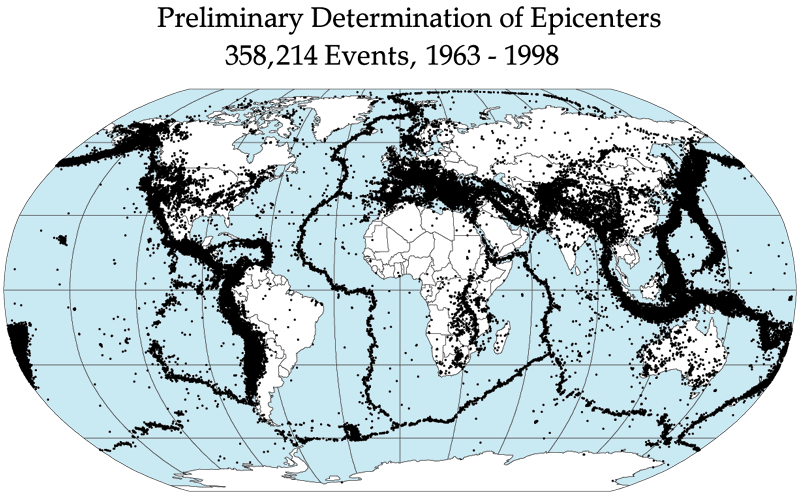
Earthquakes happen when stress that has built up for years, decades or centuries along a locked fault finally overcomes friction and the rock suddenly slips. That slip releases stored energy as seismic waves, which radiate outward and shake the ground. The U.S. Geological Survey (USGS) and Caltech describe this as a continuous cycle driven by the slow motion of Earth's tectonic plates.
Weather is the atmospheric condition at a specific place and moment — rain, wind, or temperature right now. Climate is the average of those weather patterns over a long period, usually 30 years or more, according to NASA and NOAA. The difference is essentially one of timescale, not of the phenomena themselves.