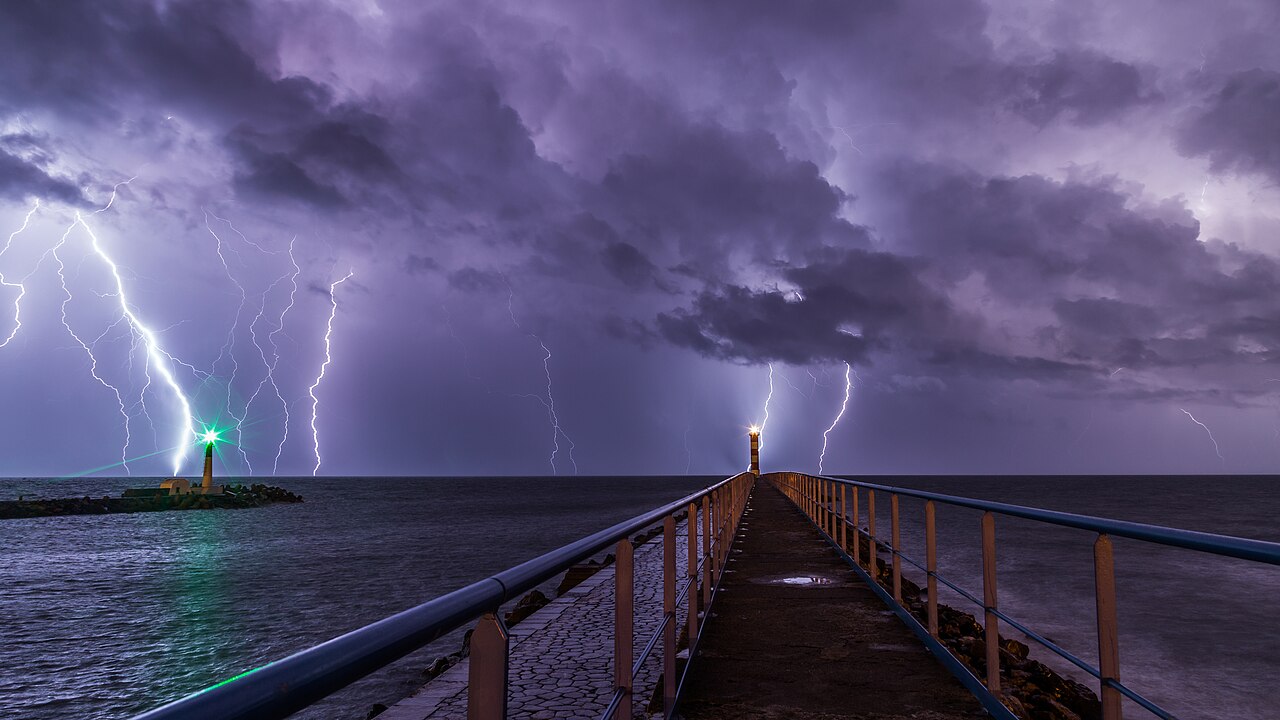
The safest response to thunder is to get into a substantial building or a hard-topped vehicle immediately — there is no fully safe place outdoors. Avoid water, corded electronics, open ground, isolated trees, and metal; if someone is struck, call emergency services and start CPR if needed, since it is safe to touch a lightning victim.
Lightning kills about 20 people in the United States each year and injures hundreds more, according to the US National Weather Service (NWS). Severe-storm warnings in places such as Kerala, India, where the state's disaster management authority has issued precautions during recent thunderstorm alerts, show that the risk is a recurring, global seasonal hazard rather than a one-off event.
The core rule: when thunder roars, go indoors
The NWS's central message is "When thunder roars, go indoors." If you can hear thunder, lightning is close enough to strike you. According to the NWS and the US Centers for Disease Control and Prevention (CDC), the only reliably safe places during a thunderstorm are a substantial enclosed building or a hard-topped vehicle with the windows closed — tents, gazebos, open-sided shelters, convertibles, motorcycles and golf carts do not count.
As soon as you hear thunder or see lightning, stop outdoor activity and head to an enclosed building or a hard-topped vehicle.
Once inside, stay away from windows, doors, and corded electronics; the CDC advises not using anything plugged into an electrical outlet, including computers, washers, dryers and stoves.
Avoid any contact with plumbing or running water — do not shower, bathe, wash dishes, or wash your hands, because lightning can travel through pipes.
Use only cordless or mobile phones; corded landline phones are not safe during a storm, per CDC and KSDMA guidance.
If outdoors with no shelter nearby, get off elevated ground, move away from isolated trees, open water, metal fences or wires, and avoid carrying metal objects above shoulder height.
Wait at least 30 minutes after the last thunderclap before resuming outdoor activity, since lightning can strike even after rain has stopped.
Common myths the NWS says are false
The NWS lightning-myths page lists several widely believed but incorrect ideas. Crouching down outdoors does not make a person meaningfully safer; the advice instead is to run to a substantial building or hard-topped vehicle. Lying flat on the ground is also discouraged because it increases exposure to ground current.
Sheltering under a tree is identified by the NWS as the second leading cause of lightning injuries. The agency also notes that lightning can strike more than three miles from the center of a storm — sometimes called a "bolt from the blue" — so clear skies overhead do not guarantee safety if thunder can still be heard.
The human body does not store electricity. It is perfectly safe to touch a lightning victim to give them first aid.
— US National Weather Service, lightning-myths guidance
What to do if someone is struck
Both the NWS and the CDC state that a person struck by lightning does not carry an electrical charge, so it is safe for others to touch and help them immediately. The CDC's first-aid guidance says to call 911 (or the local emergency number) right away, then check the victim for breathing and a pulse at the neck or groin. If there is no pulse, bystanders should begin CPR. First aid should continue until professional medical help arrives.
Kerala's State Disaster Management Authority (KSDMA), cited by The News Minute, has made a similar point for strike victims, stressing that the first moments after a strike are critical and that immediate first aid should be given without delay.
Regional guidance: Kerala's precautions
During thunderstorm alerts, KSDMA has issued precautions that echo the NWS/CDC approach while adding local detail. Indoors, residents are told to turn off electrical equipment, close doors and windows, stay in central rooms away from walls, avoid touching metal items, and not use landline phones. Outdoors, people are advised to avoid open spaces once skies turn cloudy in the afternoon, keep children away from open areas, not retrieve laundry from outdoor lines during a storm, avoid standing under trees, and — if travelling by vehicle — to stop in an open area rather than near structures or trees.
Lightning safety: do vs. don't
Situation
Do
Don't
Outdoors, storm approaching
Move to an enclosed building or hard-topped vehicle
Shelter under an isolated tree, tent, or open-sided structure
At home during a storm
Stay in a central room, use cordless/mobile phones
Use corded phones, shower, or touch plumbing
Open water or elevated ground
Get off the water and down from high ground immediately
Keep swimming, boating, or standing on a hilltop
After the last thunder
Wait at least 30 minutes before going back outside
Resume outdoor activity right after rain stops
Someone is struck
Call emergency services, start CPR if needed
Avoid touching the victim out of fear of shock
Quick takeaways
No place outdoors is fully safe during a thunderstorm — a substantial building or hard-topped vehicle is the recommended shelter.
Crouching down does not make a person meaningfully safer outdoors, according to the NWS.
Lightning can strike more than three miles from a storm's center, so hearing thunder is reason enough to seek shelter.
It is safe to touch and treat a lightning-strike victim immediately; their body does not hold an electrical charge.
Wait at least 30 minutes after the last thunder before going back outside.
Questions
Is it safe to touch someone who has been struck by lightning?
Yes. The NWS and CDC both state that the human body does not store electricity, so helping or touching a lightning-strike victim will not cause an electric shock to the rescuer.
What is the safest place to be during a thunderstorm?
According to the NWS and CDC, the only reliably safe locations are a substantial enclosed building or a hard-topped vehicle with the windows closed; tents, gazebos, and open-sided shelters do not provide adequate protection.
Does crouching down protect you from lightning if you're caught outside?
No. The NWS says crouching does not make a person meaningfully safer and recommends running to a substantial building or hard-topped vehicle instead.
How long should you wait after a storm before going back outside?
The NWS and CDC both advise waiting at least 30 minutes after hearing the last thunderclap, since lightning can still strike after rain has ended.
This piece was prepared with artificial intelligence and passed an automated source check before publication. If you see an error, ask for a correction. Request a correction or reply · How we make this
People who reach 110 or beyond — known as supercentenarians — tend to share traits such as leanness, disease-free aging and steady daily routines, according to Spanish cardiologist Manuel de la Peña. He attributes 75% of longevity to lifestyle and only 25% to genes, but a 2026 genetics study puts heredity's share closer to 50–55%, showing researchers still disagree on how much is nature versus habit.
Hospital hand-washing sinks can turn into long-term reservoirs for antibiotic-resistant bacteria that colonize drain pipes and splash onto nearby counters, according to peer-reviewed research and hospital outbreak reports. Documented outbreaks in Toronto and Tokyo show that cleaning or replacing a sink alone did not stop transmission; cases ended only after facilities combined sink redesign, stricter cleaning schedules and changes to staff hand-hygiene routines.
A study published in the British Journal of Psychiatry on 20 October 2026 found that roughly a quarter of people with severe, recurrent or persistent depression show a pattern researchers call "circadian depression," tied to disrupted sleep-wake rhythms rather than mood alone. The University of Sydney-led team says this subtype responds less to standard antidepressants and more to treatments that target the body clock, such as light therapy and melatonin.
The FDA on October 19, 2026 classified a voluntary recall of more than 4.3 million tubes of toothpaste sold under the Brush Buddies, evo and ARU brands. The recall, covering children's products such as Barbie, Hot Wheels, My Little Pony and Crayola Silly Scents toothpaste, stems from manufacturing practice deviations; no illnesses have been reported.