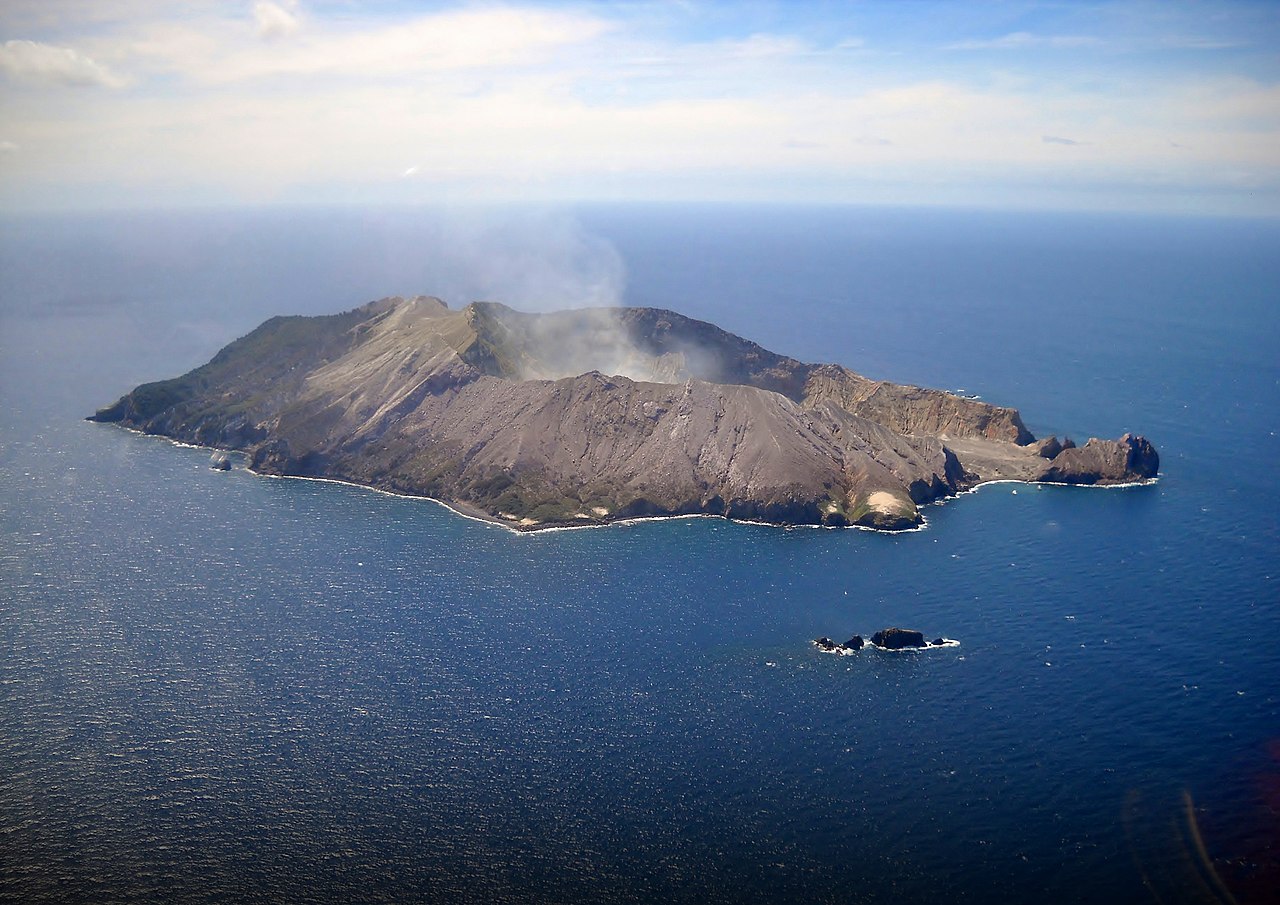
New Zealand's Earth Sciences NZ raised the Volcanic Alert Level for Whakaari/White Island from 2 to 3 on October 21, 2026, after confirming a weak but continuous eruption of ash, steam and gas. The Aviation Colour Code was also lifted to Orange, though officials say there is no significant threat to the mainland beyond a possible sulphur smell and light ash fall.
Whakaari/White Island, an uninhabited volcanic island in New Zealand's Bay of Plenty, is undergoing a confirmed ongoing eruption, according to Earth Sciences New Zealand. The agency raised the Volcanic Alert Level from 2 to 3 on Tuesday afternoon, October 20 into October 21, 2026, after an observation flight found a continuous steam and gas plume carrying volcanic ash.
The Aviation Colour Code was raised in parallel, from Yellow to Orange, according to GeoNet, the national geological hazard monitoring service run by Earth Sciences New Zealand. Level 3 denotes a minor volcanic eruption.
What changed on the island
Steam and gas plumes had already been visible for about six days before October 20, intermittently carrying minor amounts of ash, according to Sunlive, a Bay of Plenty news outlet that cited satellite imagery of the discharge. Earth Sciences New Zealand duty volcanologist Michael Rosenberg said activity moved from intermittent emissions to a weak, ongoing eruption after the Tuesday flight.
The temperature of gas at the active vent climbed sharply, from about 100 degrees Celsius a week earlier to about 395 degrees Celsius, Rosenberg said, according to 1News. Satellites have also detected sulphur dioxide gas from the volcano daily.
Hazards and who is affected
Officials said there is no significant threat to mainland New Zealand beyond a possible sulphur smell and light ash fall carried by onshore winds. The main danger is confined to the island itself and the waters immediately offshore to the southeast, where a sudden, more explosive event could throw rocks across the crater floor and produce fast-moving ash and gas surges known as pyroclastic flows, GeoNet said.
Volcanic activity could escalate with little or no warning.
— Michael Rosenberg, duty volcanologist, Earth Sciences New Zealand
MetService's Volcanic Ash Advisory Centre is continuing to assess any impact on aviation following the Aviation Colour Code change, according to 1News. Whakaari/White Island has had no permanent inhabitants.
Monitoring challenges
GeoNet and Earth Sciences New Zealand have limited real-time data because the island itself lacks working ground-based monitoring instruments. Scientists instead rely on mainland sensors, satellite imagery and periodic observation flights to track the volcano's behaviour, according to 1News.
Background: the 2019 disaster
Whakaari/White Island's most recent fatal eruption occurred on December 9, 2019, killing 22 people, most of them tourists who were on or near the crater at the time, according to 1News and Sunlive.
Smaller eruptive episodes, including ash and gas emissions that prompted temporary flight disruptions, were also recorded in 2025 and earlier in 2026, according to Sunlive. Rosenberg said the current pattern of periodic steam and ash discharge is consistent with behaviour the volcano has shown intermittently over the past few decades.
Questions
What is the current Volcanic Alert Level for Whakaari/White Island?
As of October 21, 2026, it is Level 3, meaning a minor volcanic eruption is underway, up from Level 2, according to Earth Sciences New Zealand/GeoNet.
Is there a danger to mainland New Zealand?
Officials say there is no significant threat to the mainland beyond a possible sulphur smell and light ash fall during onshore winds; the main hazards are confined to the island and waters immediately offshore.
Are flights being affected?
The Aviation Colour Code was raised from Yellow to Orange, and MetService's Volcanic Ash Advisory Centre is continuing to assess any impact on aviation, according to 1News.
How long could this eruption last?
No specific duration has been given. Rosenberg said the current pattern is typical of activity the volcano has shown intermittently over the past few decades, according to Sunlive.
This piece was prepared with artificial intelligence and passed an automated source check before publication. If you see an error, ask for a correction. Request a correction or reply · How we make this
Russia released US citizen Stephen Hubbard, a 74-year-old retired teacher who had been serving a nearly seven-year sentence on mercenary charges, on October 21, 2026. US envoy Steve Witkoff confirmed the release while meeting President Vladimir Putin in St Petersburg, after President Trump had personally pressed Putin to free him.
American Airlines Flight 41, a Boeing 787 arriving from Barcelona-El Prat, blew two tires while landing at Chicago O'Hare International Airport after its crew reported a dragging right brake moments before touchdown. None of the 245 people aboard was hurt during the landing; one passenger was later taken to hospital for an unrelated illness. The FAA has opened an investigation.
Jamaica, Guyana and the Bahamas are pressing Britain for a formal apology and financial reparations for slavery as King Charles tours Antigua and Barbuda, the Bahamas and Guyana from October 27 to November 4, 2026. Buckingham Palace and the UK government have both ruled out an apology or a payment, saying such decisions rest with ministers rather than the monarchy.
Christiane Amanpour, CNN's chief international anchor, announced on October 19, 2026 that she will leave the network at the end of June 2027, ending a 43-year tenure that began in 1983. Her CNN International program will scale back to weekly broadcasts early in 2027 before ending in May, and her PBS program will close by the end of 2026.