Artificial intelligence · Article
How AI Is Changing Diagnosis, Drug Discovery and Patient Care in 2026
Published:
In brief
Artificial intelligence already underpins more than 1,600 FDA-authorized medical devices, most of them for reading medical images, and it is now also designing experimental drugs. Insilico Medicine's rentosertib, whose biological target and molecule were both generated by AI, entered a 320-patient Phase III trial in China on July 7, 2026, while global regulators are still drafting rules to govern the technology's risks.
Artificial intelligence is now built into more than 1,600 medical devices authorized for the U.S. market, and it has expanded from reading scans to designing entirely new drug molecules. In July 2026, Insilico Medicine advanced rentosertib — a compound whose biological target and chemical structure were both generated by AI software — into a 320-patient Phase III trial for idiopathic pulmonary fibrosis, a lung disease with few treatment options. At the same time, global health bodies are still working out how to govern systems that increasingly shape diagnosis and treatment decisions.
Where AI Already Works: Reading Images
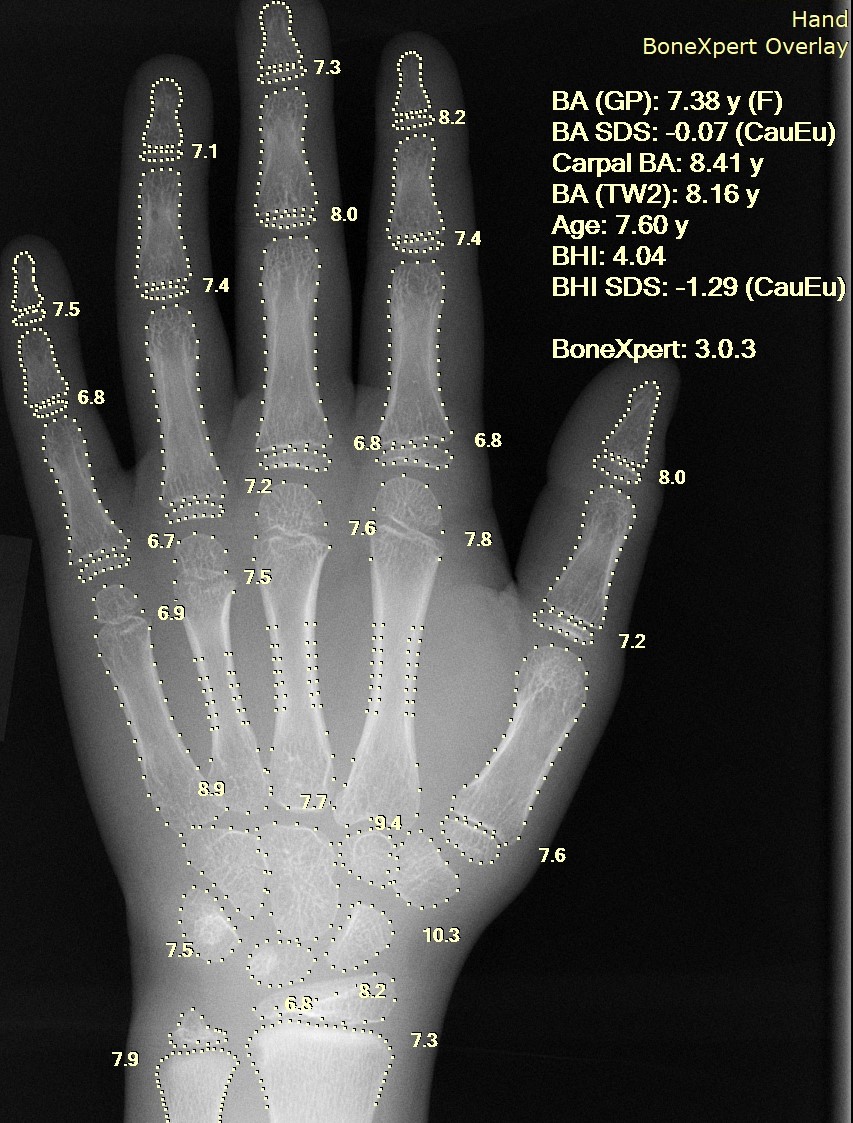
The U.S. Food and Drug Administration (FDA) states it has authorized more than 1,600 AI-enabled medical devices for marketing in the United States, according to the agency's own tracking page, last updated September 22, 2026. Examples the FDA lists include software that screens skin lesions for cancer, detects diabetic retinopathy from retinal photographs, estimates heart-attack probability from sensor data, and automates insulin dosing based on glucose-monitor readings.
An analysis of 2025 FDA 510(k) clearances by regulatory consultancy Innolitics found that radiology accounted for the large majority of that year's AI/ML device authorizations, with 295 total clearances issued to 221 different manufacturers and a median review time of 142 days. The single most common category was radiological computer-aided detection software, which alone made up more than a quarter of all 2025 clearances, according to the analysis.
| Specialty | 2025 clearances | Share of total |
|---|---|---|
| Radiology | 211 | 71.5% |
| Cardiovascular | 26 | 8.8% |
| Neurology | 14 | 4.7% |
| Orthopedic | 10 | 3.4% |
| Gastroenterology/Urology | 7 | 2.4% |
| Clinical chemistry | 6 | 2.0% |
| Anesthesiology | 5 | 1.7% |
| Other specialties combined | 16 | 5.5% |
Cardiology, neurology and orthopedics trailed far behind radiology in 2025, and specialties such as anesthesiology and clinical chemistry each accounted for under 2 percent of clearances, per the same analysis.
AI Is Designing Drugs, Not Just Screening Them
Beyond diagnostics, AI software is now being used to propose new drug targets and design the molecules meant to hit them, a step beyond earlier uses of computing to simply screen existing compound libraries faster. Insilico Medicine, a Hong Kong-based biotechnology company, says its PandaOmics platform identified a protein called TNIK as a disease target and its Chemistry42 platform generated a candidate molecule, now named rentosertib, for idiopathic pulmonary fibrosis. The company says the discovery pathway was described in a paper in Nature Biotechnology.
In a randomized, placebo-controlled Phase IIa trial, patients taking the highest tested dose of rentosertib (60 mg once daily) saw lung function, measured as forced vital capacity, improve by a mean of 98.4 milliliters over 12 weeks, compared with a mean decline of 20.3 milliliters in the placebo group, according to Insilico Medicine's own announcement of the results, which the company says were also published in Nature Medicine.
On July 7, 2026, Insilico said it began a Phase III trial of rentosertib: a randomized, double-blind, placebo-controlled study enrolling 320 patients across 47 centers in China over 52 weeks. The primary endpoint is the annual rate of decline in forced vital capacity, with time to first disease-progression event as a key secondary measure, the company said.
This program began with the hypothesis that aging biology could help identify powerful targets for major diseases.
No AI-designed drug has yet received approval from the FDA or any other regulator, and rentosertib's lung-function improvements in the Phase IIa trial were listed as secondary, exploratory endpoints rather than the study's primary safety goal, by the company's own description. Industry trackers cited by the analysis site IntuitionLabs counted more than 170 AI-discovered drug programs in clinical development in early 2026, up from roughly two dozen in late 2023, though IntuitionLabs noted the figures vary between trackers because no single authoritative, government-maintained registry of such drugs exists and each tracker applies its own classification criteria.
Regulators Are Still Writing the Rules
The World Health Organization (WHO) issued ethics and governance guidance for large multi-modal AI models in health on January 18, 2024, setting out more than 40 recommendations for governments, developers and health workers. The guidance states that poor-quality or biased training data can produce inaccurate or incomplete health information, and that clinicians risk falling into what it calls 'automation bias' by over-trusting AI outputs or improperly delegating decisions to them.
- Biased or low-quality training data can skew outputs by race, ethnicity, sex, gender identity or age
- Automation bias: health workers may overlook AI errors or delegate decisions inappropriately
- Cybersecurity gaps could expose patient data or undermine trust in AI systems
- High-performing AI tools may remain accessible mainly to wealthier health systems, widening global gaps in care
WHO Chief Scientist Jeremy Farrar said at the time of the guidance's release that generative AI technologies could improve health care only if developers, regulators and users identified and fully accounted for the associated risks.
What Hasn't Happened Yet
Several milestones sometimes associated with AI in medicine have not occurred. No fully AI-designed drug has secured regulatory approval anywhere, and WHO's guidance explicitly warns that unequal access to the most capable AI systems could widen, rather than narrow, disparities between well-resourced and under-resourced health systems. For now, AI's clearest footprint in medicine remains diagnostic imaging, where regulators have the longest clearance history, while its role in creating new medicines is moving from laboratory proof-of-concept toward larger human trials.
Questions
- Has the FDA approved a drug that was designed by artificial intelligence?
- No. As of the Phase III trial that began July 7, 2026, no AI-designed drug has received FDA or other regulatory approval; Insilico Medicine's rentosertib is the furthest-advanced candidate, now being tested in a 320-patient Phase III trial in China, according to the company.
- How many AI-enabled medical devices has the FDA authorized?
- The FDA states it has authorized more than 1,600 AI-enabled medical devices for the U.S. market, according to its tracking page, last updated September 22, 2026.
- Which medical specialty uses the most FDA-cleared AI tools?
- Radiology, which accounted for 211 of 295 AI/ML device clearances in 2025 — about 71.5 percent — according to an analysis by regulatory consultancy Innolitics.
- What risks has the WHO identified for AI in health care?
- WHO's January 2024 guidance flags biased or low-quality training data, 'automation bias' among clinicians, cybersecurity vulnerabilities, and unequal access to high-performing AI systems between wealthier and lower-income health systems.
- How was the AI-designed drug rentosertib discovered?
- Insilico Medicine says its PandaOmics platform identified the protein TNIK as a drug target and its Chemistry42 platform generated the candidate molecule, with the discovery pathway described in Nature Biotechnology and Phase IIa results published in Nature Medicine, according to the company.
Sources
- FDA — Artificial Intelligence-Enabled Medical Devices
- PR Newswire (Insilico Medicine) — Insilico Initiates Phase III Clinical Trial for Rentosertib
- World Health Organization — WHO releases AI ethics and governance guidance for large multi-modal models
- Innolitics — 2025 Year in Review: AI/ML Medical Device 510(k) Clearances
- IntuitionLabs — AI-Discovered Drugs in Clinical Trials 2026: Full Pipeline
This piece was prepared with artificial intelligence and passed an automated source check before publication. If you see an error, ask for a correction. Request a correction or reply · How we make this
Related
Artificial intelligenceNews
OpenAI Upgrades ChatGPT's GPT-6 Astra Pro With Parallel AI Agents
OpenAI announced on October 16, 2026 that GPT-6 Astra Pro inside ChatGPT now lets multiple AI agents work on separate parts of the same task at the same time, instead of one agent completing steps in sequence. The feature is currently limited to ChatGPT Pro subscribers, who can track each agent's progress and open finished work directly in the chat.

Artificial intelligenceArticle
How AI Algorithms Develop Bias, and What Safeguards Exist to Stop It
AI systems become biased when they learn from unrepresentative training data or encode human and institutional assumptions built into their design. Documented cases — an Amazon hiring tool and the 2018 "Gender Shades" facial-recognition study — show this can disadvantage women and people with darker skin. Regulators in the EU and standards bodies like NIST now require bias testing for high-risk systems.
Artificial intelligenceComparison
ChatGPT vs Claude vs Gemini in October 2026: models, prices and benchmarks compared
As of October 2026, ChatGPT runs on OpenAI's GPT-6 family (Astra for reasoning, Sol/Luna for everyday chat), Claude's flagship is Anthropic's Opus 5, and Google's generally available top model is Gemini 3.1 Pro while the newer Gemini 4 Argon is still in limited rollout. Entry-level paid plans cluster around $20 a month, but the three diverge sharply on context window, API cost and which benchmarks each company highlights.

Artificial intelligenceArticle
How AI Learns From Data: Training Explained Amid Meta's Scraping Clause Row
AI models learn by processing huge volumes of text, images or other data and adjusting internal parameters until their predictions match correct answers, repeated across billions of examples. Where that data comes from became a flashpoint in October 2026, when Meta's new commercial terms appeared to let it scrape business customers' websites for AI training, drawing criticism from publishers and legal scholars before Meta narrowed the wording.