An expedition organized by Purdue University, the Purdue Research Foundation and the Archaeological Legacy Institute has concluded that the so-called Taraia Object, a lagoon anomaly many hoped was Amelia Earhart's crashed Lockheed Electra, is a cluster of large trees, not aircraft wreckage. The team found no conclusive evidence of the plane but says the broader "castaway" hypothesis is not disproven and the search will continue.
Amelia Earhart and navigator Fred Noonan disappeared over the Pacific Ocean on July 2, 1937, while Earhart was attempting to become the first woman to fly around the world, according to CBS News. Their Lockheed Electra 10E disappeared en route to Howland Island, their intended refueling stop, and neither the aircraft nor the fliers were ever officially recovered.
What the new expedition tested
In October 2026, a 16-member team organized by the Archaeological Legacy Institute (ALI), Purdue Research Foundation and Purdue University traveled to Nikumaroro, a remote atoll in Kiribati located about 400 miles southeast of Howland Island, according to CBS News, to investigate a specific anomaly known as the Taraia Object, according to Purdue's newsroom. The object, a dark shape visible in a lagoon, had appeared in aerial photography dating back to 1938 but drew renewed attention after it showed up in 2020 satellite imagery.
The expedition departed from Tarawa on October 6, 2026, spent seven days near Nikumaroro and conducted four days of fieldwork onshore, Purdue reported. Rick Pettigrew, ALI's executive director and the project's director, said the goal was to determine what the Taraia Object actually was.
What they found
The team concluded the anomaly was most likely a cluster of large trees deposited along a sandy peninsula, Newsweek reported, citing the expedition's findings. Purdue's own account states the object's reflective surface, long cited as evidence it was metallic, was actually a carbonate veneer rather than part of an aircraft.
Steve Schultz, Purdue's general counsel, said the team had set out to test a hypothesis rather than guarantee a particular result, according to Newsweek. No wreckage from Earhart's Electra was located during the mission.
Despite the negative result for the Taraia Object specifically, researchers did recover other items during the fieldwork, including a 30-inch steel tube, which Purdue says may still support the broader theory that Earhart and Noonan survived as castaways on the island.
The older castaway theory
The Taraia Object was always a relatively new addition to a much older line of research pursued by the International Group for Historic Aircraft Recovery (TIGHAR), according to National Geographic. That castaway hypothesis holds that Earhart and Noonan landed on Nikumaroro and died there, rather than crashing into open ocean.
Evidence cited for this theory, per National Geographic, includes handicrafts apparently made from aircraft materials found in an abandoned village on the island, 1930s-era personal items such as cosmetic bottles and a compact mirror, shoe fragments said to match a brand Earhart wore, and radio signals reportedly picked up near the area shortly after the disappearance. Bones found on the island in 1940 were analyzed as likely belonging to a woman of European descent, though the remains themselves have since been lost.
National Geographic also notes that other researchers have proposed competing explanations, including that the pair was captured by Japanese forces or that they ran out of fuel and crashed into the sea without reaching any island.
Why this result matters
The 2026 expedition's conclusion does not resolve the overall Earhart mystery; it eliminates one specific, high-profile hypothesis about the Taraia Object while leaving the wider castaway theory open, according to both Purdue and CBS News. Purdue's team said that failing to find the wreckage strengthens its resolve to continue searching for answers about the 1937 disappearance.
We owe it to Amelia's legacy at Purdue to follow the evidence.
— Steve Schultz, senior vice president, Purdue University (via CBS News)
Earhart was a visiting faculty member and career counselor at Purdue before her final flight, which is why the university has backed multiple search efforts over the years, Purdue's newsroom notes.
Questions
What is the Taraia Object?
It is a dark, reflective anomaly visible in a Nikumaroro lagoon in aerial photos since 1938 and in 2020 satellite imagery, which some hoped was wreckage from Amelia Earhart's Lockheed Electra, according to Purdue University.
Did the 2026 expedition find Amelia Earhart's plane?
No. The team found no conclusive evidence of aircraft wreckage; it determined the Taraia Object was most likely a cluster of large trees with a carbonate-coated surface, according to Purdue and Newsweek.
Who led the expedition?
The Archaeological Legacy Institute, the Purdue Research Foundation and Purdue University jointly organized it, with ALI executive director Rick Pettigrew as project director, per Purdue's newsroom.
Is the castaway theory about Earhart now dead?
No. Researchers say the broader hypothesis that Earhart and navigator Fred Noonan landed on Nikumaroro as castaways remains unresolved, and artifacts found during the 2026 trip, including a steel tube, will be studied further, according to Purdue and CBS News.
When did Amelia Earhart disappear?
Earhart and Noonan vanished on July 2, 1937, during an attempt to fly around the world, while en route to Howland Island, their planned refueling stop, according to CBS News.
This piece was prepared with artificial intelligence and passed an automated source check before publication. If you see an error, ask for a correction. Request a correction or reply · How we make this
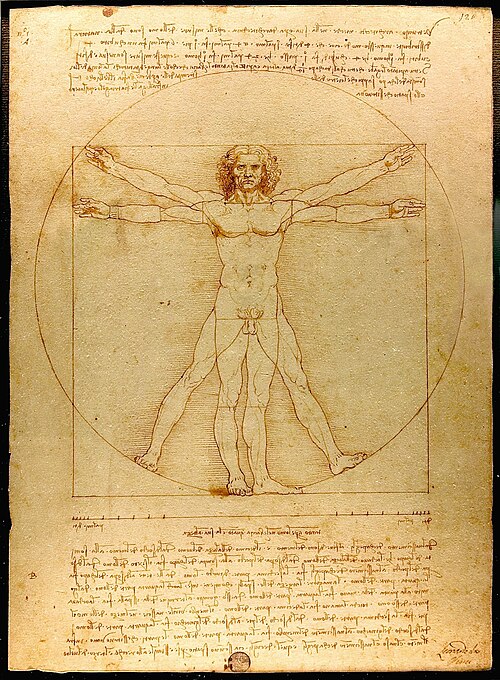
The Renaissance was a period of renewed interest in classical Greek and Roman learning that began in Florence in the 14th century and reshaped European art, science and thought through the 1600s. It introduced techniques such as mathematical perspective and oil painting, inspired the philosophy of humanism, and set the stage for the later Scientific Revolution.
A Cambridge-led study of a Neanderthal skeleton called Shanidar A, found in Iraqi Kurdistan, identifies a 15-millimetre hole in the left shoulder blade consistent with a wooden spear piercing the chest. Published in the journal Scientific Reports, the analysis also found a healed facial injury on the same individual, pointing to both violence and care within the group.
Archaeologists first place an object in sequence using its position in the ground, then pin down a calendar age with scientific methods such as radiocarbon dating, dendrochronology and thermoluminescence. To confirm an artifact is genuine rather than a modern fake, specialists examine tool marks, material sources and manufacturing techniques under microscopes and X-ray instruments.
On 29 May 1453, after a 53-day siege, the army of Ottoman Sultan Mehmed II broke through Constantinople's walls and killed the last Byzantine emperor, Constantine XI Palaiologos, ending the Eastern Roman Empire. Historians treat the conquest as the event that closed Europe's medieval period and opened Ottoman expansion into the Balkans and the eastern Mediterranean.