History · Glossary
Gandhi's First Political Fight: The 1894 Struggle for Indian Voting Rights
Published:
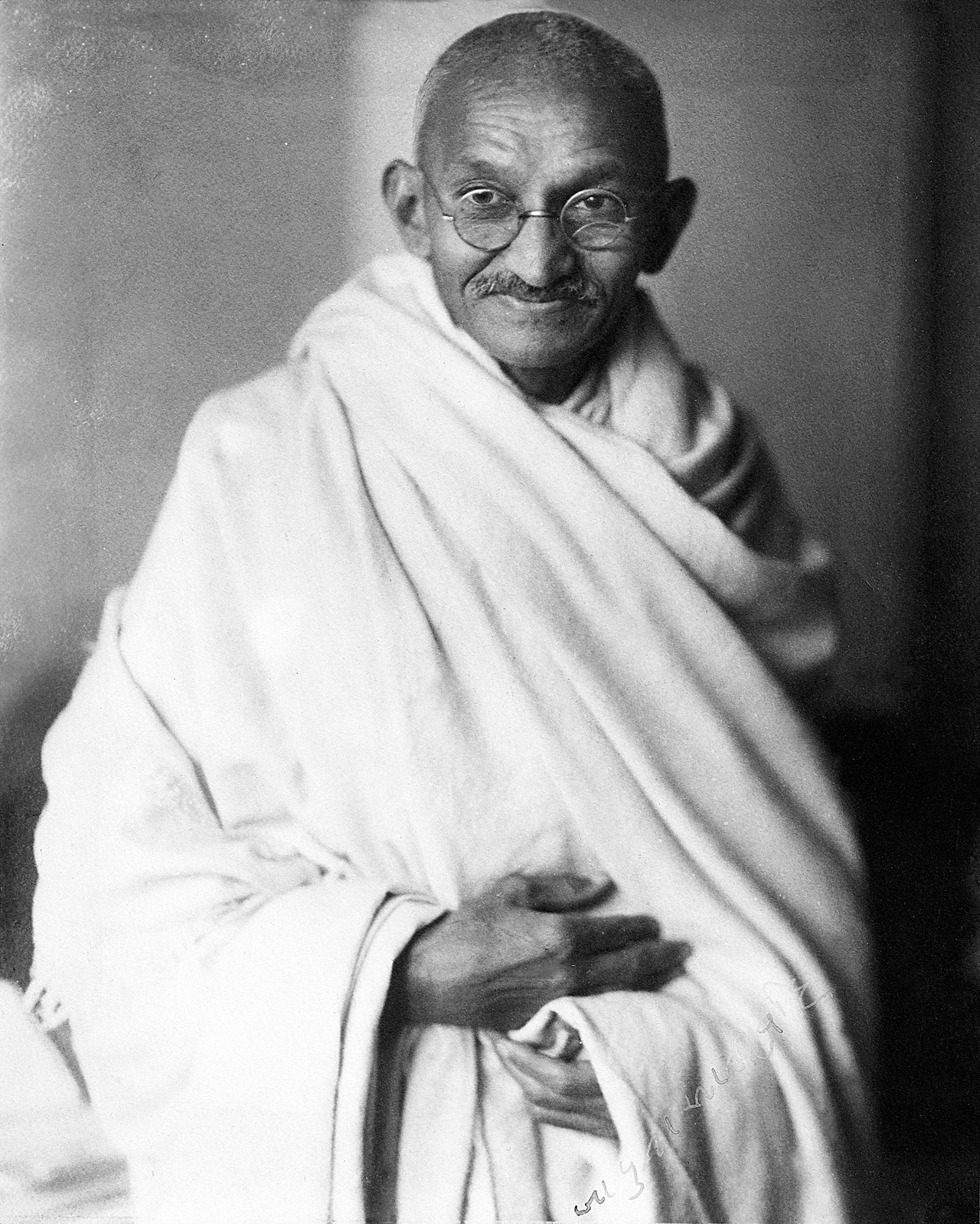
In brief
Mohandas Gandhi's first major political campaign was not in India but in the British colony of Natal, South Africa, where in 1894 he helped organize petitions against a bill that stripped Indians of the vote. The fight led to the founding of the Natal Indian Congress and fed into a much longer debate that only ended with India's 1949 constitutional guarantee of universal adult suffrage.
What was Gandhi's first political campaign?
In 1894, Mohandas Karamchand Gandhi, a lawyer working in the British colony of Natal, launched his first organized political campaign. Its target was a bill in the Natal Legislative Assembly designed to remove Indian residents from the colony's voters' roll, according to Wikipedia's entry on the Natal Legislative Assembly Bill. The campaign came three decades before Gandhi returned to India to lead the independence movement.
Natal law already limited the franchise mainly to men who owned immovable property worth 50 pounds, the news outlet The Leaflet reported. The new bill singled out Indians specifically: according to South African History Online, it exempted Indians who were already on the voters' roll, but it permanently barred any other Indian resident -- regardless of property or qualifications -- from ever registering to vote.
How Gandhi organized the opposition
Gandhi helped draft and circulate petitions against the bill. One petition addressed to the Natal Legislative Assembly gathered signatures from about 10,000 Indian residents, according to Wikipedia. A separate appeal to the British Secretary of State for the Colonies, Lord Ripon, was formally submitted around 14 July 1894 under the names of Hajee Mohamed Hajee Dada -- who would become vice-president of the Natal Indian Congress -- and sixteen others, according to South African History Online. The petitioners rejected the claim that Indian voters would overwhelm European ones, noting that Natal had roughly 45,000 European and 45,000 Indian residents at the time.
Gandhi went on to help found the Natal Indian Congress in 1894 to continue the campaign beyond the initial petition drive. Hajee Mohamed Hajee Dada, who had helped lead the appeal to Lord Ripon, became the new organization's vice-president, according to South African History Online.
Did the 1894 campaign succeed?
The Natal Legislative Assembly passed the bill on its third reading on 2 July 1894, South African History Online reported. The British Crown initially disallowed the measure, partly because it named Indians explicitly, according to The Leaflet. After Natal received self-governing Responsible Government status, the colony passed a new law, Act 8 of 1896, that achieved the same disenfranchising effect without naming race directly. Indians in Natal lost the parliamentary vote, Wikipedia states.
Gandhi kept writing about the issue after the bill passed. On 16 December 1895 he published a piece titled 'Indian Franchise,' challenging colonial authorities' demand that Indians prove they had already been registered voters in India before qualifying in Natal.
Why such a rule for the poor Indians alone?
From a colonial franchise fight to universal suffrage in India
The Natal campaign sought to preserve a narrow, property-based right to vote for Indians who already qualified under colonial law -- it was not yet a demand for universal suffrage. The idea that every adult citizen, regardless of property, education, gender or caste, should have one vote developed over the following decades inside the Indian nationalist movement. The Constitution of India Bill of 1895 had already proposed giving every citizen a single vote, according to the legal research site Constitution of India; the Indian National Congress's Karachi Resolution of 1931 later demanded that any future constitution rest on adult suffrage, the same source states.
A 1946 publication titled 'Gandhian Constitution of Free India' called for universal adult suffrage, Constitution of India's historical account notes. India's Constituent Assembly adopted the principle largely without debate in 1949; it became Article 326 of the Constitution, which provides for elections based on adult suffrage. The first general election held under that rule, in 1951-52, registered about 173 million voters, with Sukumar Sen serving as India's first Chief Election Commissioner, according to Constitution of India and the Hindi-language outlet Usthadian.
| Aspect | Natal, 1894 | Independent India, 1949-1951 |
|---|---|---|
| Starting point | Property-owning Indian men already on the voters' roll | British-era franchise limited by property, education and gender in parts of India |
| Demand | Keep the existing, limited franchise open to qualifying Indians | Extend the vote to every adult citizen regardless of property, education, gender or caste |
| Key document | Natal Franchise Law Amendment Bill, 1894 (replaced by Act 8 of 1896) | Constitution of India, Article 326 (1949) |
| Outcome | Indians lost the vote in Natal | Universal adult suffrage adopted; first election 1951-52 registered about 173 million voters |
Questions
- What was Mahatma Gandhi's first political campaign?
- It was his 1894 opposition, in the British colony of Natal, South Africa, to a bill that aimed to remove Indian residents from the colony's voters' roll, according to Wikipedia and South African History Online.
- Did Gandhi's 1894 campaign stop Indians from losing the vote in Natal?
- No. The original bill was disallowed by the British Crown, but Natal passed a new law, Act 8 of 1896, once it gained Responsible Government, and Indians in Natal lost the parliamentary vote anyway, according to Wikipedia and South African History Online.
- What is the Natal Indian Congress and why did Gandhi found it?
- It is an organization Gandhi helped establish in 1894 to continue opposing discriminatory legislation against Indians in South Africa through petitions and public campaigning, according to South African History Online.
- Did Gandhi personally call for universal suffrage in India?
- The sourced record shows Gandhi's 1894 fight was about preserving a limited, property-based franchise for Indians who already qualified; the broader demand for universal adult suffrage for all Indians developed over later decades, including in a 1946 publication called the 'Gandhian Constitution of Free India,' according to Constitution of India.
- When did India adopt universal adult suffrage and hold its first election under it?
- India's Constituent Assembly adopted universal adult franchise in 1949 as Article 326 of the Constitution, and the first general election under that principle, in 1951-52, registered about 173 million voters, according to Constitution of India.
How the world is telling it
- HindiHindi-language explainers published around Gandhi Jayanti connect the 1894 Natal campaign to India's current legal framework on voting, noting that the Supreme Court has classified the right to vote as a statutory right under the Representation of the People Act, 1951 rather than a fundamental right, even as Article 326 guarantees adult suffrage, according to Usthadian.
Sources
- Wikipedia — Natal Legislative Assembly Bill
- South African History Online — The Natal Franchise Bill, 1894: Do not make our sons pariahs
- The Leaflet — In Protests for Removal of CEC Gyanesh Kumar and Against Mass Disenfranchisement, An Echo of 1894 Mahatma Gandhi's Struggle for Voting Rights of I
- Constitution of India — Universal Adult Franchise: A Brief Constitutional History
- Usthadian (Hindi) — भारत में वोट देने का अधिकार
This piece was prepared with artificial intelligence and passed an automated source check before publication. If you see an error, ask for a correction. Request a correction or reply · How we make this
Related
HistoryGuide
How to Research Your Family History: A Step-by-Step Genealogy Guide
Genealogy guides from the U.S. National Archives, FamilySearch and the Smithsonian Libraries recommend starting with time-sensitive steps — interviewing living relatives and preserving old photographs and documents — before searching historical records such as census, military, immigration and land files. All three stress keeping a research log, citing original sources and building timelines to track progress. DNA testing can supplement, but not replace, document-based research.
HistoryArticle
From Barter to Digital Currency: How Money Evolved Across Civilizations
Money moved from direct barter to livestock and shell currencies, then to metal coins, paper notes, and today's electronic payments and central bank digital currencies. Each shift solved a practical problem of trust, portability or scale, according to the Bank of England and the IMF.

HistoryNews
Expedition reaches Nikumaroro to search for Amelia Earhart's lost plane
A 16-to-17-member expedition led by the Archaeological Legacy Institute and Purdue University is approaching the remote Pacific atoll of Nikumaroro to inspect a sonar/satellite anomaly called the "Taraia Object," which researchers say could be wreckage of Amelia Earhart's Lockheed Electra 10-E. The team departed Tarawa, Kiribati on October 7, 2026 and expected to reach the atoll around midday on October 12 local time, after which it plans about five days of diving, dredging and remote-sensing work.

HistoryArticle
The Renaissance: How Art and Science Reshaped Europe, 14th–17th Centuries
The Renaissance was a cultural and intellectual movement that began in 14th-century Florence and spread across Europe by the 17th century, reviving classical learning and reshaping art, science, and education. It bridged the medieval and modern worlds through humanism, new artistic techniques such as linear perspective, and scientific breakthroughs including the heliocentric model of the solar system.