How a 1172 Venetian Military Disaster Produced Europe's First Bonds
Published:
In brief
Europe's first tradable government bonds grew out of a Venetian military disaster. After Byzantine Emperor Manuel I arrested Venetian merchants in Constantinople in 1171, Doge Vitale II Michiel sent a fleet east; plague killed roughly 1,000 crew, the mission failed, and the Doge was killed by his own citizens. The forced loans Venice raised to pay for it were later consolidated into a single fund, the Monte Vecchio, in 1262 — creating what historians describe as the first known secondary market for public debt.
A Doge Sends a Fleet East
On 12 March 1171, Byzantine Emperor Manuel I ordered the sudden arrest of Venetian merchants across the empire, imprisoning large numbers of them in Constantinople, according to the Wikipedia biography of Doge Vitale II Michiel. Venice and Byzantium disputed the cause: Venetian sources blamed imperial revenge for refused military aid, while Byzantine accounts cited Venetian arrogance and property damage.
Doge Vitale II Michiel, who had governed Venice since February 1155, responded in September 1171 by sending a fleet of 100 galleys, reinforced by 10 more ships from Istria and Dalmatia, toward Byzantine territory. The fleet took Trogir and Ragusa, besieged Chalcis on Euboea, then wintered on the island of Chios.
An epidemic broke out among the Venetian crews at Chios, killing about a thousand men in a short time, the Wikipedia account states. The sickness followed the fleet as it moved to Kyra Panagia, then Lesbos and Skyros, where the surviving ships spent Easter 1172 before giving up the campaign and sailing home.
A Doge Killed, a Government Changed
The failed expedition triggered public anger in Venice. On 28 May 1172, a rioter named Marco Casulo struck Michiel, who died shortly afterward near the Church of San Zaccaria; Casulo was later executed, according to the same Wikipedia biography. A newsletter on Venetian public finance, The Bond Salad, adds that the crisis also forced a constitutional change: wealthy families demanded a share of power, and Sebastiano Ziani became the new Doge in 1172 under a reformed council system.
From Forced Loans to a Permanent Fund
To pay for the war and its aftermath, Venice turned to compulsory loans from its own wealthy residents rather than ordinary taxation, according to the financial-history blog Tontine Coffee-House. Men of property were required to subscribe an amount proportional to their wealth — typically between 0.5% and 1% — and because these forced loans, known as prestiti, were not collected every year, propertied Venetians generally preferred them to a standing tax.
The arrangement initially stayed informal and temporary: the state borrowed in times of need and repaid when finances allowed. That changed in 1262, when Venice consolidated its outstanding prestiti into one permanent fund called the Monte Vecchio, according to both Tontine Coffee-House and the financial-markets site Finaeon. From then on the fund paid a fixed 5% annual interest, split into two installments each March and September; Tontine Coffee-House reports that the governing council reserved only a fixed sum of tax revenue for the state's own budget each month, directing the remainder to interest payments.
The First Secondary Market for Public Debt
What made the Monte Vecchio notable was not just the fixed interest rate but what holders could do with their claim. No physical certificates existed; ownership was recorded by officials called the Ufficiali degli Prestiti, the Loan Officers, but those recorded claims could be sold and transferred to other investors, Finaeon reports. That created an active, price-quoted market in government debt — widely cited by historians as the first of its kind in Europe.
Prices moved with Venice's fortunes. The Bond Salad notes that by 1299 prestiti traded at about 60% of face value, implying a yield near 8.375%. Decades later, after Venice suspended interest payments between 1378 and 1382 during renewed warfare, prices collapsed to roughly 18% of face value, according to Tontine Coffee-House.
Key dates in Venice's bond system
Year
Event
Detail
1171
Byzantine arrest of Venetians
Emperor Manuel I detains Venetian merchants in Constantinople
1171–72
Michiel's naval expedition
100+ galleys sent east; plague kills about 1,000 crew; mission fails
1172
Doge assassinated
Vitale II Michiel killed by a rioter; Sebastiano Ziani becomes Doge
1262
Monte Vecchio created
Forced loans consolidated into one fund paying 5% interest twice yearly
1299
Secondary-market pricing
Prestiti trade at about 60% of face value (implied yield ~8.375%)
1378–82
Payment suspension
Interest halted during war; prices later fall to about 18% of face value
Why a Medieval Crisis Resonates in 2026
The episode has drawn fresh attention through Robin Wigglesworth's new book on bond-market history, discussed in a Fortune interview. In it, Wigglesworth — who covers bonds for a living — traces how government debt instruments first built to fund warfare went on to underpin modern state finance, and argues that today's Treasury and repo markets show their own signs of strain.
I worry that the growing heft of far more price-sensitive and extremely leveraged players in the Treasury market makes that market more volatile, more prone to sudden hissy fits.
— Robin Wigglesworth, quoted by Fortune
Fortune reported that for most of the postwar era, foreign central banks were the Treasury market's steadiest buyers, but they have gradually stepped back over the past two decades, with hedge funds running leveraged trades taking their place. Wigglesworth told Fortune the overnight repurchase, or repo, market has swelled past $12 trillion, and he described the growing fragility around who holds and trades government debt as dangerous because Treasury markets underpin the wider financial system.
The parallel he draws is not that today's markets face a 12th-century-style plague fleet, but that the basic question — who absorbs a government's losses, and how transparently that debt trades — is the same one Venice confronted after 1172.
Questions
What military disaster led to Venice's first bonds?
In 1171, Byzantine Emperor Manuel I arrested Venetian merchants in Constantinople. Doge Vitale II Michiel sent a fleet east in response, but plague killed about 1,000 of his crew and the campaign failed, leaving Venice in debt and the Doge dead within a year.
What were prestiti?
Prestiti were forced loans that wealthy Venetians had to subscribe to in proportion to their wealth, typically 0.5% to 1%, used by the Venetian government to fund wars instead of relying solely on regular taxation.
When did Venice create a permanent bond fund?
In 1262, Venice consolidated its outstanding forced loans into one fund called the Monte Vecchio, which paid a fixed 5% annual interest in two installments each year.
Could people trade these early Venetian bonds?
Yes. Ownership of prestiti was recorded by officials called the Ufficiali degli Prestiti and could be sold or transferred to other investors, creating what historians describe as the first known secondary market for government debt; by 1299 prices stood at about 60% of face value.
How does this history connect to current debt debates?
Author Robin Wigglesworth, in a Fortune interview tied to his book on bond-market history, argues that modern Treasury and repo markets — now exceeding $12 trillion in overnight lending — face their own fragility, echoing the core question Venice faced in the 1170s about who bears a government's debt risk.
This piece was prepared with artificial intelligence and passed an automated source check before publication. If you see an error, ask for a correction. Request a correction or reply · How we make this
The Cold War was a decades-long rivalry between the United States and the Soviet Union that began after World War II and ended with the Soviet collapse in December 1991. It never became a direct military war between the two superpowers but shaped alliances, nuclear policy and regional conflicts whose effects, from NATO's structure to U.S.-Russia tensions, are still visible today.
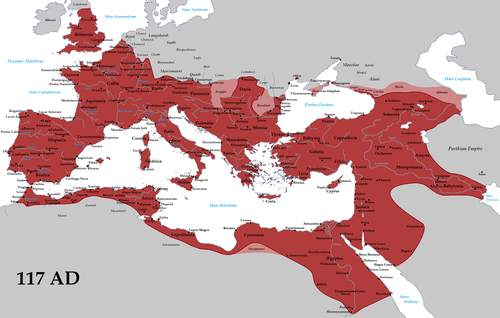
The Roman Empire began in 27 BCE when Augustus became its first emperor, reached its largest territorial extent under Trajan in 117 CE, and ended in the west in 476 CE when Odoacer deposed the last emperor, Romulus Augustulus. Historians point to a mix of military, economic, political, and external pressures over roughly two centuries as the causes of its decline.
The Renaissance was a cultural movement, running roughly from the 14th to the 17th century, that began in Florence and revived interest in Greek and Roman antiquity. It reshaped European art, science and scholarship through innovations such as linear perspective, Copernicus's 1543 heliocentric theory, and the printing press, developments historians link to the shift from medieval to modern thought.
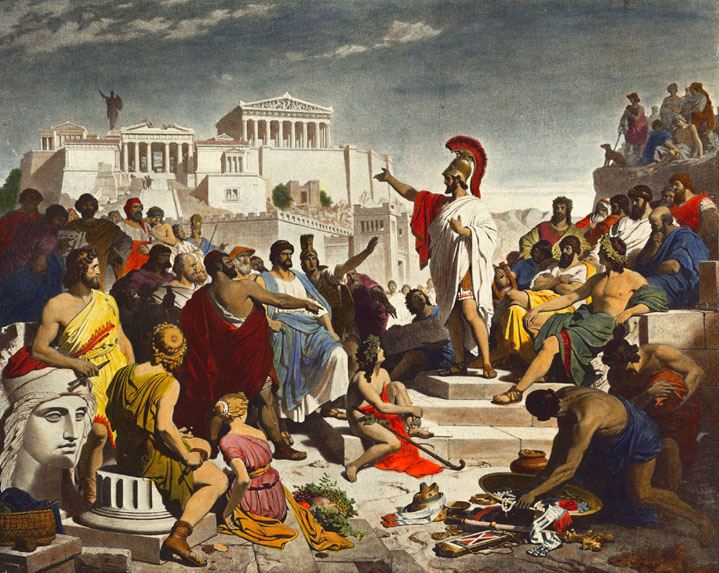
Democracy as a system of rule by citizens dates back to Athens around 508–507 BC, when the reformer Cleisthenes restructured the city-state's constitution. From there it spread unevenly through Roman representative institutions, medieval limits on royal power, Enlightenment theory, and later expansions of political rights to today's mix of electoral and liberal democracies worldwide.