Science · Article
Turkestan Cockroach From Middle East Confirmed Breeding in South Korea
Published:

In brief
Researchers in Busan confirmed the first established population of a non-native cockroach species in South Korea: the Turkestan cockroach, native to the Middle East, Central Asia and North Africa. Field surveys near Gamman Port between November 2025 and June 2026 found adults, nymphs and egg cases, showing the insect is already reproducing in its new environment.
Scientists at Pusan National University and Gyeongsang National University have documented the first confirmed establishment of a non-native cockroach species on South Korean soil. The insect, known as the Turkestan cockroach, was found living and breeding near Gamman Port in Busan, according to a study the researchers published in the Journal of Integrated Pest Management in September 2026.
What the surveys found
The research team ran field observations and baited trapping around the port area across five surveys between November 2025 and June 2026, using vinegar-soaked tissue and beer-moistened oatmeal as attractants. They recorded all developmental stages of the insect, including adults, nymphs and oothecae (egg cases), which the study's authors say indicates successful, ongoing reproduction rather than a one-off arrival.
According to the study, yellowish males were abundant in early June 2026 and females were observed by mid-June. Adults concentrated on retaining walls, while nymphs were found in wood debris and moist refuges; the population also used sewers and garbage and food-waste areas near the port.
Identifying the species
South Korean outlets, the published study and the English-language Wikipedia entry refer to the insect primarily as Periplaneta lateralis, while the University of California's Statewide Integrated Pest Management Program lists its scientific name as Blatta lateralis. Wikipedia lists Blatta lateralis and Shelfordella lateralis, among other names, as synonyms for the same species, meaning sources disagree on which name is primary even though they describe the same insect. All sources agree on its common name, the Turkestan cockroach, also called the red runner cockroach.
Local reporting describes the insect as roughly 3 centimeters long with a dark reddish body, distinguishable from native cockroach species by pale bands at both ends. Wikipedia adds that males are reddish-brown and slender with long wings that allow flight, while females are darker with cream-colored markings and short, non-functional wings.
- Native range: an area spanning the Middle East, Central Asia and northern Africa, per Wikipedia
- Time to reach adulthood: about 220 days, per the Korean field study
- Reproductive output: a single female can produce roughly 350 nymphs, per the same study
- Adult size: approximately 3 centimeters, dark reddish in color
How it likely reached Busan
Researchers say the species most likely entered South Korea through maritime shipping containers passing through the port, which handles large volumes of mobile cargo. Local reporting also cited mild local winters, with average temperatures of 3.6 to 5.8 degrees Celsius, as a likely factor helping the insect survive and establish itself outdoors.
| Period | What researchers recorded |
|---|---|
| November 2025 | Initial detection of the Turkestan cockroach near Gamman Port |
| December 2025 | Follow-up survey confirming continued presence at the site |
| Early–mid June 2026 | Adults, nymphs and egg cases found together; males abundant in early June, females by mid-June |
Why researchers are concerned
Lee Sang-bin, a professor in the Department of Life Sciences who led the Busan investigation, said the species shows "very rapidly increasing population numbers" and warned that the port's large volume of moving containers creates a risk of the insect spreading to other regions.
Very rapidly increasing population numbers
In the United States, the Turkestan cockroach was first detected in 1978 near the former Sharpe Army Depot in California and later found at Fort Bliss in Texas. It has since spread across the southwestern United States and has been displacing the previously dominant oriental cockroach in urban habitats there, according to Wikipedia and the UC Statewide IPM Program. The UC program describes it as both a nuisance pest and a potential public health concern because it can carry disease-causing organisms, though it does not specify which pathogens or confirm any illness linked to the species.
Official and scientific response
Busan's Infectious Disease Management Division said it would strengthen quarantine monitoring and pest-control measures across city districts and advised international travelers to inspect their belongings after trips to reduce the chance of introducing further invasive species. The published study's authors recommend continued monitoring of the insect's distribution, integrated pest management that avoids indiscriminate pesticide use, and further investigation into how it may be moving inland, including through legal and illegal trade in insects used as reptile feed.
The study's authors describe the Busan find as the first report of an established non-native cockroach species in Korea, and they say containment at the local level, combined with sustained surveillance, is the priority before any wider spread can be assessed.
Questions
- What is the Turkestan cockroach and where does it come from?
- It is a cockroach species native to an area spanning the Middle East, Central Asia and northern Africa, known scientifically as Periplaneta lateralis or Blatta lateralis depending on the source (also called Shelfordella lateralis), and commonly as the red runner cockroach.
- Where exactly was it found in South Korea?
- Researchers confirmed an established, breeding population near Gamman Port in Busan, based on field surveys conducted between November 2025 and June 2026.
- How did the cockroach likely reach South Korea?
- Researchers say the most likely pathway is maritime shipping containers moving through Busan's port, combined with mild local winters that helped the species survive outdoors.
- Is the Turkestan cockroach dangerous to humans?
- The University of California's IPM program describes it as a nuisance pest and a potential public health pest because it can carry disease-causing organisms, though no specific illness has been linked to the Busan population in the available reporting.
- What are authorities doing about it?
- Busan's Infectious Disease Management Division said it will increase quarantine monitoring and pest control across districts, while the researchers behind the study recommend ongoing surveillance and integrated pest management rather than widespread pesticide use.
How the world is telling it
- KoreanKorean outlets (KNN, Money Today) frame the discovery mainly as a local public-health and port-biosecurity story, emphasizing the lead researcher's warning about rapid population growth, Busan authorities' quarantine response, and advice to travelers to check belongings, rather than placing it in a broader global invasive-species context.
Sources
- KNN — 바퀴벌레 '터키스탄바퀴' 부산서 첫 발견...해충 확산 우려 (Turkestan cockroach first found in Busan, raising pest-spread concerns)
- Money Today — 부산 감만부두서 '터키스탄바퀴' 국내 첫 정착 확인 (Turkestan cockroach confirmed established for first time in Korea at Busan's Gamman Port)
- Journal of Integrated Pest Management — Establishment of the Turkestan cockroach, Periplaneta lateralis (Blattodea: Blattidae) in South Korea
- Wikipedia — Turkestan cockroach
- UC Statewide IPM Program — Turkestan Cockroach (Blatta Lateralis)
This piece was prepared with artificial intelligence and passed an automated source check before publication. If you see an error, ask for a correction. Request a correction or reply · How we make this
Related

ScienceNews
Margaret Hamilton, Apollo software pioneer who coined the term, dies at 90
Margaret Hamilton, who led the MIT team that wrote the onboard flight software for NASA's Apollo missions and is credited with coining the term "software engineering," died on September 30, 2026, at a hospital in Cambridge, Massachusetts. She was 90.
ScienceNews
USGS: Deep-Sea Sulfide Rocks Can Spontaneously Catch Fire in the Lab
A USGS-led team reports that iron-sulfide-rich rocks collected from the seafloor off the Oregon–California coast spontaneously combusted after being brought into a laboratory. The study, published in Scientific Reports, says the reaction poses a possible fire hazard for future deep-sea mining operations that has not been fully accounted for in current safety rules.

ScienceNews
Northern Lights Reach Southern England After G3 Solar Storm
A strong (G3) geomagnetic storm pushed the aurora borealis far south of its usual range over the UK on October 10–11, 2026, with sightings reported from Scotland down to Devon, Hampshire and Kent in southern England. The display followed a coronal mass ejection that left the Sun on October 8 and reached Earth two days later, according to the US Space Weather Prediction Center (SWPC).
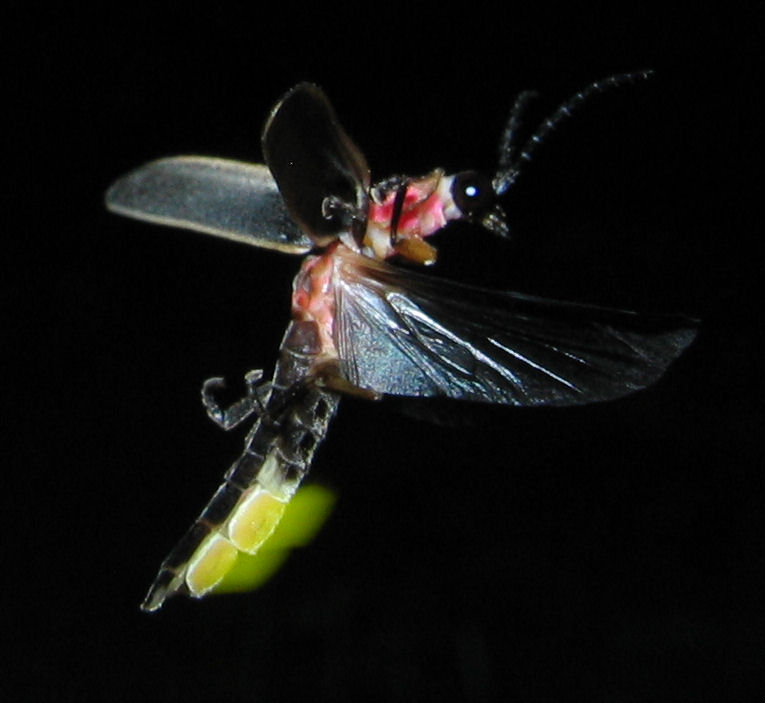
ScienceArticle
Bioluminescence Explained: The Chemistry Behind Light-Producing Organisms
Bioluminescence is light produced inside a living organism by a chemical reaction between a light-emitting molecule called luciferin, an enzyme (usually luciferase) and oxygen. Organisms use this self-made light to find food, attract mates, evade predators and communicate, and it is far more common in the ocean than on land.