For roughly 1,500 years, overland caravan routes known as the Silk Road and parallel sea lanes across the Indian Ocean linked China, India, Persia, Arabia, Africa and Europe. Goods such as silk, spices, ceramics and glass moved alongside religions, technologies and diseases, reshaping economies and cultures on every continent they touched.
The term "Silk Road" describes a network of overland trade routes that linked China to the Mediterranean world, formally taking shape around 130 BCE under China's Han Dynasty and remaining active until 1453 CE, when the Ottoman Empire's control of key crossings disrupted direct East-West trade, according to the World History Encyclopedia.
Running in parallel, a separate network of sea lanes known today as the Maritime Silk Road connected Southeast Asia, East Asia, the Indian subcontinent, the Arabian Peninsula, eastern Africa and Europe from around the 2nd century BCE through the 15th century CE, per Wikipedia's entry on the Maritime Silk Road, citing historical and archaeological scholarship on the subject.
The overland network
According to National Geographic Education, the Silk Road stretched roughly 6,437 kilometers (4,000 miles) across deserts and mountain ranges including the Gobi Desert and the Pamirs. It was not a single road but a web of interconnected pathways; few merchants traveled its full length, instead passing goods along a relay of regional traders.
Goods moved in both directions. National Geographic Education reports that silk, jade, precious stones, porcelain, tea and spices traveled west out of Asia, while horses, glassware, textiles and manufactured goods moved east. The World History Encyclopedia adds that the routes also carried paper and gunpowder eastward to westward, alongside weapons and metals moving the other way.
The World History Encyclopedia lists the major powers that controlled or profited from sections of the route over time: the Han Dynasty in China, the Greco-Bactrian Kingdom, the Parthian Empire (which acted as the principal intermediary between East and West), and later the Roman and Byzantine Empires, before the Ottoman Empire's rise curtailed direct overland access in 1453.
Ideas, religions and disease traveled too
Trade routes carried more than merchandise. According to the World History Encyclopedia, exchange along the Silk Road extended to art, religion, philosophy, technology, language, science and architecture, alongside the usual flow of goods. Buddhism and later Islam spread into new regions partly through these trading networks, the source notes.
Art, religion, philosophy, technology, language, science, architecture, and every other element of civilization was exchanged along these routes.
— World History Encyclopedia
The same connectivity carried hazards. The World History Encyclopedia notes that the bubonic plague of 542 CE spread partly along Silk Road networks, illustrating how the routes transmitted pathogens as readily as goods and ideas.
The maritime routes
Sea trade across the Indian Ocean and South China Sea predated and outlasted much of the overland network. Wikipedia's Maritime Silk Road article describes early participants including Austronesian sailors from Southeast Asia using sewn-plank and lashed-lug vessels, alongside Persian and Tamil merchants, who moved ceramics, glass, beads, gems, ivory, aromatic woods, metals, textiles and silk between ports.
Major port hubs named in the same source include Guangzhou and Quanzhou in China and the Strait of Malacca, a chokepoint controlled at different times by the Srivijaya and later Majapahit empires. From roughly the 10th century, China's Song Dynasty expanded its own seagoing shipbuilding, increasing direct Chinese participation in maritime trade, while Arab dhow traders helped spread Islam through Southeast Asian ports.
China's treasure fleets
Maritime trade reached a notable peak in the early 15th century. According to The Mariners' Museum and Park, Emperor Zhu Di (the Yongle Emperor) ordered the construction of a massive fleet in 1403 and appointed the admiral Zheng He to command it. Zheng He led seven expeditions between 1405 and 1433, with the first voyage alone deploying about 208 vessels, including 62 treasure ships, and more than 27,800 crew members.
The fleets sailed through the South China Sea, the Indian Ocean, the Arabian Sea and the Red Sea, calling at ports in Vietnam, Java, Sumatra, India, the Maldives, the Persian Gulf and the East African coast, including present-day Somalia and Kenya, the Mariners' Museum states. Most historians cited by the museum conclude the voyages were primarily intended to project Ming dynasty prestige, alongside diplomatic and trade aims.
The expeditions ended after the deaths of their imperial patron and, later, of Zheng He himself during the seventh voyage in 1433, after which the Ming court suspended further state-sponsored ocean voyages, according to the Mariners' Museum.
Two networks compared
Overland vs. maritime Silk Road
Feature
Overland Silk Road
Maritime Silk Road
Approximate active period
130 BCE – 1453 CE
2nd century BCE – 15th century CE
Approximate length
~6,437 km (4,000 miles)
Thousands of km across the Indian Ocean and South China Sea
Key goods traded
Silk, jade, porcelain, tea and spices moving west out of Asia; horses, glassware, textiles and manufactured goods moving east
Ceramics, glass, beads, gems, ivory, aromatic woods, metals, textiles including silk, food and spices, per Wikipedia's Maritime Silk Road entry
Notable powers
Han Dynasty, Parthia, Rome/Byzantium, Ottomans
Srivijaya, Majapahit, Song/Ming China, Arab dhow traders
Why the routes declined
National Geographic Education attributes the overland Silk Road's decline to the Age of Exploration (roughly the 1400s to 1800s), when European mariners established faster, higher-volume oceanic trade routes, reducing reliance on slow caravan transport across Central Asia. The World History Encyclopedia similarly links the Ottoman closure of overland routes in 1453 to Europe's push toward maritime alternatives, which it labels the start of an Age of Discovery.
Portions of the historic routes remain recognized today: National Geographic Education notes that parts of the Silk Road are listed on UNESCO's World Heritage List, reflecting their lasting cultural and archaeological significance.
Questions
Was the Silk Road a single road?
No. National Geographic Education describes it as a network of interconnected trade pathways spanning about 6,437 kilometers, with most merchants covering only sections of the route rather than its full length.
What made the Maritime Silk Road different from the overland route?
The maritime network relied on ships crossing the South China Sea and Indian Ocean rather than caravans crossing deserts and mountains, and it operated over a longer continuous period, from roughly the 2nd century BCE to the 15th century CE, according to Wikipedia's Maritime Silk Road entry.
Who was Zheng He and why do his voyages matter?
Zheng He was the Ming Chinese admiral who led seven state-sponsored maritime expeditions between 1405 and 1433 under orders from Emperor Zhu Di, commanding fleets of over 200 ships that reached as far as East Africa, according to The Mariners' Museum and Park.
Why did the Silk Road decline?
Sources attribute the overland route's decline to the Ottoman Empire's control of key crossings by 1453 and the parallel rise of faster European maritime trade during the Age of Exploration, per the World History Encyclopedia and National Geographic Education.
Did these trade routes only move goods?
No. The World History Encyclopedia notes that religion, philosophy, technology, science and even diseases such as the 542 CE bubonic plague spread along the same networks that carried silk, spices and ceramics.
This piece was prepared with artificial intelligence and passed an automated source check before publication. If you see an error, ask for a correction. Request a correction or reply · How we make this
Long before European colonization, the African continent was home to powerful states that built pyramids, ran trans-Saharan gold-and-salt economies, and raised cities of carved stone. This list ranks seven ancient African kingdoms by the scale of their political, economic or architectural reach, based on dates and figures from historians, UNESCO and museum records.
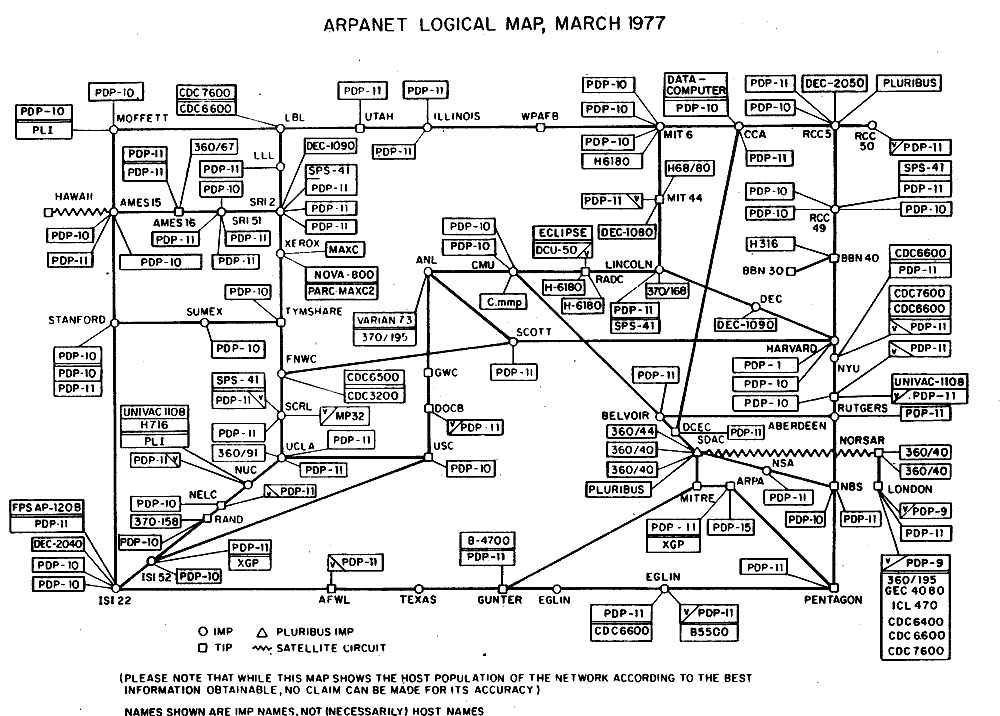
The internet began as a U.S. defense research network called ARPANET in 1969 and became the World Wide Web two decades later through a 1989 proposal at CERN. Today roughly 6 billion people — about three-quarters of the world's population — use the internet, according to the UN's International Telecommunication Union (ITU).
Archaeologists use two broad approaches: relative dating, which orders finds by layer or style without giving a year, and absolute (scientific) dating, which uses physical or chemical changes — such as carbon-14 decay, tree-ring patterns or potassium-argon decay — to estimate a calendar-based age range. Most sites are dated by combining several of these methods rather than relying on one alone.
Ancient Rome ran its affairs through elected magistrates, a senate of former officials and popular assemblies for roughly five centuries before power concentrated in a single emperor from 27 BCE. Its rigid social hierarchy, its legal code and its Latin tongue went on to shape European and wider Western institutions long after the empire itself fell.