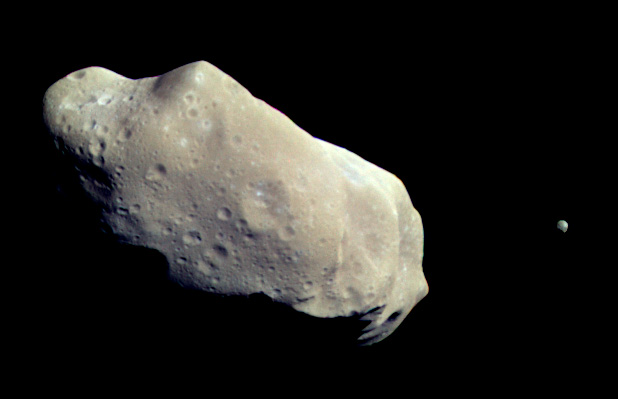
Asteroids are rocky remnants left over from the formation of the solar system about 4.6 billion years ago, mostly orbiting the Sun between Mars and Jupiter, according to NASA. They range from Vesta, roughly 530 kilometers across, down to boulder-sized rocks, and amateur astronomers can spot the brighter ones with binoculars or a small telescope by watching them shift against background stars over a night or two.
Asteroids are small, rocky bodies that orbit the Sun but never grew large enough to become planets. According to NASA, they are debris left over from the solar system's formation roughly 4.6 billion years ago, and the agency notes they are sometimes called minor planets.
Most asteroids circle the Sun in the main asteroid belt, the wide region between Mars and Jupiter. NASA estimates this belt holds between 1.1 and 1.9 million asteroids larger than 1 kilometer across, plus many smaller fragments. Other populations include near-Earth objects, whose orbits bring them close to our planet; Trojans, which share a planet's orbit at gravitationally stable points; and Earth-crossers, whose paths intersect Earth's orbit.
How asteroids formed
According to NASA, asteroids are material from the early solar system that never coalesced into a planet, largely because Jupiter's gravity disrupted the process in the region between Mars and Jupiter. Some asteroids experienced enough internal heating after they formed to partly melt, a process called differentiation, in which heavier iron sank toward the center while lighter basaltic material rose to the surface.
Vesta, the second most massive body in the asteroid belt, is a clear example. NASA states that Vesta formed within 1 to 2 million years of the solar system's birth, early enough for short-lived radioactive isotopes to heat it and separate it into a crust, mantle and core — much like Earth. Vesta alone accounts for almost 9% of the total mass of all asteroids in the main belt.
What asteroids are made of
NASA groups most asteroids into three broad composition classes based on reflected light and density.
Main asteroid composition classes (NASA)
Type
Main material
Notes
C-type (chondrite)
Clay and silicate rock
Most common class; dark surfaces; among the most ancient objects in the solar system
S-type (stony)
Silicate rock with nickel-iron
M-type (metallic)
Nickel-iron
Asteroid or dwarf planet? The case of Ceres
Ceres, discovered in 1801, is the largest object in the asteroid belt and was classified as an asteroid for most of two centuries. According to NASA, scientists reclassified it as a dwarf planet in 2006 because it is so much bigger and so different from its rocky neighbors. NASA's Dawn spacecraft began orbiting Ceres in 2015.
How to observe asteroids
Unlike planets, asteroids show no disk through amateur equipment — they look like ordinary points of light, so the only way to confirm a sighting is to track movement against the fixed background stars. Astronomy.com's observing guide recommends sketching or photographing the star field around the predicted position and checking the same spot a night or two later to see which "star" has shifted.
Pick a target near opposition, when the asteroid is opposite the Sun in Earth's sky and at its closest, brightest point; at that time its apparent motion against the stars is slow, often around half a degree per day, which makes it easier for beginners to track.
Look up its predicted position for your date and location using a finder chart or an ephemeris service, such as the one maintained by the International Astronomical Union's Minor Planet Center.
Match equipment to brightness: dozens of main-belt asteroids reach around magnitude 10.5 at opposition, within range of a small refractor in the 2- to 4-inch class, or a pair of binoculars for the brightest ones such as Vesta.
Record the star field — by sketch or photo — around the asteroid's expected spot.
Return to the same field a night or two later; the object that has moved against the unmoving stars is the asteroid.
For faster-moving near-Earth asteroids passing close to Earth, expect fainter magnitudes (often around 14 or dimmer) and motion visible within a single night, which calls for a larger telescope, roughly 11 inches of aperture or more.
Vesta and 8 Flora are frequently cited as accessible starting targets for beginners because of their relative brightness during favorable oppositions, according to Astronomy.com.
Why this matters during World Space Week
The United Nations observes World Space Week every year from October 4 to 10, marking the 1957 launch of Sputnik 1 and the 1967 entry into force of the Outer Space Treaty. The UN describes it as the largest annual space event in the world, held to build public understanding of space science and encourage participation in astronomy and STEM activities. The 2026 edition carries the theme "Rocket Revolution," focused on the growing number of commercial and national actors launching into space, according to the UN and event organizers.
Asteroids, sometimes called minor planets, are rocky remnants left over from the formation of our solar system about 4.6 billion years ago.
— NASA Science, on the origin of asteroids
Questions
What exactly is an asteroid?
An asteroid is a small, rocky body orbiting the Sun that formed from material left over when the solar system took shape about 4.6 billion years ago but never grew large enough to become a planet, according to NASA.
Where are most asteroids located?
Most known asteroids orbit in the main asteroid belt between Mars and Jupiter, which NASA estimates contains between 1.1 and 1.9 million asteroids larger than 1 kilometer, alongside smaller near-Earth and Trojan asteroid populations.
Is Ceres an asteroid?
Ceres was classified as an asteroid after its 1801 discovery, but according to NASA, scientists reclassified it as a dwarf planet in 2006 because it is so much bigger and so different from its rocky, irregularly shaped neighbors.
What equipment do I need to see an asteroid?
Bright main-belt asteroids near opposition can reach about magnitude 10.5, visible with a small telescope in the 2- to 4-inch class or binoculars for the brightest ones, while fainter near-Earth asteroids typically require larger telescopes, per Astronomy.com's observing guide.
How do I know I've actually found an asteroid and not a star?
Asteroids look identical to stars in an eyepiece, so observers confirm a sighting by recording the star field and checking the same spot a night or two later — the point of light that has shifted position is the asteroid, according to Astronomy.com.
This piece was prepared with artificial intelligence and passed an automated source check before publication. If you see an error, ask for a correction. Request a correction or reply · How we make this
Rockets move by expelling exhaust in one direction so the vehicle is pushed in the other, under Newton's third law of motion. Thrust depends on how much exhaust mass flows out per second and how fast it leaves the nozzle, while staying in orbit depends on balancing forward speed against the pull of gravity. Multistage designs and, for some missions, electric propulsion are used to manage the enormous amount of propellant spaceflight requires.
Astronaut training is a multi-year process that starts with a selection screening for education, experience and physical fitness, then moves into years of ground training before any flight. According to NASA and the European Space Agency (ESA), candidates learn spacecraft systems and practice spacewalks underwater, and ESA candidates also study Russian, while life aboard the International Space Station (ISS) runs on a fixed daily schedule of work, exercise and sleep.
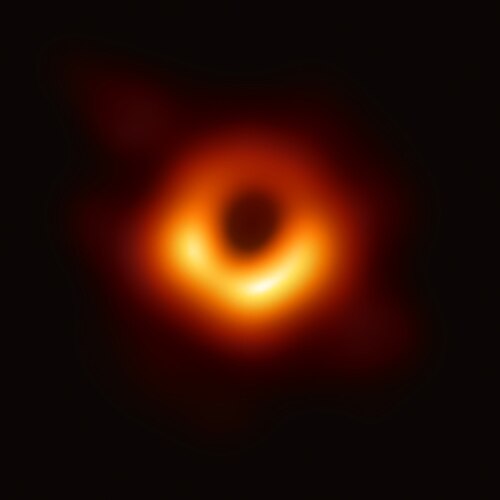
A black hole is a region of space where gravity is so strong that nothing, not even light, can escape once it crosses the event horizon. Most form when a massive star runs out of nuclear fuel and its core collapses; supermassive versions grow at galaxy centers over billions of years. Direct images and gravitational-wave detections have confirmed their existence and tested Einstein's general relativity.
The Moon's phases change because sunlight hits different parts of its surface as it moves around Earth, not because of Earth's shadow; one full cycle of phases, called a synodic month, averages 29.5 days. The same Moon also pulls on Earth's oceans with uneven gravitational force, creating two high tides and two low tides roughly every 24 hours and 50 minutes, with the Sun strengthening or weakening that pull twice a month.