Science · Article
How DNA, Genes and Heredity Work: The Basics of Inheritance Explained
Published:
In brief
Heredity is the passing of traits from parents to children through genes, which are segments of DNA carried on chromosomes. Each person inherits one chromosome of every pair from each parent, which is why genetic conditions and physical traits follow predictable patterns such as dominant, recessive and X-linked inheritance.
Genetics is the study of genes and heredity — how traits are passed from parents to children through DNA, according to the U.S. National Institute of General Medical Sciences (NIGMS). DNA, or deoxyribonucleic acid, is the hereditary material found in nearly every cell of the human body, according to MedlinePlus Genetics, a resource maintained by the U.S. National Library of Medicine.
What DNA actually looks like
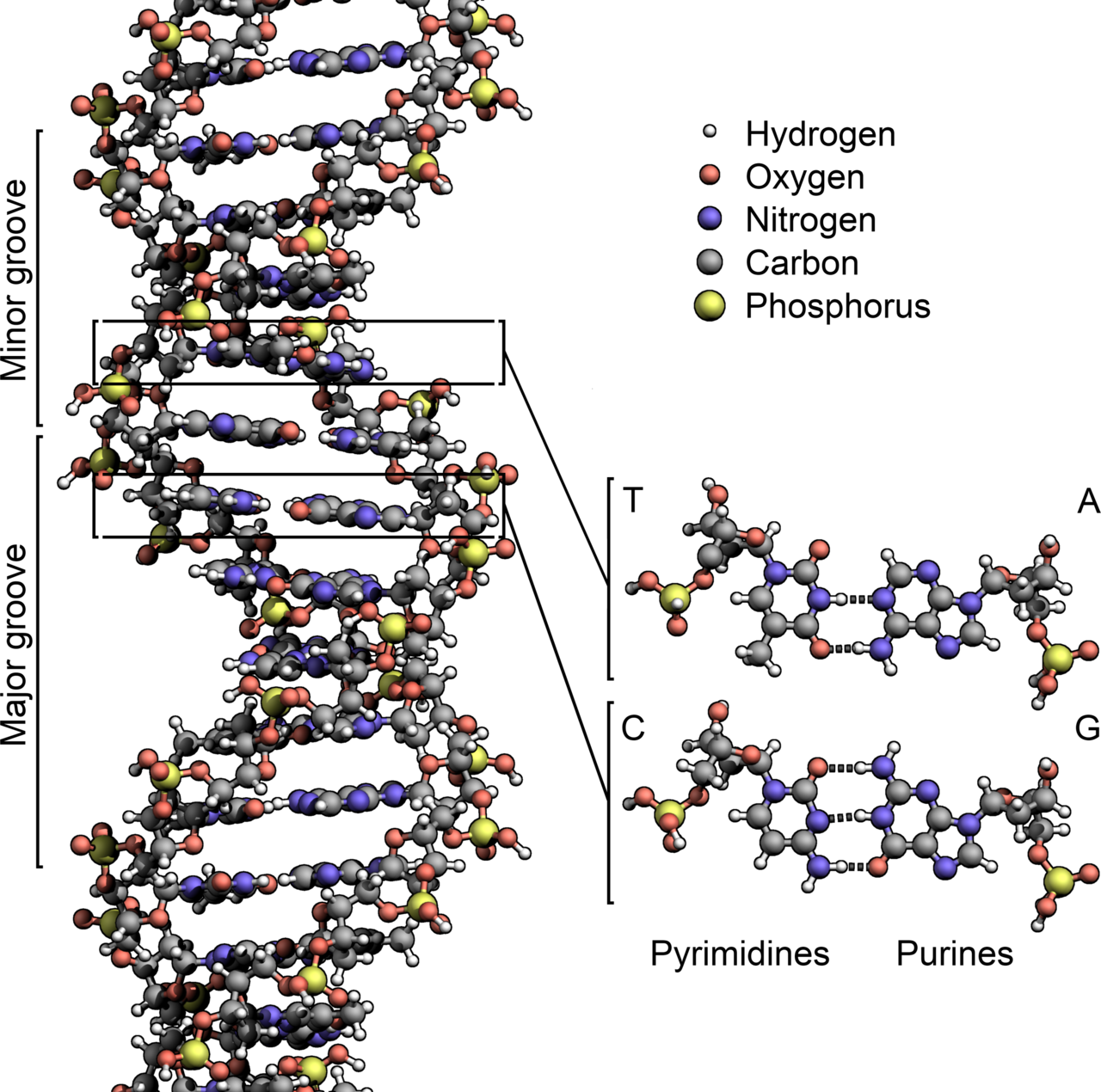
DNA is built from four chemical bases — adenine (A), thymine (T), guanine (G) and cytosine (C) — that pair up (A with T, C with G) to form rungs on a twisted, ladder-like structure called a double helix, MedlinePlus explains. Human DNA contains about 3 billion of these base pairs, and more than 99 percent of them are identical in every person; the remaining fraction accounts for individual differences, MedlinePlus states.
Most DNA sits inside the cell nucleus, where it is called nuclear DNA. A small amount also exists inside mitochondria, the cell structures that convert food into usable energy; this is known as mitochondrial DNA, or mtDNA, according to MedlinePlus.
Genes: the units of heredity
A gene is described by MedlinePlus as "the basic physical and functional unit of heredity." Genes are made of DNA and typically carry instructions for building proteins that the body needs to function; some genes instead regulate other genes. Human genes range from a few hundred DNA base pairs to more than 2 million base pairs in length, according to MedlinePlus. Estimates of the total protein-coding gene count have varied: the Human Genome Project (1990–2003) initially estimated 20,000 to 25,000 such genes, while more recent estimates put the figure at around 19,900, per MedlinePlus, and NIGMS cites approximately 20,000.
Genes make up only about 1 percent of human DNA, according to NIGMS; the rest consists of other sequences, including regions that regulate when and how genes are switched on or off.
Chromosomes and how traits pass between generations
Genes are carried on chromosomes, and people typically have 23 pairs of them, per NIGMS. One chromosome in each pair comes from the mother and one from the father, which means a person usually inherits two copies of every gene — one from each parent, MedlinePlus notes. Because chromosome pairs carry matching genes that can differ slightly, this is the basic mechanism behind why children resemble, but are not identical to, their parents.
A gene variant is called an allele. Less than 1 percent of genes vary between individuals, but these variants are responsible for differences in physical traits such as eye or hair color, and in some cases for inherited disease risk, according to MedlinePlus and NIGMS.
Dominant, recessive and other inheritance patterns
When a gene has two different alleles, how a trait appears depends on the inheritance pattern. In autosomal dominant inheritance, a single altered copy from one parent is enough for the trait or condition to appear; a person with such a variant has a 50 percent chance of passing it to each child, MedlinePlus states, citing standard risk-assessment figures used in clinical genetics.
In autosomal recessive inheritance, a trait only appears when both gene copies carry the variant. People with just one copy are carriers and are usually unaffected. If both parents are carriers, MedlinePlus states there is a 25 percent chance per pregnancy that a child will be affected, a 50 percent chance the child will be an unaffected carrier, and a 25 percent chance the child will neither be affected nor a carrier.
X-linked inheritance depends on the sex chromosomes. According to MedlinePlus, an affected father passes an X-linked variant to all of his daughters but none of his sons, because sons receive his Y chromosome instead. Y-linked conditions, by contrast, can only affect males, and an affected father passes the condition to all of his sons.
Researchers at the University of Utah's Genetic Science Learning Center caution that "there is no universal mechanism by which dominant and recessive alleles act," and that the two terms describe outcomes rather than one fixed biological process. They point to sickle-cell disease as an example: two copies of the sickle-cell allele cause the disease, but carriers with one copy have some sickled cells and, under certain conditions, gain resistance to malaria — a pattern that does not fit a simple dominant/recessive label.
| Pattern | How it works | Example figure cited |
|---|---|---|
| Autosomal dominant | One altered copy from either parent is enough to affect a child | 50% chance per child if one parent is affected (MedlinePlus) |
| Autosomal recessive | Both gene copies must carry the variant for the trait to appear | 25% chance per pregnancy if both parents are carriers (MedlinePlus) |
| X-linked | Inheritance differs depending on the sex of the parent and child | Affected fathers pass it to all daughters, no sons (MedlinePlus) |
| Y-linked | Passed only through the male line | Only males affected; all sons of affected fathers inherit it (MedlinePlus) |
Beyond simple patterns
Not every trait follows a clean dominant or recessive rule. NIGMS notes that many conditions involve multiple genes and environmental factors, making inheritance harder to predict than for single-gene traits. MedlinePlus adds that for such conditions, family history and genetic test results can sometimes refine — but not fully determine — the chance that a trait will be passed on.
Epigenetics adds another layer: chemical tags attached to DNA or to the proteins DNA wraps around can switch genes on or off without changing the underlying DNA sequence itself. NIGMS cites smoking as an example of an environmental factor that can trigger such changes.
There is no universal mechanism by which dominant and recessive alleles act.
Questions
- What is the difference between a gene and DNA?
- DNA is the chemical molecule that stores hereditary information in a double-helix structure; a gene is a specific segment of DNA that functions as the basic unit of heredity, often carrying instructions for making a protein, according to MedlinePlus Genetics.
- How many genes do humans have?
- The Human Genome Project initially estimated 20,000 to 25,000 protein-coding genes. More recent estimates put the number at around 19,900, according to MedlinePlus, while NIGMS cites approximately 20,000.
- What does it mean for a trait to be dominant?
- A dominant trait or condition appears when a person has just one altered copy of the relevant gene, inherited from either parent, according to MedlinePlus.
- What is a carrier in genetics?
- A carrier has one copy of a recessive gene variant but typically shows no symptoms; the trait or condition only appears when a person inherits two copies of the variant, one from each parent, per MedlinePlus.
- Why do X-linked conditions affect sons and daughters differently?
- Sons receive a Y chromosome from their father and an X chromosome from their mother, while daughters receive an X chromosome from each parent; this is why, per MedlinePlus, an affected father passes an X-linked variant to all daughters but no sons.
Sources
- MedlinePlus Genetics — What is a gene?
- MedlinePlus Genetics — What is DNA?
- MedlinePlus Genetics — If a genetic disorder runs in my family, what are the chances that my children will have the condition?
- NIH National Institute of General Medical Sciences — What Is Genetics?
- University of Utah Genetic Science Learning Center — What are Dominant and Recessive?
This piece was prepared with artificial intelligence and passed an automated source check before publication. If you see an error, ask for a correction. Request a correction or reply · How we make this
Related

ScienceArticle
How Viruses Spread, Mutate and Turn Into New Variants
Viruses spread between people mainly through close contact, respiratory droplets or airborne particles, and copying errors during replication create mutations. Most mutations are harmless, but a few help a virus spread more easily or evade immunity, and natural selection then favors those versions — producing what health agencies call a "variant."

ScienceNews
Swedish-Led Team Identifies Unknown Extinct Yak Species in Siberia's Denisova Cave
Researchers led by Stockholm University's Centre for Palaeogenetics have identified a previously unknown extinct bovine species related to modern yaks, nicknamed "yak X," from ancient DNA found in Siberia's Denisova Cave and nearby sites. The animal split from the yak lineage roughly 400,000 years ago and was still alive as recently as 27,000 years ago, according to a study published in Current Biology on October 5, 2026.
ScienceNews
2026 Nobel Prize in Economics Goes to Robert Hall and Michael Woodford
The 2026 Nobel Prize in Economic Sciences has been awarded to American economists Robert E. Hall of Stanford University and Michael Woodford of Columbia University. The Royal Swedish Academy of Sciences honored them for building the "microeconomic foundations of macroeconomic stabilization," work now used by central banks worldwide to manage inflation, unemployment and economic shocks.
ScienceArticle
Africa's Turkana Rift: Why Scientists Say the Continent's Crust Is Thinner Than Thought
New seismic data show the crust along Kenya and Ethiopia's Turkana Rift has thinned to about 13 kilometers, less than half of what surrounding areas measure. Columbia University researchers say this means eastern Africa has entered "necking," an advanced, self-sustaining phase of continental breakup that could eventually produce a new ocean — though the process is expected to take several million more years.