Writing began as a record-keeping tool: Sumerian cuneiform appeared in Mesopotamia around 3600–3500 BCE, Egyptian hieroglyphs are dated to roughly 3400–3200 BCE, and Chinese oracle-bone script emerged under the Shang dynasty by about 1250 BCE. The alphabet most of the world now uses traces back through Phoenician, Greek and Latin letters, spread globally after Johannes Gutenberg's printing press made books cheap to copy from the 1450s onward.
Several regions of the ancient world began keeping written records at different times and for different practical reasons, long before anyone wrote literature. The earliest known systems were built not for storytelling but for administration: tracking goods, labor and offerings.
The earliest scripts: Sumer and Egypt
According to the World History Encyclopedia, cuneiform writing emerged among the Sumerians of Mesopotamia around 3600–3500 BCE, making it the earliest writing system identified so far. It began as "a mnemonic device designed to aid accountants and bureaucrats," used for trade lists, inventories and bills of goods rather than literature.
The script's wedge-shaped marks (cuneus is Latin for "wedge") were pressed into soft clay with a stylus. By around 3200 BCE in the city of Uruk, the original pictographs — simple drawings of things like livestock or rulers — began shifting toward phonograms representing sounds. The number of signs in use dropped from over 1,000 to about 600, and formal scribal schools called edubba trained students for up to twelve years.
In Egypt, the oldest confirmed hieroglyphs come from Abydos, about 300 miles south of Cairo. According to Guinness World Records, clay seal impressions and ivory tags excavated there in 1999 by Germany's Deutsches Archäologisches Institut in Cairo have been dated to between 3400 and 3200 BCE. The markings were originally used to label containers of goods such as cereals, oils and textiles.
China's oracle bones
Chinese writing has its own, separately documented starting point. The Shang dynasty's last capital, Yinxu, near modern Anyang in Henan Province, is where scholar Wang Yirong first recognized ancient Chinese characters in 1899 on bones being sold as "dragon bones," according to the Wikipedia entry on the site. The characters had been carved into turtle plastrons and ox bones for divination, during the reign of kings including Wu Ding, whose rule began around 1250 BCE.
Roughly 150,000 oracle bones have been unearthed at Yinxu, making up much of the earliest surviving evidence of written Chinese. Decades after the initial discovery, scholar Wang Guowei used the inscriptions to confirm the royal genealogy of the Shang dynasty, which until then had been known mainly through later legend.
From symbols to letters: the alphabet
The alphabetic writing used across most of the world today traces back to the Phoenicians, whose script was fully developed by around 1000 BCE and represented 22 consonant sounds without separate vowel signs, according to the World History Encyclopedia. Phoenician traders carried the script around the Eastern Mediterranean.
Greeks most likely adopted the Phoenician system through this merchant contact, with the World History Encyclopedia dating the shift to around 800–700 BCE. The Greeks' key innovation was converting several Phoenician letters that represented sounds not used in Greek into vowel signs, producing a 24-character alphabet. One of the earliest known Greek alphabetic inscriptions, the so-called Nestor's Cup, dates to about 740 BCE.
The Greek alphabet was the first writing that informed the reader what the words sounded like, whether or not he knew what the words meant.
— Classicist Barry B. Powell, quoted by the World History Encyclopedia
From Greece, the alphabet passed to the Etruscans and then to Rome, where it became the Latin script — the direct ancestor of the alphabet used today for English and most other European languages.
Printing and the global spread of alphabetic writing
Alphabetic scripts spread far more widely once copying text became mechanical. Johannes Gutenberg, a German printer, established his printing operation in Mainz around 1450 CE and produced his famous Latin Bible in 1456 CE, according to the World History Encyclopedia. His system engraved individual letters into a copper mould, filled it with molten metal to cast reusable type, and arranged the letters into frames that could be inked and pressed onto paper repeatedly.
The effect on book production was significant: by 1550 CE, around 20 million books had been printed in Europe, compared with about 2 million during the first decade of the 1500s, the World History Encyclopedia reports. Printed books cost roughly one-eighth the price of a handwritten copy, and became, in the encyclopedia's words, a catalyst for wider literacy across the following centuries.
Early writing systems compared
Writing system
Region
Approximate date
Material
Cuneiform
Sumer, Mesopotamia (Uruk)
c. 3600–3500 BCE
Clay tablets
Egyptian hieroglyphs
Abydos, Egypt
c. 3400–3200 BCE
Clay seals, ivory tags
Oracle bone script
Yinxu, Anyang, China
From c. 1250 BCE
Turtle plastrons, ox bones
Phoenician alphabet
Eastern Mediterranean
By c. 1000 BCE
Stone, pottery, metal
Greek alphabet
Greece
c. 800–740 BCE
Pottery, stone
Each of these systems answered a different need — accounting in Sumer, royal labeling in Egypt, divination in Shang China, trade records among the Phoenicians — before the Greek addition of vowels and Gutenberg's movable type turned a specialist skill into a tool usable, and teachable, on a much larger scale.
Questions
What is the oldest known writing system in the world?
Cuneiform, developed by the Sumerians in Mesopotamia around 3600–3500 BCE, is identified by the World History Encyclopedia as the earliest writing system found so far.
When were the oldest Egyptian hieroglyphs made?
Guinness World Records dates the oldest known Egyptian hieroglyphs — clay seal impressions and ivory tags from Abydos — to between 3400 and 3200 BCE, based on a 1999 excavation by the German Archaeological Institute in Cairo.
When did Chinese writing begin?
The earliest confirmed Chinese writing is the oracle bone script used for divination at Yinxu during the late Shang dynasty, with major evidence dating from around the reign of King Wu Ding, starting about 1250 BCE; the script was first recognized by scholar Wang Yirong in 1899.
Where does the modern alphabet come from?
It descends from the Phoenician consonant-only script, fully developed by about 1000 BCE, which Greeks adapted around 800–700 BCE by adding vowel letters; the Etruscans then passed the Greek alphabet to Rome, producing the Latin script used today.
How did printing change the spread of alphabetic writing?
Johannes Gutenberg's movable-type press, operating in Mainz from around 1450 CE and producing a Bible in 1456 CE, made books far cheaper and faster to copy; European book output rose from about 2 million copies in the 1500–1510 decade to around 20 million by 1550, according to the World History Encyclopedia.
This piece was prepared with artificial intelligence and passed an automated source check before publication. If you see an error, ask for a correction. Request a correction or reply · How we make this
Long before European colonization, the African continent was home to powerful states that built pyramids, ran trans-Saharan gold-and-salt economies, and raised cities of carved stone. This list ranks seven ancient African kingdoms by the scale of their political, economic or architectural reach, based on dates and figures from historians, UNESCO and museum records.
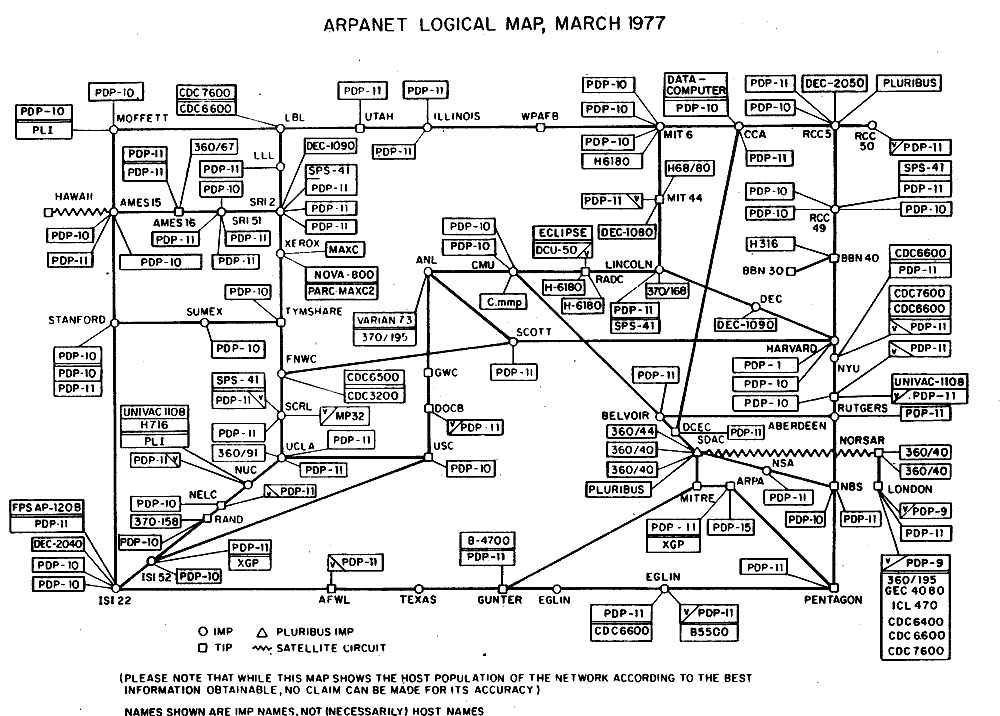
The internet began as a U.S. defense research network called ARPANET in 1969 and became the World Wide Web two decades later through a 1989 proposal at CERN. Today roughly 6 billion people — about three-quarters of the world's population — use the internet, according to the UN's International Telecommunication Union (ITU).
Archaeologists use two broad approaches: relative dating, which orders finds by layer or style without giving a year, and absolute (scientific) dating, which uses physical or chemical changes — such as carbon-14 decay, tree-ring patterns or potassium-argon decay — to estimate a calendar-based age range. Most sites are dated by combining several of these methods rather than relying on one alone.
Ancient Rome ran its affairs through elected magistrates, a senate of former officials and popular assemblies for roughly five centuries before power concentrated in a single emperor from 27 BCE. Its rigid social hierarchy, its legal code and its Latin tongue went on to shape European and wider Western institutions long after the empire itself fell.